ISO 9001:2015 Quality System · RoHS & REACH Compliant Titanium Parts
Choosing a China Top Titanium Motorcycle Fasteners Manufacturer requires more than comparing prices. It requires evidence, engineering knowledge, and consistent production control. Titanium fasteners may reduce weight, resist corrosion, and create a clean racing appearance. However, every benefit depends on correct material selection, machining, and installation.
A reliable manufacturer should explain its titanium grades clearly. Grade 5 titanium, also called Ti-6Al-4V, is widely used for demanding motorcycle components. It offers a strong balance between low weight and mechanical performance. Experienced suppliers can produce bolts, nuts, washers, axle hardware, and customized kits. They should also discuss thread accuracy, surface finishing, tolerances, and torque guidance.
Details matter.
A professional factory normally supports quality checks from raw material certificates to final inspection. Useful evidence may include dimensional reports, hardness testing, batch identification, and sample approval records. Production experience also appears in practical details, such as clean threads, consistent anodized colors, and packaging that prevents scratches. These small points affect installation and customer trust.
No supplier is perfect. Even a capable manufacturer may face tooling limits, color variation, or delays during custom production. Honest communication is therefore essential. Buyers should ask about testing methods, lead times, minimum quantities, and after-sales support. This article examines how to evaluate China-based suppliers and identify dependable Titanium Motorcycle Fasteners for professional workshops, motorcycle brands, and performance-focused riders. Performance claims should always match verifiable technical data.
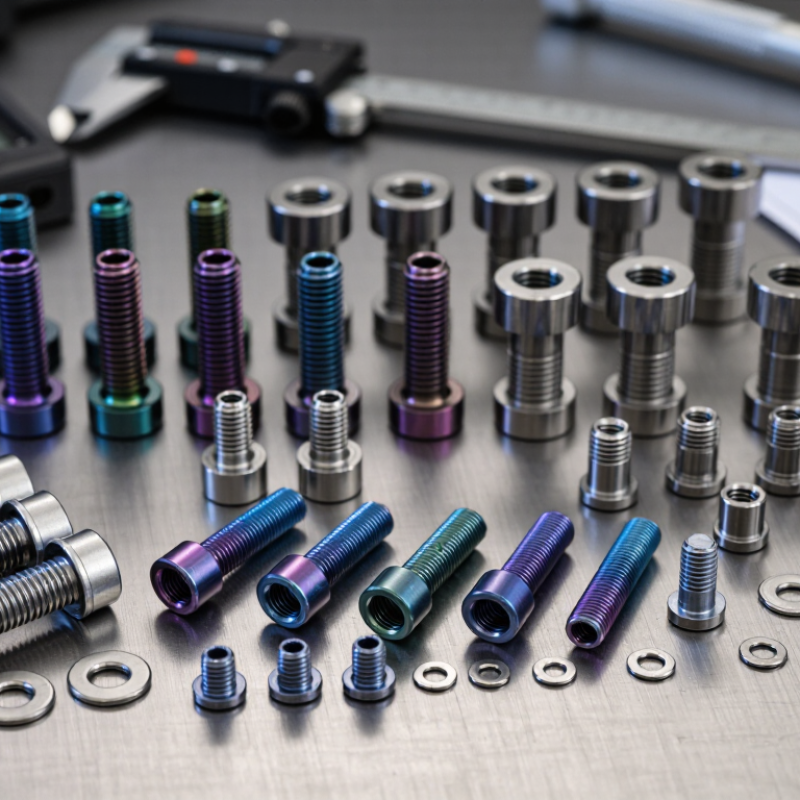
China’s strength in titanium motorcycle fasteners comes from a connected manufacturing base. The country combines sponge titanium, bar processing, CNC machining, surface treatment, and export logistics in one supply chain. The USGS Mineral Commodity Summaries 2024 reported approximately 9.8 million metric tons of global titanium mineral concentrate production in 2023. China remained one of the largest producing countries, supporting steady material access for downstream manufacturers.
Material access is only part of the answer. Titanium fasteners require controlled threads, accurate head dimensions, and careful heat management during machining. Experienced factories commonly use CNC turning, optical inspection, hardness checks, and batch traceability. ASTM F468 provides a recognized framework for nonferrous bolts, screws, and studs. ISO 9001-based quality systems also help control incoming material and final inspection. Small details matter here. A damaged thread can stop assembly.
Demand also encourages specialization. Fortune Business Insights valued the global motorcycle market at about 120 billion US dollars in 2023, indicating a large customer base for lightweight components. Titanium can reduce weight and resist corrosion, especially around exhaust systems and exposed chassis hardware. However, China’s advantage is not automatic. Supplier quality varies, machining costs can rise, and inconsistent surface finishing still needs attention. Buyers should request mill certificates, inspection records, sample testing, and clear tolerances before production. That caution is practical, not pessimistic.
Choosing titanium motorcycle fasteners requires more than chasing low weight. Grade 5, or Ti-6Al-4V, offers high tensile strength and strong fatigue performance. It suits brake caliper bolts, rear-set screws, axle pinch bolts, and structural brackets. Grade 2 provides better corrosion resistance and easier forming, but its lower strength limits heavily loaded joints. Grade 23 contains fewer interstitial elements. It can improve toughness, although its higher cost is not always justified.
Socket-head cap screws fit recessed motorcycle assemblies. Flange bolts spread clamping force around uneven surfaces. Studs and prevailing-torque nuts help reduce repeated thread damage. Washers are useful on softer aluminum parts. ASTM F467 and ASTM F468 provide relevant guidance for nonferrous fastener materials and mechanical requirements. Threads still need careful inspection. Titanium can gall during installation.
According to the USGS Mineral Commodity Summaries 2024, China produced approximately 210,000 metric tons of titanium sponge in 2023. That supply scale supports domestic processing, but sponge output does not guarantee fastener quality. Material certificates, hardness checks, dimensional inspection, and torque testing remain essential. Practical fitting also shows a common weakness: installers may use standard steel torque values without considering titanium’s lower friction consistency. That can distort preload. Dry assembly is risky. A qualified anti-seize compound and controlled tightening procedure are usually safer. Grade 5 is often the practical choice, yet it is not automatically the best choice.
China Top Titanium Motorcycle Fasteners Manufacturer?
How China’s Titanium Motorcycle Fasteners Are Manufactured
Manufacturing begins with certified titanium bar stock, commonly selected for strength, low weight, and corrosion resistance. Incoming material is checked against chemical composition and mechanical property requirements. Traceability starts here, not after production.
Bars are cut into measured blanks before CNC turning, milling, or forming. Skilled operators control thread dimensions, head profiles, and contact surfaces. Cutting tools must remain sharp because titanium generates heat and resists machining. Coolant flow matters. A small mistake can distort a thread.
After machining, parts may receive controlled heat treatment or surface conditioning, depending on the titanium grade and application. Threads and bearing surfaces are inspected with calibrated gauges. Critical dimensions are measured using coordinate equipment, while visual checks identify burrs, scratches, and discoloration. Torque testing helps confirm practical performance during assembly.
Quality records should include material certificates, machine settings, inspection results, and batch identification. This documentation supports reliability and makes problems easier to trace. Still, no factory process is flawless. Tool wear, operator judgment, and inconsistent cleaning can affect results. That is why responsible manufacturers combine automated measurement with experienced inspection staff. Sample testing alone may miss a recurring issue. For motorcycle fasteners, precise fit and controlled tightening are more important than appearance alone. Titanium looks premium, but manufacturing discipline determines whether it performs properly.
China Top Titanium Motorcycle Fasteners Manufacturer?
Quality Standards and Testing for Titanium Motorcycle Fasteners
Reliable titanium motorcycle fasteners require more than a bright, polished surface. Material grade, thread accuracy, strength, and traceability must be verified for every production batch. Common titanium grades should match the motorcycle’s load, temperature, and corrosion conditions. Chemical composition testing confirms the alloy. Tensile and hardness tests help identify weak or inconsistent material. Thread gauges check fit without forcing the fastener into place.
Dimensional inspection is equally important. Technicians should measure thread pitch, head diameter, length, and tolerance with calibrated tools. Surface checks can reveal cracks, scratches, contamination, or uneven coating. Salt-spray or corrosion testing may support evaluation, but it cannot represent every riding environment. Fatigue testing is valuable for high-stress locations, although test results depend on the design and assembly method. A perfect report does not guarantee perfect installation. That detail is often underestimated.
Tips: Request batch traceability, test reports, and clear grade identification before purchase. Use a calibrated torque wrench during installation. Titanium threads may gall, especially when dry or over-tightened. Apply a suitable anti-seize compound and follow the motorcycle manufacturer’s torque guidance. Inspect fasteners after early rides. Small marks can matter. One practical improvement is recording torque values during assembly, though many workshops still skip this simple step.
The chart compares minimum mechanical requirements for common titanium fastener grades under ASTM F468. Grade 5 titanium provides substantially higher tensile and yield strength than commercially pure Grade 2 titanium, while Grade 2 typically offers greater elongation. Grade 2 values: 345 MPa tensile strength, 275 MPa yield strength, and 20% elongation. Grade 5 values: 895 MPa tensile strength, 825 MPa yield strength, and 10% elongation.
Selecting a reliable Chinese titanium fastener supplier requires more than comparing prices. The U.S. Geological Survey’s Mineral Commodity Summaries 2024 estimated 2023 global titanium sponge output at about 290,000 metric tons. Large supply does not guarantee consistent motorcycle-grade material. Ask for heat numbers, mill certificates, chemical analysis, and full batch traceability. Confirm Ti-6Al-4V grade against ASTM F468 requirements, where applicable. Check tensile strength, hardness, thread accuracy, and surface condition through independent testing.
Production details matter. Request machining photographs, gauge records, and torque-test results from the actual factory. A capable supplier should explain how it controls thread galling, especially during dry assembly. It should also provide sample fasteners before mass production. I would inspect flange faces, thread roots, and tool marks under magnification. Small defects can become expensive failures.
ISO 9001 certification helps, but it does not replace product testing. That assumption deserves caution. Use an impartial inspection company for random sampling, dimensional checks, and certificate verification. The 2024 ASTM standards remain useful references, but motorcycle applications may need additional vibration and corrosion testing. A supplier that welcomes these checks is easier to trust than one offering only polished catalogs and fast quotations. Ask difficult questions early. The best decision often comes from documented evidence, not factory size.
China connects titanium supply, bar processing, machining, finishing, and export logistics. This linked system can shorten purchasing and production coordination. Material access helps, but it does not guarantee consistent quality.
Titanium fasteners are lightweight and resist corrosion. They suit exposed chassis parts and areas near exhaust systems. Weight savings can help, but the benefit depends on correct design and installation.
Production begins with certified titanium bar stock. Workers cut blanks before turning, milling, or forming them. CNC machines create threads, heads, and contact surfaces. Sharp tools and steady coolant control heat during machining.
Useful checks include chemical composition, tensile strength, hardness, dimensions, and thread fit. Inspectors also look for burrs, scratches, cracks, and discoloration. Small defects can stop assembly.
Request material certificates, inspection records, test results, tolerances, and batch identification. These records make problems easier to trace. Sample testing helps, but it may miss repeated production defects.
Compare material control, machining equipment, inspection methods, and traceability systems. Ask for production samples and clear tolerance data. A polished surface proves very little.
Use a calibrated torque wrench and follow the motorcycle’s specified torque guidance. Apply suitable anti-seize compound to reduce thread galling. Record the torque value during assembly. Many workshops skip this.
Tool wear can change thread dimensions and surface quality. Poor cleaning may cause contamination or uneven finishing. Dry or over-tightened threads can seize. A perfect report cannot guarantee perfect installation. Recheck fasteners after early rides. Small marks matter.
China has become a major manufacturing center for Titanium Motorcycle Fasteners because of its integrated metal supply chain, advanced machining capabilities, skilled workforce, and competitive production costs. Manufacturers can provide various titanium grades, including commercially pure titanium and performance-oriented alloys, in forms such as bolts, nuts, washers, studs, and custom fasteners. These products are widely used in motorcycle frames, engines, exhaust systems, suspension components, and other areas where low weight, corrosion resistance, and high strength are important.
The production process typically includes material selection, precision forging or machining, heat treatment when required, surface finishing, and dimensional inspection. Reliable manufacturers support their products with quality management systems, material certificates, tensile and hardness testing, thread inspections, and corrosion-resistance evaluations. When selecting a Chinese supplier, buyers should assess technical experience, production capacity, quality-control procedures, customization abilities, sample approval processes, communication efficiency, and delivery reliability. A careful evaluation helps ensure that Titanium Motorcycle Fasteners meet both performance expectations and application-specific requirements.
