0%

Choosing the right Titanium Alloy Bolts can determine whether a project remains secure, lightweight, and durable over time. These fasteners are valued for their excellent strength-to-weight ratio, corrosion resistance, and performance in demanding environments. They are commonly used in marine equipment, aerospace assemblies, medical devices, racing components, and outdoor structures.

However, material selection should never rely on appearance or price alone. A practical choice begins with load requirements, operating temperature, exposure to saltwater, and expected maintenance conditions. Grade 5 titanium, also called Ti-6Al-4V, offers high strength for many structural applications. Commercially pure titanium may provide better corrosion resistance but lower mechanical strength. Thread size, bolt length, head style, and compatible nuts also require careful attention.

Real-world installation can reveal problems that product descriptions overlook. Titanium threads may gall when assembled dry or tightened too aggressively. Applying a suitable anti-seize compound and using a calibrated torque wrench can reduce this risk. Still, torque values vary with lubrication, thread condition, and manufacturer guidance. This is where many projects become less certain. A bolt that looks oversized may not provide the correct clamping force. A lighter fastener may also fail when vibration, fatigue, or galvanic corrosion is ignored.

Before purchasing, compare certified material data, tensile strength, corrosion performance, and dimensional standards. Confirm supplier traceability and request inspection documents when reliability matters. Testing a small batch first is often wiser than ordering everything immediately. With careful engineering judgment, Titanium Alloy Bolts can deliver dependable performance without adding unnecessary weight or maintenance concerns.
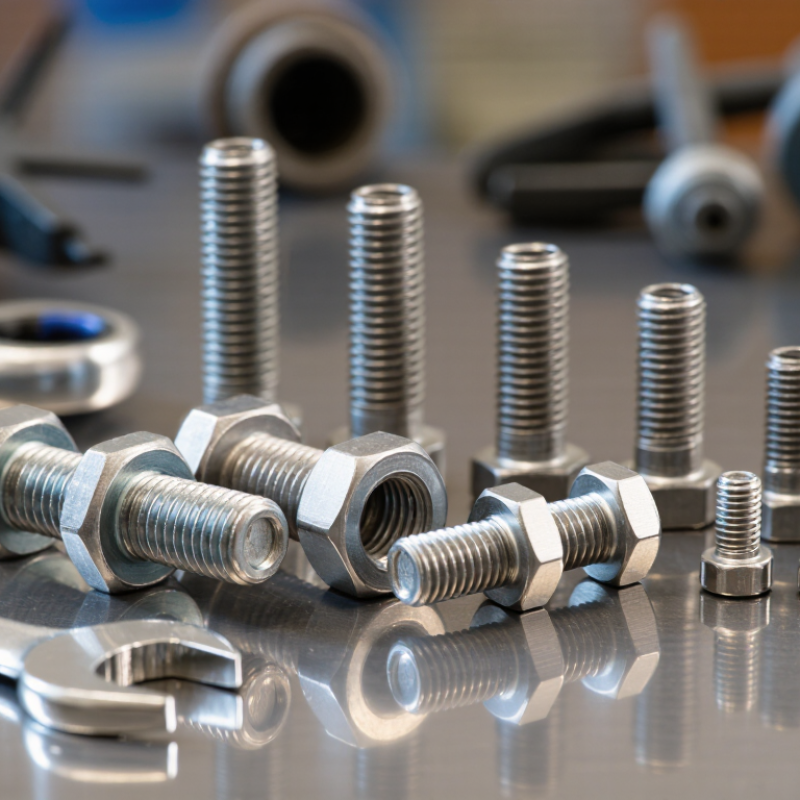
How to Choose Titanium Alloy Bolts for Your Project

Define the Project’s Load, Environment, and Performance Requirements

How to Choose Titanium Alloy Bolts for Your Project

Define the project’s load, environment, and performance requirements before selecting a titanium bolt. Record tensile, shear, fatigue, and vibration loads separately. ASTM F468 lists Grade 5 titanium alloy bolts with approximately 895 MPa minimum tensile strength and 828 MPa minimum yield strength. ASM Handbook data places Grade 5 titanium density near 4.43 g/cm³. That is considerably lighter than typical steel. The margin still matters. Strength changes with heat treatment, diameter, and manufacturing condition.

Map temperature, moisture, chemicals, and nearby metals. Titanium performs well in many chloride environments, but it may create galvanic corrosion with aluminum or unprotected steel. Use compatible washers, coatings, or electrical isolation where needed. Check thermal expansion across the full temperature range. A joint can loosen when the bolt and clamped parts expand differently. Small details become expensive problems.

Match the thread size and grip length to the actual joint design. Do not select by tensile strength alone. NASA’s Fastener Design Manual explains that torque can vary widely because friction changes with lubrication, surface finish, and thread condition. A calibrated preload method is safer than trusting torque charts blindly. I have seen lightweight designs overlook embedment and fatigue. That is an uncomfortable reminder. Obtain certified material reports, verify the applicable ASTM requirements, and test a representative joint before production.

How to Choose Titanium Alloy Bolts for Your Project

Define the project's load, environment, and performance requirements before selecting a titanium alloy bolt. The chart compares commonly referenced room-temperature minimum material strengths for several titanium grades.

Load

Grade 5 titanium alloy provides the highest strength in this comparison and is commonly considered for high-strength, lightweight bolted joints.

Environment

Commercially pure titanium and Grade 7 offer strong resistance to many oxidizing and chloride-containing environments. Check compatibility with reducing acids and galvanic couples.

Performance

Titanium alloys have a density of approximately 4.43–4.51 g/cm³, about 40% lower than common steel, helping reduce fastener weight while maintaining useful strength.

Reference values are typical room-temperature minimum material values for commonly supplied wrought grades: Grade 2 and Grade 7, 345 MPa tensile and 275 MPa yield strength; Grade 9, 620 MPa tensile and 483 MPa yield strength; Grade 5, 895 MPa tensile and 828 MPa yield strength. Actual bolt properties depend on the applicable fastener standard, heat treatment, diameter, thread condition, and manufacturing process.

Compare Titanium Alloy Grades and Their Mechanical Properties

How to Choose Titanium Alloy Bolts for Your Project

Titanium grade determines more than corrosion resistance. It also controls strength, ductility, weight, and thread durability. ASTM B348 lists Grade 2 with a minimum tensile strength of 345 MPa, yield strength of 275 MPa, and elongation of 20%. This commercially pure grade suits moderate loads and highly corrosive environments. It is forgiving during forming. Not always the strongest choice.

Grade 5, or Ti-6Al-4V, reaches a minimum tensile strength of 895 MPa and yield strength of 825 MPa, with 10% minimum elongation, according to ASTM B348. ASM Handbook data also identifies its high strength-to-weight ratio as a major engineering advantage. Choose it for heavily loaded joints, aerospace-style structures, and compact assemblies. However, its higher strength can increase galling risk during tightening. Clean threads and controlled torque matter.

Grade 9, Ti-3Al-2.5V, provides a middle option. ASTM B348 specifies at least 620 MPa tensile strength, 483 MPa yield strength, and 15% elongation. It balances formability and mechanical performance. Grade 7 offers corrosion resistance similar to Grade 2, with palladium additions, but availability may vary. Published values are minimum requirements, not guaranteed field performance. Joint design, surface condition, temperature, and preload can change results. A bolt that looks perfect may still fail through thread damage or uneven clamping. Verify the applicable standard and test certificates before final selection.

Select the Appropriate Bolt Size, Thread, and Head Design

Choosing titanium alloy bolts begins with the load, space, and installation method. Measure joint thickness, washer clearance, and tool access before ordering. A bolt that is too short may provide weak thread engagement. One that is too long can bottom out inside a blind hole. Aim for full nut engagement and suitable thread projection, based on the assembly standard and load conditions. A first selection is rarely perfect.

Select the diameter according to tensile and shear loads, not appearance. Verify strength data, temperature limits, and corrosion conditions using current technical documents. Thread choice matters. Fine threads offer better adjustment and a larger tensile stress area. Coarse threads usually install faster and tolerate dirt better. Avoid incompatible metals without checking galvanic corrosion risks. Choose the head design carefully. A socket head suits narrow spaces, while a hex head can simplify field service. Countersunk heads require a prepared seat and may reduce local material thickness.

Tips: Test one sample assembly first. Check thread fit, seating, torque access, and washer contact. Use calibrated tools and follow the specified torque procedure. Do not assume torque alone proves preload; friction changes it significantly. Record the result and reconsider the design if the bolt feels tight before the joint closes.

How to Choose Titanium Alloy Bolts for Your Project Select the appropriate bolt size, thread, and head design
Selection Factor Recommended Specification Typical Values or Options Why It Matters Project Guidance
1. Titanium Alloy and Mechanical Requirements
Commercially pure titanium, Grade 2 Corrosion resistance priority Typical minimum tensile strength: approximately 345 MPa
Typical minimum yield strength: approximately 275 MPa
Provides excellent resistance to seawater, chlorides, and many chemical environments, but has lower strength than Ti-6Al-4V. Use for lightly or moderately loaded fasteners where corrosion resistance and formability are more important than maximum strength.
Grade 5 titanium alloy, Ti-6Al-4V High-strength choice Typical minimum tensile strength: approximately 895 MPa
Typical minimum yield strength: approximately 828 MPa
Offers a high strength-to-weight ratio and good resistance to marine and atmospheric corrosion. Use for structural, aerospace, motorsport, marine, and weight-sensitive applications. Confirm the actual fastener specification and heat treatment before design approval.
Strength verification Check the fastener standard Do not assume the properties of bar or sheet material automatically apply to a finished bolt. Thread rolling, machining, heat treatment, surface condition, and manufacturing standard can change bolt performance. Use certified mechanical-property data for the finished fastener, especially for fatigue, preload, or safety-critical assemblies.
2. Bolt Diameter and Thread Selection
M4 × 0.70 Small equipment and covers Nominal diameter: 4 mm
Coarse pitch: 0.70 mm
Tensile stress area: approximately 8.78 mm²
Small diameter minimizes weight but provides limited tensile and shear capacity. Use where loads are low and the joint has adequate material thickness. Avoid repeated assembly in soft metals without a suitable insert.
M5 × 0.80 Light-duty panels and brackets Nominal diameter: 5 mm
Coarse pitch: 0.80 mm
Tensile stress area: approximately 14.2 mm²
Provides a practical balance between compact size and installation strength. Suitable for instrument panels, guards, small brackets, and lightly loaded covers.
M6 × 1.00 General-purpose size Nominal diameter: 6 mm
Coarse pitch: 1.00 mm
Tensile stress area: approximately 20.1 mm²
A common size for medium-duty assemblies with good availability of compatible washers and nuts. Use for equipment frames, structural panels, clamps, and moderate-load joints when the joint design supports the applied load.
M8 × 1.25 Medium structural connections Nominal diameter: 8 mm
Coarse pitch: 1.25 mm
Tensile stress area: approximately 36.6 mm²
Provides substantially greater load capacity than M6 while remaining relatively compact. Suitable for machine frames, suspension components, marine hardware, and medium-load structural joints.
M10 × 1.50 High-load assemblies Nominal diameter: 10 mm
Coarse pitch: 1.50 mm
Tensile stress area: approximately 58.0 mm²
Supports higher tensile and clamp loads when the joint, washers, and mating material are adequately designed. Use for heavy brackets, structural supports, engine or machinery mounts, and high-load marine assemblies.
M12 × 1.75 Heavy-duty structural connections Nominal diameter: 12 mm
Coarse pitch: 1.75 mm
Tensile stress area: approximately 84.3 mm²
Offers high load capacity but requires sufficient edge distance, clearance, joint thickness, and installation access. Use for major structural joints only after checking bearing stress, tear-out, fatigue, and preload requirements.
Fine-pitch thread option Use only when justified by the design Examples: M10 × 1.25 or M12 × 1.50
Smaller pitch than the standard coarse thread
Fine threads provide more threads per unit length, a larger tensile stress area for the same nominal diameter, and finer preload adjustment. Consider for thin sections, vibration-sensitive joints, or limited adjustment space. Protect the threads from damage and verify compatibility with the matching nut.
Coarse-pitch thread option Default selection Examples: M6 × 1.00, M8 × 1.25, M10 × 1.50, and M12 × 1.75 Coarse threads are generally easier to assemble, less prone to cross-threading, and more tolerant of dirt or minor damage. Choose coarse threads for most general-purpose applications unless a fine thread is specifically required.
3. Head Design Selection
Hex head General-purpose installation External six-sided head used with a wrench or socket Provides robust tool engagement and is convenient for higher installation torque and service access. Choose when there is sufficient clearance around the head and when frequent maintenance is expected.
Socket head cap screw Compact, high-clamp assemblies Cylindrical head with an internal hexagon drive Requires less radial clearance than a hex head and provides good access in recessed locations. Use for machinery, compact frames, and assemblies where a clean, narrow head profile is needed.
Button head socket screw Low-profile exposed surfaces Rounded head with an internal hexagon drive Reduces sharp edges and offers a lower-profile appearance, but generally has less head height and drive engagement than a cap screw. Use for guards, covers, consumer equipment, and locations where snagging must be minimized. Avoid replacing a structural cap screw without checking head capacity.
Countersunk flat head Flush-surface requirements Conical underside designed to sit flush in a matching countersink Eliminates protrusion but transfers load through the countersunk surface and reduces the effective head section. Use only with a correctly machined countersink and verify that the remaining material thickness is adequate.
Flanged head Integrated load-spreading surface Head includes a built-in circular flange Spreads bearing pressure over a larger area and may reduce the need for a separate washer. Consider for softer mating materials or limited access, but verify flange diameter, underside geometry, and contact pressure.
4. Joint Design and Installation Checks
Minimum thread engagement Design-dependent As a starting point, use approximately 1.0D engagement in steel and approximately 1.5D to 2.0D in softer materials, where D is the nominal bolt diameter. Insufficient engagement can cause thread stripping; excessive engagement does not automatically increase joint strength. Confirm engagement using the strength of both the bolt and the tapped material. Use threaded inserts when the parent material is thin, soft, or repeatedly serviced.
Washer selection Use when bearing pressure or surface damage is a concern Choose washer diameter and thickness according to the joint material, hole size, and expected clamp load. Washers distribute bearing load, protect surfaces, and help prevent embedding in softer materials. Use compatible titanium or suitably isolated corrosion-resistant washers where galvanic corrosion is a concern.
Gallling prevention Important for titanium threads Use an approved anti-seize or compatible thread treatment when permitted by the design and service environment. Titanium-on-titanium or titanium-on-similar-metal threads can gall during tightening, especially with high contact pressure or repeated installation. Keep threads clean, avoid high-speed tightening, use controlled installation, and verify that the lubricant does not compromise chemical compatibility or preload control.
Preload and tightening torque Do not use a generic torque value Torque depends on bolt diameter, thread pitch, lubrication, surface finish, washer condition, and the required preload. The same torque can produce very different preload values under different friction conditions. Establish torque from a validated preload-torque procedure or test data for the exact bolt, nut, lubricant, and joint configuration.
Corrosion isolation Required for dissimilar-metal joints in conductive environments Consider insulating washers, coatings, sealants, sleeves, or compatible nuts where titanium contacts aluminum, carbon steel, or other dissimilar metals. Electrical contact in the presence of moisture or saltwater can promote galvanic corrosion of the less noble material. Inspect the complete joint system rather than evaluating the titanium bolt alone.
Reference note: Metric thread dimensions and tensile stress areas are based on commonly used ISO metric coarse-thread dimensions. Mechanical properties shown are typical minimum values associated with commercially pure Grade 2 titanium and Grade 5 Ti-6Al-4V material; finished fastener properties can differ. Final selection should be verified against the applicable fastener standard, design loads, fatigue requirements, temperature, corrosion environment, and certified supplier documentation.

Evaluate Corrosion Resistance, Compatibility, and Installation Needs

How to Choose Titanium Alloy Bolts for Your Project

Corrosion resistance begins with the service environment, not the bolt catalog. Identify moisture, salt spray, chemicals, temperature changes, and possible crevices. Titanium alloys perform well in many harsh conditions, but no fastener is immune to every chemical exposure. Chlorides, trapped moisture, and poor drainage can still create problems. Review verified material data and consult a qualified engineer when the environment is uncertain.

Compatibility deserves equal attention. Titanium bolts can react galvanically with dissimilar metals, especially in wet assemblies. Use suitable washers, insulating layers, or compatible mating materials when necessary. Check thread dimensions, strength requirements, thermal movement, and the load direction. A strong bolt may still fail if the joint design is weak. Small details matter.

Installation needs are often overlooked. Titanium threads can gall when dry, contaminated, or over-tightened. Clean the threads, use an approved lubricant if the design permits, and follow a documented torque value. Calibrated tools help produce consistent clamping force. Do not copy torque values from steel bolts. Their friction behavior differs. Inspect threads before assembly and avoid forcing a damaged fastener.

A common field lesson is uncomfortable: corrosion resistance alone does not guarantee reliability. I once underestimated access limitations during planning; installation became awkward and less controlled. That mistake reinforced the need to check tool clearance, inspection access, and future maintenance before selecting the bolt. Use drawings, material certificates, and application-specific guidance to support the final decision.

Verify Standards, Quality Certifications, and Supplier Reliability

Choosing titanium alloy bolts starts with verification, not a low quote. Request the material designation, diameter, thread class, heat treatment, and intended load. For common nonferrous fasteners, compare supplier documents with ASTM F468 for bolts and ASTM F467 for nuts. Confirm grade, chemistry, tensile strength, and hardness by heat or lot. A certificate without lot linkage is weak evidence.

Quality certificates matter, but their scope matters more. Check the current ISO 9001 certificate, issuing body, covered site, and expiration date. The ISO Survey 2022 recorded 1,265,216 ISO 9001 certificates worldwide. That scale shows broad adoption, not automatic product conformity. Aerospace or safety-critical projects may require AS9100 or customer-specific controls. Ask for mill certificates, inspection reports, calibration records, and nonconformance history. Keep every report tied to the exact shipment.

Supplier reliability appears in daily behavior. Can the supplier explain titanium’s galling risk and recommend compatible nuts or controlled installation torque? Do they protect threads, separate grades, and provide traceability within hours? Require sample inspection using positive material identification, dimensional checks, and tensile data from an accredited laboratory when risk justifies it. Avoid relying on impressive PDFs. One uncomfortable lesson: a perfect certificate can coexist with poor packaging or mixed lots. I would approve only after a small trial order, documented corrective actions, and a review of delivery consistency against the promised lead time.

FAQS

How does titanium grade affect bolt selection?

Grade influences strength, ductility, weight, corrosion resistance, and thread durability. A lighter bolt is not automatically safer.

When is Grade 2 titanium suitable?

Grade 2 suits moderate loads and highly corrosive environments. Its minimum tensile strength is 345 MPa, with 20% elongation. It forms easily. It is not the strongest option.

When should I choose Grade 5 titanium?

Grade 5 suits heavily loaded joints and compact structures. It provides 895 MPa minimum tensile strength and 825 MPa yield strength. Its higher strength can increase galling during tightening.

What makes Grade 9 a useful middle option?

Grade 9 balances strength and formability. It provides 620 MPa minimum tensile strength, 483 MPa yield strength, and 15% elongation. A middle option.

Does corrosion resistance guarantee reliable performance?

No. Moisture, salt spray, chemicals, temperature changes, and crevices can affect performance. Poor drainage and trapped moisture create hidden risks.

Can titanium bolts react with other metals?

Yes. Wet assemblies can create galvanic reactions between dissimilar metals. Consider suitable washers, insulating layers, or compatible mating materials.

How should titanium bolts be installed?

Clean the threads before assembly. Use approved lubricant when permitted, and follow documented torque values. Calibrated tools improve clamping consistency. Do not copy steel-bolt torque values.

What should be checked before final selection?

Check thread dimensions, load direction, temperature movement, tool clearance, and inspection access. Review material certificates and applicable standards. Published strength values are minimum requirements, not field guarantees. A perfect-looking bolt can still fail through damaged threads or uneven clamping. Mistakes happen. Recheck the joint design.

Conclusion

Choosing the right Titanium Alloy Bolts begins with a clear understanding of your project’s load, operating environment, temperature range, and expected service life. Define the required strength, fatigue resistance, weight limits, and performance conditions before comparing titanium alloy grades. Each grade offers different combinations of tensile strength, ductility, hardness, and corrosion resistance, so the selection should match the application rather than rely on general assumptions.

Next, determine the appropriate bolt diameter, length, thread type, pitch, and head design to ensure secure fastening and efficient load distribution. Consider galvanic compatibility with surrounding materials, exposure to moisture or chemicals, and the installation method, including torque control and the possible need for anti-seize products. Finally, verify applicable standards, material traceability, inspection records, and quality certifications. Working with a reliable supplier that provides accurate technical documentation and consistent manufacturing quality can help ensure the bolts deliver safe, durable, and predictable performance throughout the project.

Seraphina

Seraphina

Seraphina is a highly skilled marketing professional with a strong understanding of business strategy, customer needs, and digital communication. As a valued member of our team, she brings exceptional expertise in presenting complex products and services in a clear, practical, and engaging way. Her......