Featured Industrial Titanium Fasteners & Hardware Components
Aerospace and marine-grade fasteners cold-headed, thread-rolled, and precision CNC-machined from certified Grade 5 (Ti-6Al-4V) and Grade 2 titanium billet stocks. Engineered for zero corrosion in harsh maritime environments.
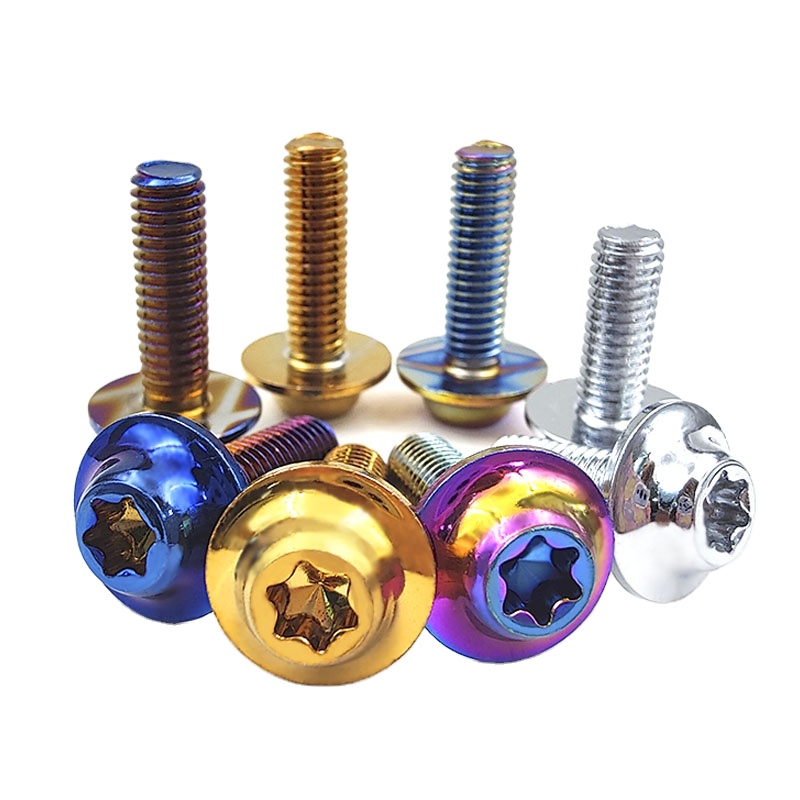
Titanium Alloy GR5 Disc Brake Rotor Bolts Polished Finish ISO Standard Motorcycle Studs
Ultra-lightweight Ti-6Al-4V Grade 5 brake rotor studs with cold-rolled threads ensuring continuous grain flow and superior shear resistance under extreme thermal cycling.
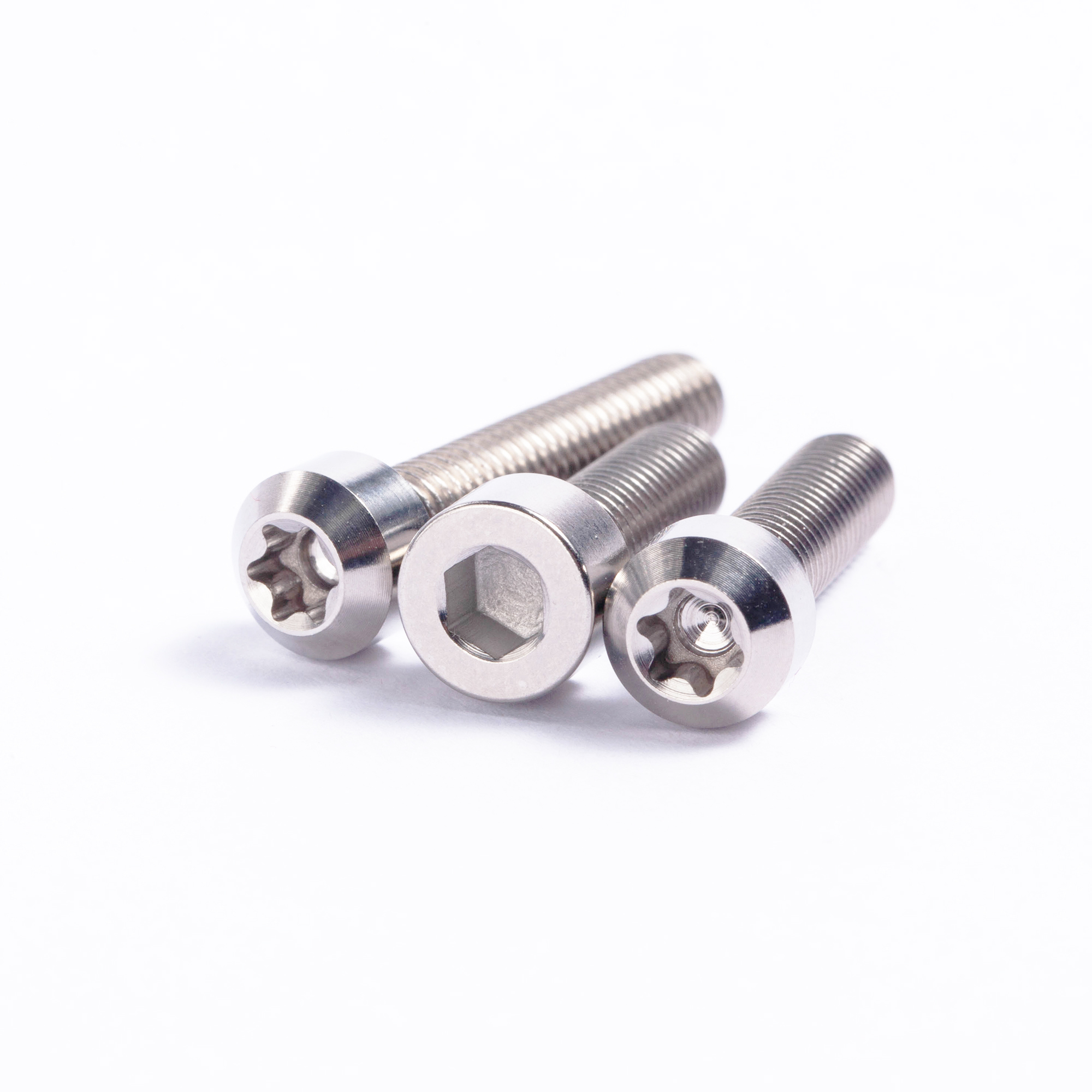
BST-TI Polished Titanium Alloy Gr5 DIN Standard Hexagon Head Disc Brake Motorcycle Heng Bolts for 12 Point M7 M5x80
High-tensile Grade 5 motorsport bolts designed with mirror-polished surfaces, high torque capability, and high shear resistance for extreme vibration resistance.
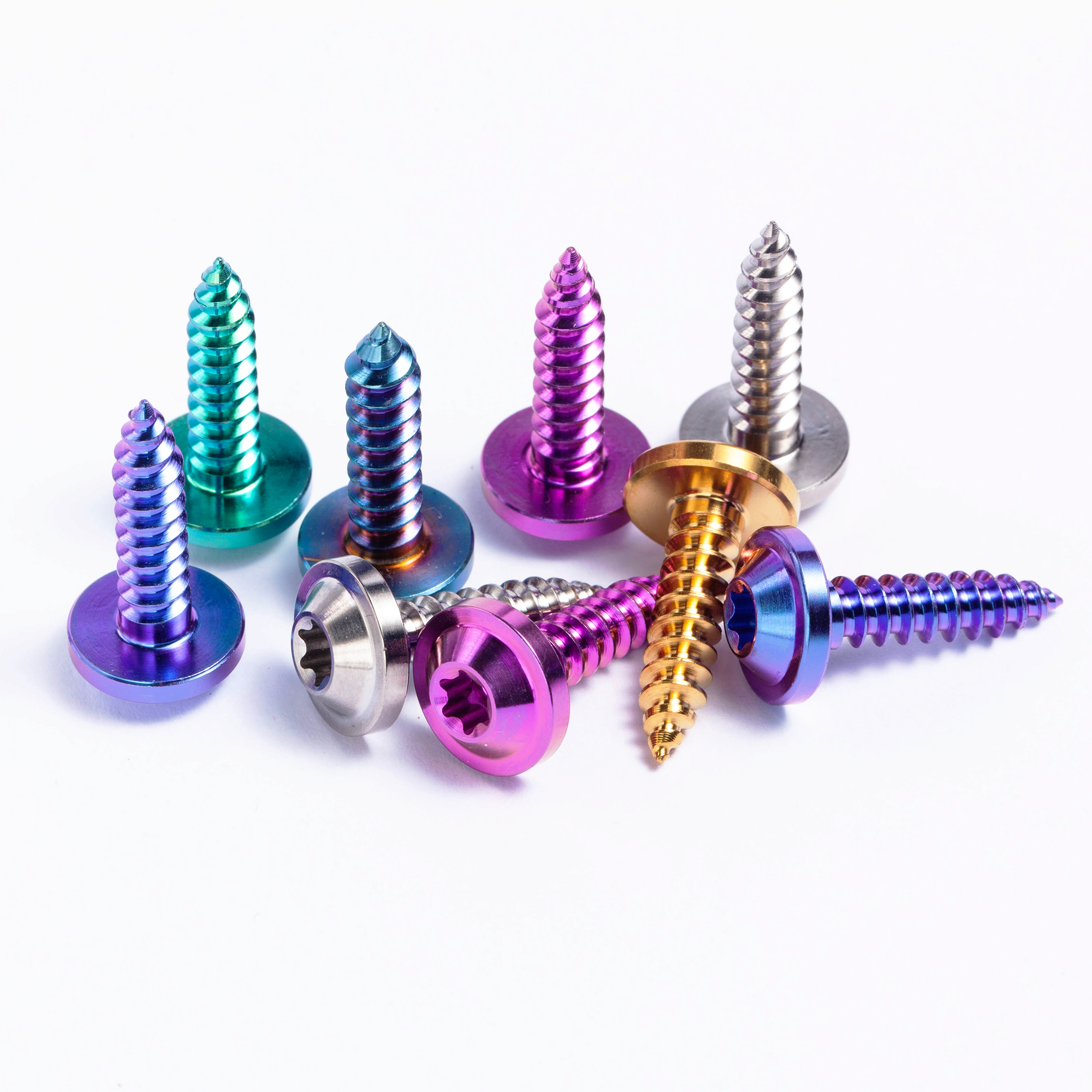
BSTTI TMJ Free Shipping M1.25 UNC Thread Class 10 Polished Titanium Flat Head Bolts Air Filter Body Cover Self-Tapping Screw
Countersunk flat head titanium self-tapping screws fabricated for non-magnetic housings, marine enclosure covers, and high-cleanliness air handling systems.
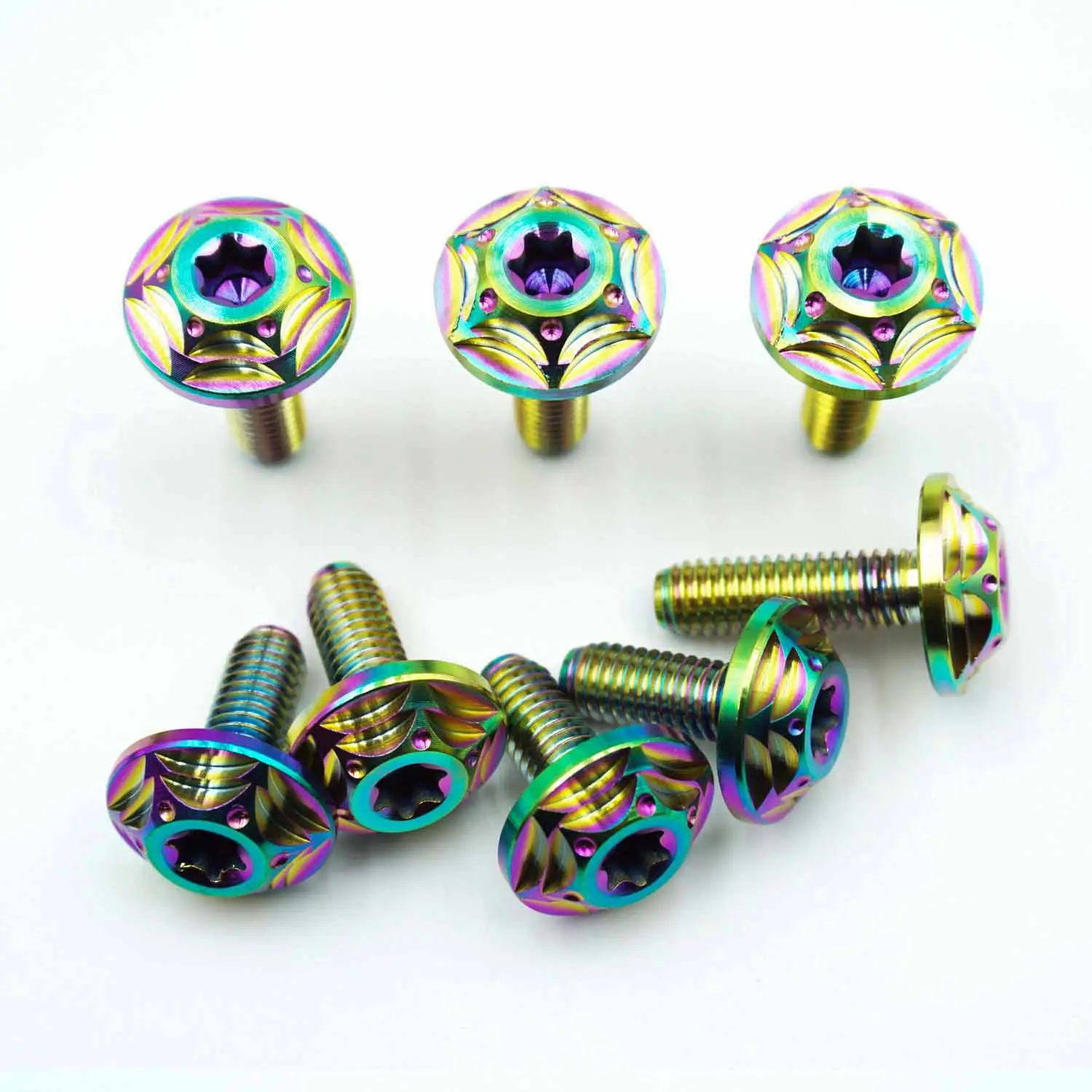
BST-TI M6 M8 M10 Socket Head Titanium License Plate Screws Colorful Industrial Grade Plain Finish Customized Sizes
Hex-socket cap screws featuring electrochemical anodic passivation for salt-spray exposure resistance and distinct corporate branding color schemes.
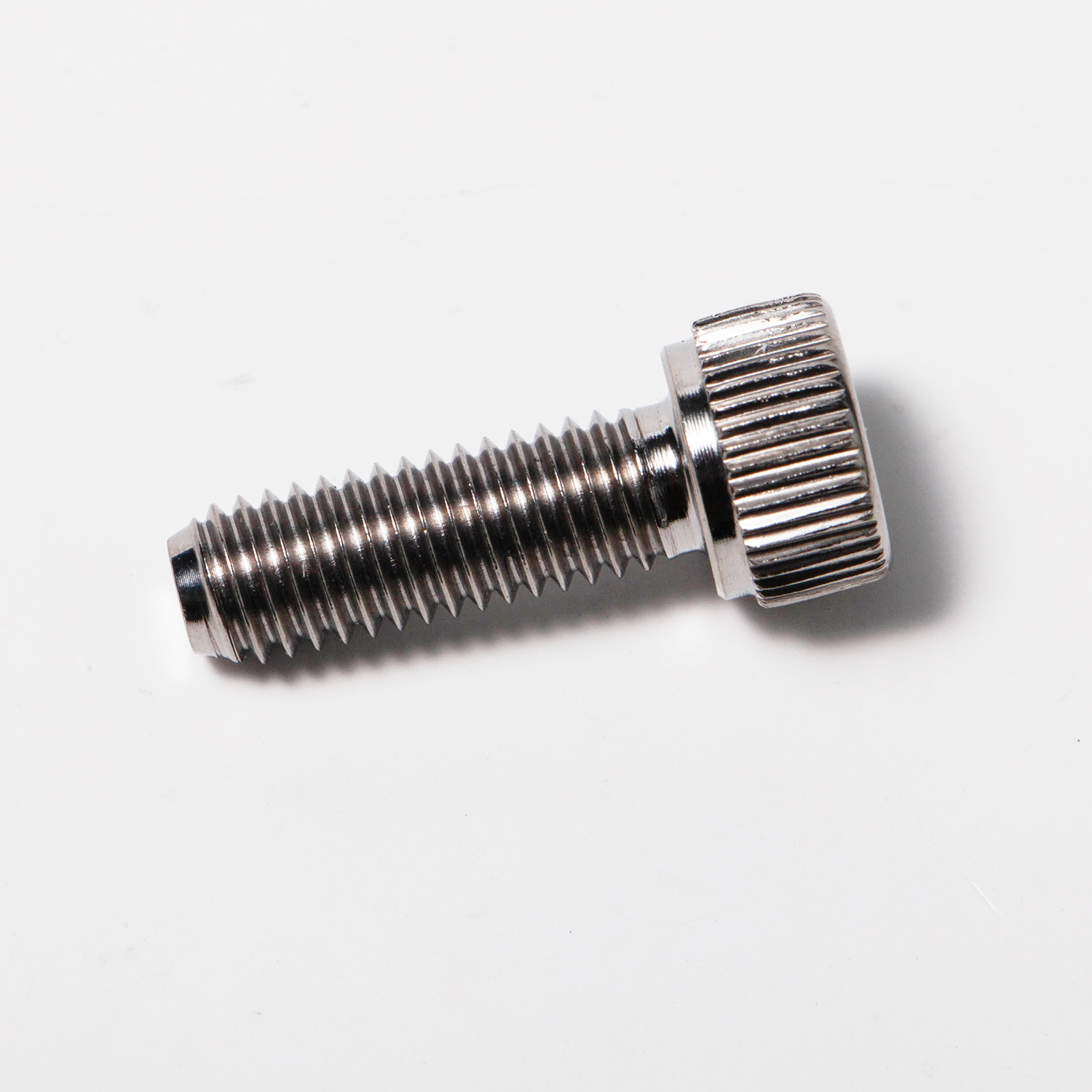
Titanium Alloy Hexagon Socket Head Cap Screws CNC Machined Lightweight Corrosion Resistant Customized Sizes for MTB Road Bike
Tight tolerance (±0.01mm) DIN 912 titanium socket screws optimized for high-end cycling stems, disc mounts, and offshore instrumentation mounts.
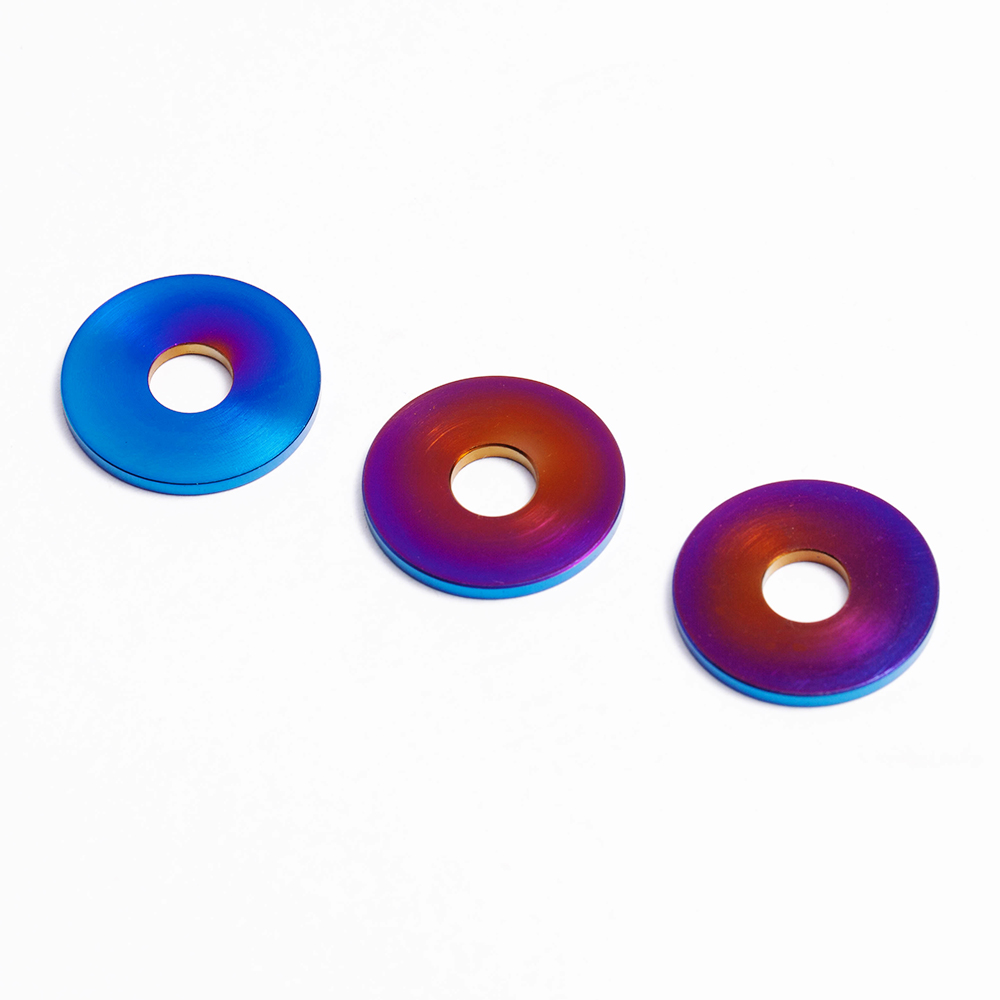
BST-TI Gr5 Titanium Burnt Blue Color Anodized 5mm Washer Spacer with Customized Colors and OEM Available
Thermal-tinted and anodized titanium washers preventing galvanic coupling and distributing high clamping loads without galling or material creep.
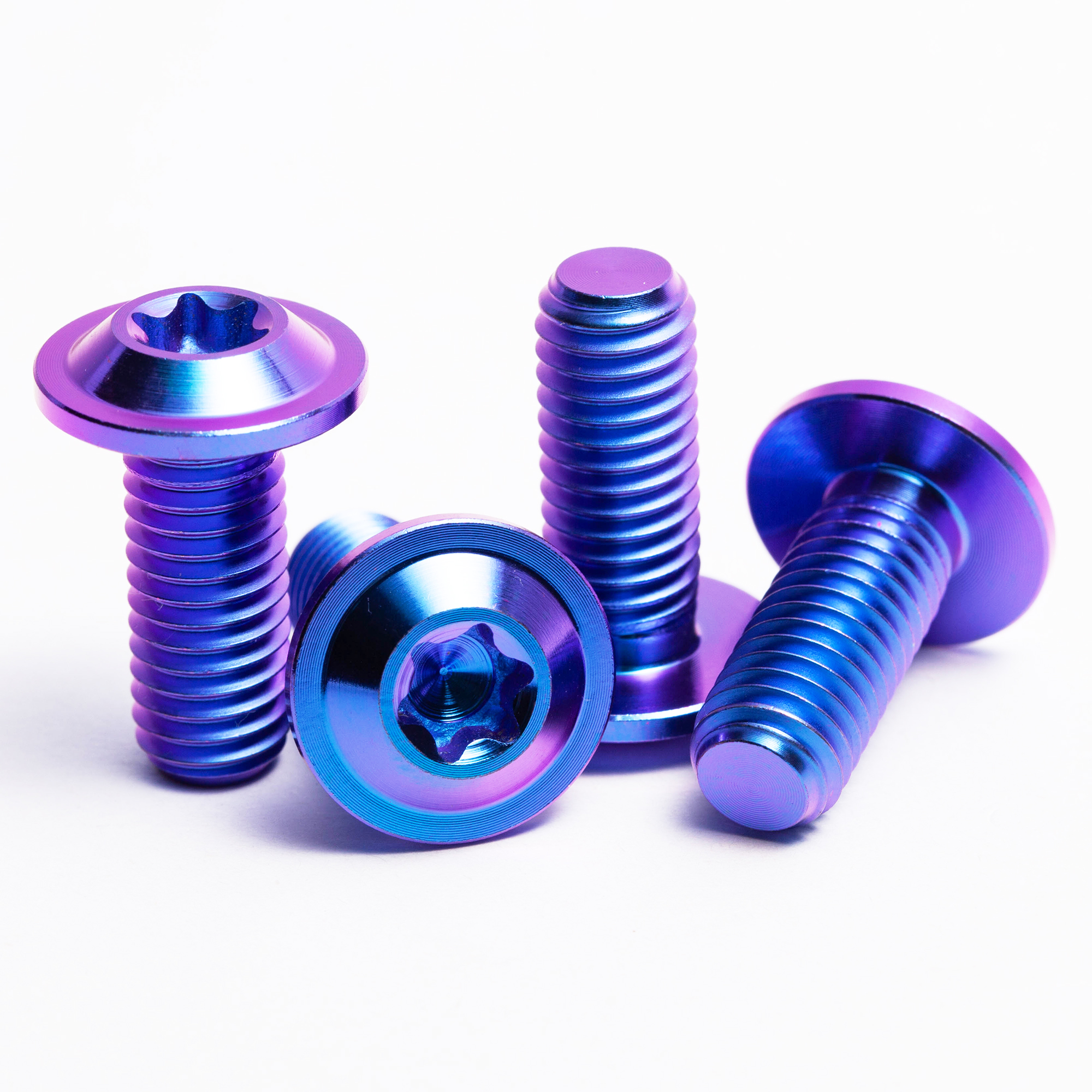
Customized Titanium Disc Head Bolts M6/M8/M10 Gr5 DIN6921 Motorcycle Screws
Integrated flange disc head design eliminating washer requirements, providing uniform clamp force distribution across structural assemblies.
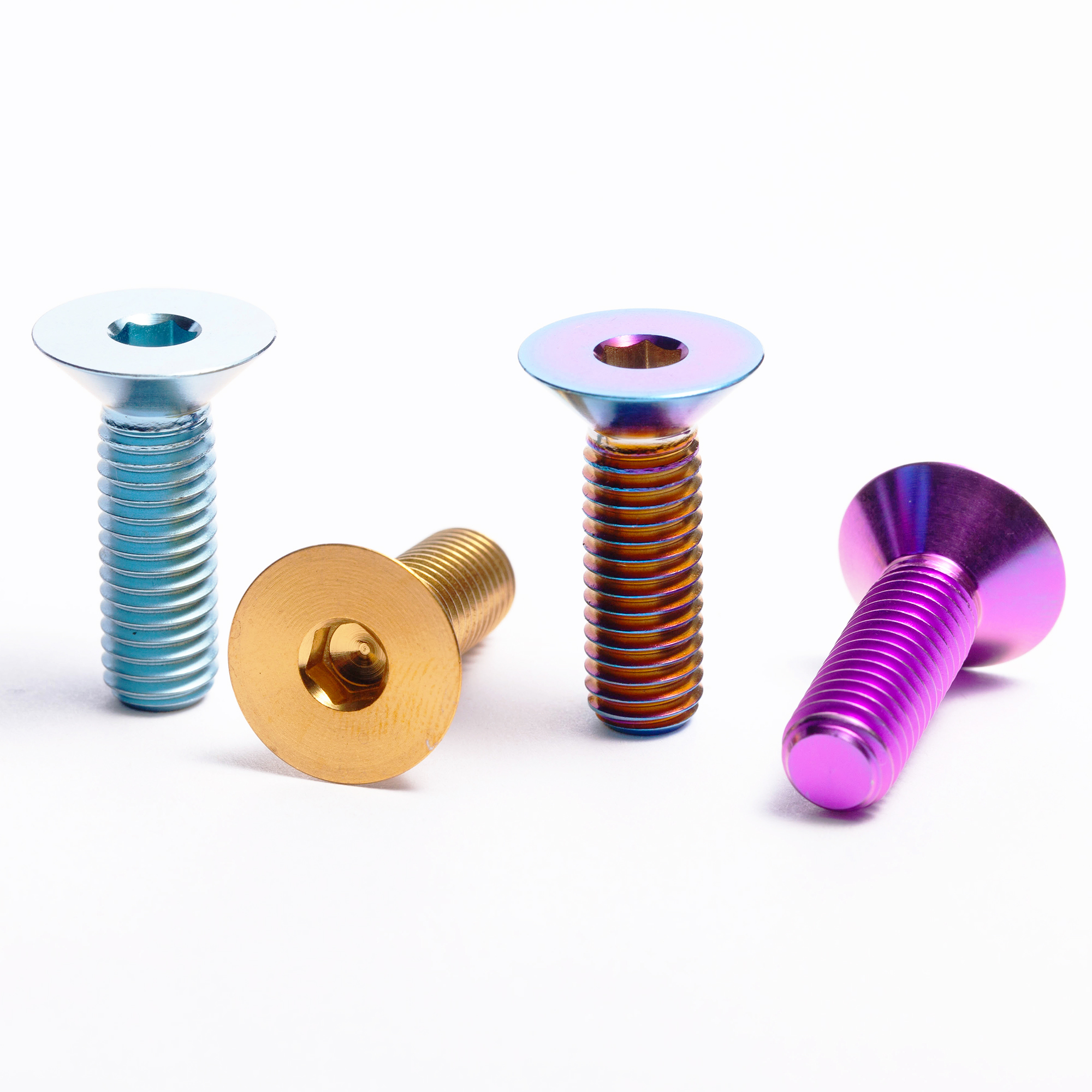
GR5 Titanium Alloy Hex/Torx Bicycle Allen Bolts Customized Sizes Raw Corrosion Resistant & Durable BSTTI Brand
Precision Torx and Allen socket profiles cold-forged to eliminate tool cam-out and stripped heads during automated production assembly line operations.
Engineering Titanium Alloys for Aarhus Maritime, Renewable & Industrial Sectors
Aarhus serves as Denmark’s commercial maritime gateway and the technological epicenter of the Jutland clean-energy corridor. Deploying titanium mill products requires matching alloy microstructures to Denmark's rigorous environmental and operating standards.
Port of Aarhus & Splash-Zone Marine Infrastructure
As Denmark's premier container hub, Aarhus Havn demands materials impervious to brackish North Sea and Kattegat waters. Unalloyed commercially pure Grade 2 (UNS R50400) and Grade 5 (UNS R56400) form an instantaneous, continuous titanium dioxide ($TiO_2$) protective passivation film. This offers complete resistance against microbiologically influenced corrosion (MIC), severe chloride pitting, and crevice attack without sacrificial anodes.
Offshore Wind & Power-to-X (PtX) Fastening Systems
Jutland's offshore wind clusters subject nacelle assemblies, pitch control mechanisms, and subsea cable connectors to relentless cyclic vibrational strain. Grade 5 titanium boasts an exceptional fatigue endurance limit exceeding $510\text{ MPa}$ coupled with an elastic modulus of $114\text{ GPa}$—roughly half that of structural steel. This flexibility absorbs peak harmonic shock loading without brittle fracture or stress corrosion cracking (SCC).
Biotech, Food-Tech & Sanitary Dairy Machinery
The Midtjylland food-processing belt demands total chemical inertness during acidic CIP (Clean-in-Place) sanitation cycles. Titanium Grade 2 ensures zero metallic ion leaching in high-salinity organic acid food processing matrices. Fully biocompatible and compliant with EC 1935/2004 food-contact norms, it ensures food purity while eliminating replacement downtimes common to austenitic stainless steels.
Danish Performance Cycling & Micro-Mobility Tech
In Aarhus, everyday and competitive cycling requires components that withstand wet northern winters and road de-icing salts. Our custom-machined Ti-6Al-4V stem bolts, brake hardware, and through-axles cut hardware weight by 44% compared to 10.9 steel fasteners while eliminating galvanic seizing inside carbon fiber and high-grade alloy frames.
Subsea Instrumentation & Oceanographic Sensors
Marine research hubs across Aarhus University and autonomous marine sensor manufacturers require enclosures capable of deep-water hydrostatic pressure. Titanium alloy raw bars and seamless tubes provide an unmatched strength-to-density ratio ($1.9\times 10^5\text{ N}\cdot\text{m/kg}$), allowing acoustic telemetry and seismic hydrophones to survive depths down to 6,000 meters without wall collapse or saltwater pitting.
Robotic Automation & Dynamic End-Effectors
Modern high-speed sorting and packaging automation lines throughout Denmark require minimum inertial mass on robotic arms. Replacing structural steel brackets and bolts with CNC-machined Grade 5 titanium lowers moving mass, decreases servo motor wear, increases pick-and-place cycle speeds by up to 18%, and preserves tight operational tolerances over millions of operational cycles.
Comparative Technical Benchmark: Titanium Alloys vs. Marine Steels
Material selection requires quantitative justification. Compare physical, mechanical, and electrochemical metrics between certified titanium grades and commonly specified Scandinavian marine metals.
| Alloy Grade / Specification | Density (g/cm³) | Yield Strength (Rp 0.2 MPa) | Tensile Strength (Rm MPa) | Seawater Pitting Resistance | Fatigue Endurance Limit | Magnetic Permeability |
|---|---|---|---|---|---|---|
| Titanium Ti-6Al-4V (Grade 5 / UNS R56400) | 4.43 | 828 | 895 - 1050 | Immune (∞) | ~510 MPa | < 1.00005 (µr) |
| Titanium CP Grade 2 (UNS R50400) | 4.51 | 275 - 410 | 345 - 520 | Immune (∞) | ~240 MPa | < 1.00005 (µr) |
| Stainless Steel 316L (EN 1.4404) | 8.00 | 220 | 520 - 680 | Pitting Risk (PREN ~24) | ~260 MPa | 1.008 - 1.02 |
| Super Duplex Steel 2507 (EN 1.4410) | 7.80 | 550 | 750 - 1000 | High (PREN ≥42) | ~450 MPa | Ferromagnetic |
| High Tensile Alloy Steel Class 10.9 | 7.85 | 940 | 1040 | Rapid Corrosion (Coating Req.) | ~490 MPa | Ferromagnetic |
*Standards verified against ASTM B348 (Titanium Bar), ASTM F136 (Medical ELI Spec), DIN EN ISO 898-1 (Mechanical Properties of Fasteners), and NACE MR0175. Mill Test Certificates (EN 10204 Type 3.1) provided with each shipment.
Localized Sourcing Trends Across Aarhus & The Danish Industrial Landscape
Procurement methodologies across Scandinavian manufacturing are transitioning rapidly toward verified ESG compliance, circular life cycles, and digital supply integrity.
1. Decarbonization & Circular Titanium Supply Chains
Danish corporate sustainability mandates require suppliers to document embodied carbon footprints. Jiaxing Wexra adopts vacuum arc remelting (VAR) processes with optimized sponge-to-melt energy ratios and comprehensive scrap recycling loops. Our direct mill shipments to the Port of Aarhus avoid intermediaries, reducing the carbon footprint of transport logistics across the Eurasia corridor.
2. Direct Mill Partnerships Replacing Regional Stockists
Historically, mid-sized Jutland manufacturers relied on regional Scandinavian distributors, paying markups ranging from 30% to 65% for localized warehousing. Today, forward-looking engineering procurement departments in Aarhus establish direct mill-to-factory pipelines with Chinese titanium producers. This setup provides custom tolerances, custom anodized finishes, and laser-marked heat codes directly at the manufacturing level.
3. Strict Compliance with EU REACH & RoHS Regulations
Denmark enforces some of the European Union's strictest chemical safety standards via the Danish Environmental Protection Agency (Miljøstyrelsen). Our titanium materials and surface finishing processes are verified free of hexavalent chromium, lead, cadmium, and SVHCs (Substances of Very High Concern), ensuring frictionless custom clearance at Danish ports of entry.
4. Growth in Specialized Additive & 5-Axis CNC Integration
Aarhus’s engineering incubators and R&D centers increasingly demand bespoke titanium raw geometries—such as ultra-straight ground bar stock (h7 tolerance) and high-density billets tailored for direct 5-axis CNC machining centers. We supply precision-ground stock that eliminates tool chatter and minimizes insert tool wear during client-side finishing operations.
Frequently Asked Questions: Sourcing Titanium in Aarhus, Denmark
Direct answers addressing technical validations, import protocols, logistics, and metallurgical standards for Danish industrial buyers.
Do your titanium shipments to Aarhus include EN 10204 3.1 Inspection Certificates? +
Yes. Every titanium raw material order (bars, billets, sheets) and fastener batch shipped to Denmark is accompanied by a genuine EN 10204 Type 3.1 Mill Test Certificate (MTC). This includes complete chemical composition analysis (testing for Ti, Al, V, Fe, C, N, H, and O via optical emission spectroscopy and inert gas fusion) and quantitative mechanical test results (yield, tensile, elongation, and reduction of area) with full heat-number traceability back to the initial ingot melt.
What is the standard transit time and customs clearance process for shipments to Aarhus? +
For expedited prototyping and high-priority machine maintenance batches, air freight via Billund Airport (BLL) or Copenhagen (CPH) delivers within 4 to 7 business days. For volume manufacturing consignments, maritime container lines transit directly from Ningbo/Shanghai to the Port of Aarhus within 28 to 35 days. We furnish all necessary Harmonized System (HS) documentation, commercial invoices, and packing lists to facilitate rapid clearance through the Danish Customs Agency (Toldstyrelsen) under DDP or CIF incoterms.
How do you resolve galvanic corrosion concerns when titanium fasteners interface with aluminum? +
While titanium itself is noble and immune to saltwater corrosion, coupling it directly with an active metal like 6000-series aluminum in marine Kattegat atmospheres can induce galvanic degradation of the aluminum. To solve this, we engineer custom anodized barrier layers, deliver fluoropolymer-treated threads, and supply CNC-turned titanium washers and Delrin isolation spacers that electrically isolate dissimilar metal junctions, preventing galvanic potential differences.
Why choose Grade 5 (Ti-6Al-4V) over commercially pure Grade 2 for subsea equipment? +
Grade 2 is pure unalloyed titanium; it delivers extraordinary ductility and exceptional chemical resistance, but its tensile strength is limited to ~345–520 MPa. Grade 5 is an alpha-beta alloy containing 6% aluminum and 4% vanadium, elevating tensile strength past 895–1000 MPa while maintaining excellent corrosion resistance. For high-stress applications such as subsea pressure vessels, offshore bolting, and cycling drivetrain parts, Grade 5 prevents yielding and fatigue failure under heavy mechanical loads.
Can Jiaxing Wexra fabricate custom OEM titanium components according to Danish CAD drawings? +
Yes. We specialize in build-to-print OEM/ODM manufacturing. Danish engineering firms regularly supply 2D drawings (PDF, DWG) and 3D native CAD models (STEP, IGES). Our CNC facility operates 3-axis, 4-axis, and 5-axis high-speed machining centers alongside precision Swiss-type lathes, thread rolling machinery, and laser cutting equipment capable of maintaining continuous tolerances of ±0.01 mm.
Jiaxing Wexra Titanium: Your Dedicated Production Partner
Based in Zhejiang, China, Jiaxing Wexra Titanium Products Co., Ltd. operates an integrated precision manufacturing facility designed exclusively for titanium and reactive refractory alloys.
ISO 9001:2015 Quality Infrastructure
Our quality management system oversees every manufacturing phase from raw ingot vacuum melting inspection to CNC machining, multi-stage ultrasonic degreasing, and final optical packaging inspection. Full traceability is maintained with archival records stored for a minimum of 10 years.
Thread Rolling vs. Thread Cutting
For all dynamic load-bearing fasteners, we utilize specialized hydraulic thread rolling dies instead of single-point lathe cutting. Thread rolling produces unbroken metallurgical grain flow lines along the root and flank contours, boosting dynamic fatigue resistance by up to 35% and virtually eliminating notch sensitivity.
Comprehensive In-House Surface Engineering
We provide in-house vibratory deburring, precision micro-glass bead blasting, optical polishing, Type II anodization, and decorative electrolytic color anodizing (burnt blue, gold, purple, black PVD coating). Our anodization methods do not alter pitch diameters or thread tolerances.
Bespoke Prototyping to High-Volume Runs
Whether you require a pilot run of 50 customized through-axles for an Aarhus cycling brand or a 250,000-piece container load of Grade 5 hex studs for wind nacelle production, our scalable machining cells deliver reliable dimensions and consistent batch quality without prohibitive setup surcharges.
Complete Ultrasonic & Dimensional Metrology
Non-destructive examination (NDE) capabilities include immersion ultrasonic inspection to AMS 2631 standards for bars and billets, ensuring structural integrity against micro-voids and inclusions. Thread pitch diameters are verified with calibrated optical comparators and multi-axis coordinate measuring machines (CMM).
Nordic Export Logistics & ERP Packaging
We provide export packaging tailored to Scandinavian automated inventory setups, featuring barcode labeling, VCI anti-oxidation wrapping, and reinforced eco-friendly crating. Compliant with the German and European EPR circular packaging standards for rapid, hassle-free clearance.
Connect Directly with Our Titanium Technical Engineering Team
Planning an OEM fabrication project, seeking certified Grade 2/Grade 5 titanium raw bars, or transitioning marine equipment in the Aarhus market away from failing stainless steels? Send your dimensional prints, material specifications, or procurement schedules for an engineering review and direct factory quote within 8 business hours.
Contact Us