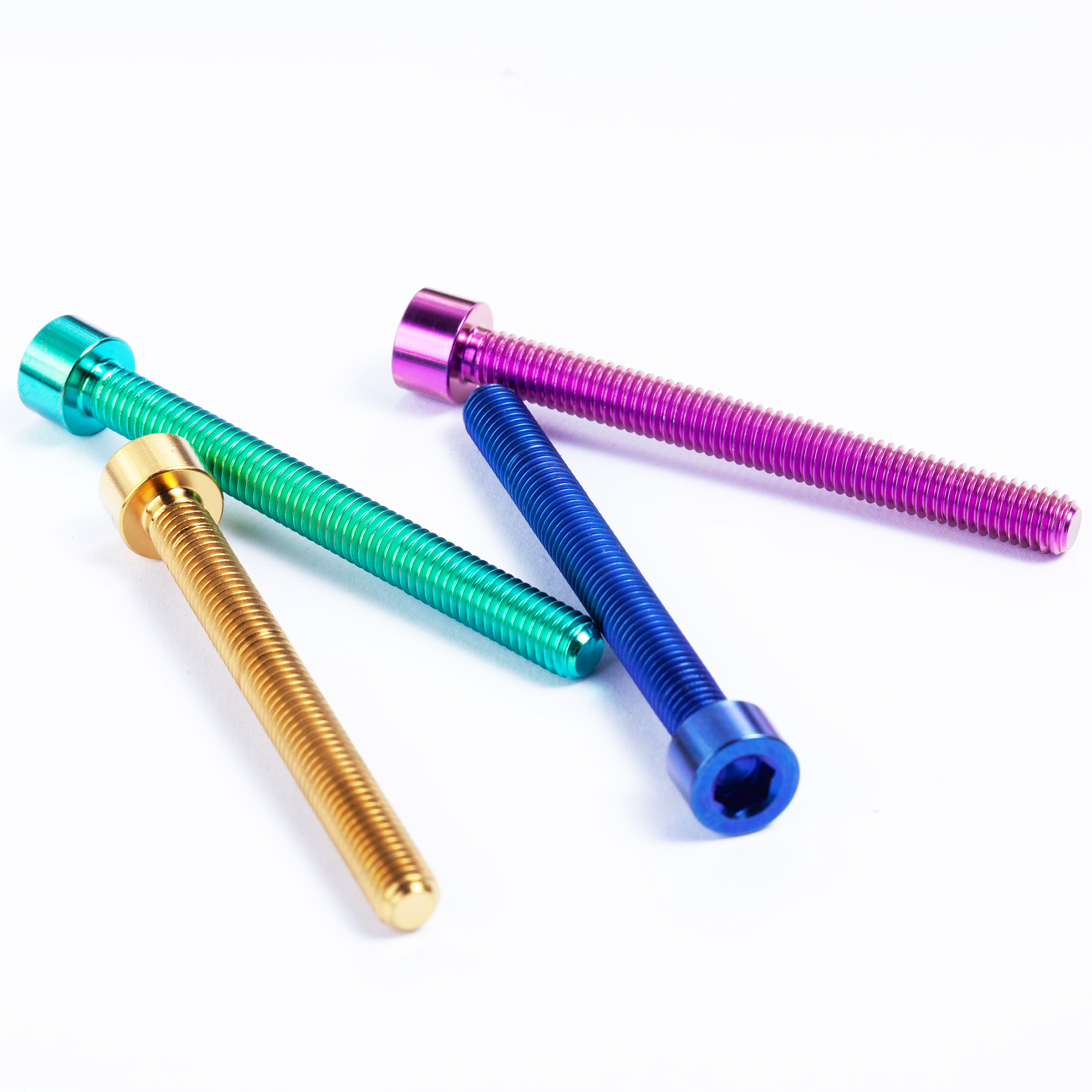
±0.01 mm
CNC Machining Accuracy
≥ 895 MPa
Grade 5 Tensile Yield
44% Less
Weight vs. Grade 10.9 Steel
ISO 9001
Certified Quality Traceability
Precision Portfolio
High-Integrity Caliper & Disc Fastening Systems
Engineered for high-stress hydraulic calipers, direct disc mounting, and vibration-intense torque loads across racing, e-mobility, and aerospace assemblies.
Technical White Paper
Engineering Superiority: Titanium Brake Calipers in Bristol's High-Tech Sector
A rigorous metallurgical and mechanical breakdown for Bristol, Filton, and South Gloucestershire engineering directors demanding peak thermal stabilization and unsprung mass reduction.
In modern high-performance mechanical systems, the brake caliper operates at the intersection of violent kinetic dissipation and continuous thermal cycling. For tier-1 procurement managers, performance tuning workshops, and specialized OEM designers based in Bristol and the wider West of England aerospace hub, transitioning from conventional cast aluminum or ductile iron brake calipers to bespoke CNC-machined Grade 5 Titanium (Ti-6Al-4V) represents an undeniable technological leap.
Titanium exhibits an exceptional thermal conductivity profile relative to traditional lightweight alloys. While aluminum transfers immense friction heat directly into the hydraulic brake fluid—frequently precipitating fluid boiling, vapor lock, and severe brake fade during prolonged track or high-load descent conditions—Grade 5 Titanium acts as an authentic thermal barrier. Its lower thermal conductivity (~6.7 W/m·K compared to aluminum's ~120–180 W/m·K) protects critical internal seals and maintains constant hydraulic pressure across extreme operating envelopes exceeding 650°C.
| Material Category | Density (g/cm³) | Yield Strength (MPa) | Thermal Cond. (W/m·K) | Thermal Expansion (10⁻⁶/K) | Operating Ceiling |
|---|---|---|---|---|---|
| Titanium Gr5 (Ti-6Al-4V) | 4.43 | 825 – 895 | 6.7 | 8.6 | 450°C – 600°C |
| Billet Aluminum (6061-T6) | 2.70 | 276 | 167 | 23.1 | 150°C – 200°C |
| Motorsport Aluminum (7075-T6) | 2.81 | 503 | 130 | 23.4 | 120°C – 160°C |
| Alloy Steel (Grade 10.9) | 7.85 | 940 | 42.6 | 11.5 | 350°C – 450°C |
Unsprung Mass Optimization
Reducing unsprung rotational and corner weight directly sharpens suspension response frequencies, dampens harmonic vibrations, and enhances directional responsiveness across challenging apexes.
Caliper Piston Heat Resistance
By pairing titanium monoblock calipers with titanium pistons, hydraulic fluid retention improves drastically, eliminating pad knock-back and piston swelling during extreme braking events.
Corrosion & Salt Immunity
Bristol's coastal proximity to the Severn Estuary accelerates road-salt-induced electrolytic pitting on cast metals. Titanium forms an instant, passive TiO₂ oxide shield that never chips or rusts.
Regional Integration
Localized Engineering Application Scenarios in Bristol
Empowering Bristol's advanced manufacturing infrastructure, motorsport dynasties, and green transport initiatives.
Aerospace Valley R&D (Filton)
Bristol's world-renowned aerospace testing centers frequently utilize our customized titanium caliper brackets, hydraulic slave mounts, and bleed assemblies for experimental high-g testing apparatus where thermal resistance and mechanical zero-deflection are essential design prerequisites.
Castle Combe & SW Motorsport
Surrounding circuit racers and track-day specialists demand bespoke four-pot and six-pot billet titanium caliper rebuilds and lightweight floating disc carrier bolts to mitigate corner inertia on short-braking technical courses throughout the South West racing belt.
Clean Maritime & Urban Fleet EV
Harbour marine operators and Bristol Clean Air Zone fleet developers require corrosion-proof regenerative brake calipers and locking fasteners that remain completely unaffected by salt fog, road brine, and continuous low-emission urban cycling.
Market Dynamics
Bristol & South West Engineering Trends Shaping Sourcing
The convergence of electrification, additive design, and stringent environmental procurement in the West of England.
1. EV Weight Reduction Imperatives
Electric performance powertrains add significant battery bulk. Sourcing managers across Avonmouth and Southmead are mandating substantial mass-reduction metrics on unsprung wheel components to maintain range benchmarks without compromising structural deceleration force.
2. Regenerative Corrosion Resistance
With electric regenerative braking systems handling initial decelerations, mechanical calipers remain unengaged for longer periods, exacerbating corrosion and salt seizure on cast iron units. Grade 5 titanium offers lifetime corrosion immunity under humid British winter conditions.
3. Decarbonized Component Life
Under modern UK procurement frameworks, the lifecycle assessment (LCA) of vehicle hardware is scrutinised. Titanium's indefinite operational lifespan and total recyclability eliminate the continuous replacement schedules common to oxidised cast components.
4. Additive & Hybrid Machining
Bristol's advanced machining companies are shifting toward hybrid workflows: combining topological titanium 3D printing with precision multi-axis CNC secondary finishing for intricate internal cooling veins unattainable through conventional metal casting.
Enterprise Credentials
Why Choose Wexra Titanium for Your OEM/ODM Manufacturing
Comprehensive vertical integration from certified raw titanium stock to high-tolerance 5-axis CNC machining, specialized anodizing, and global technical export compliance.
Tight ±0.01 mm CNC Tolerance
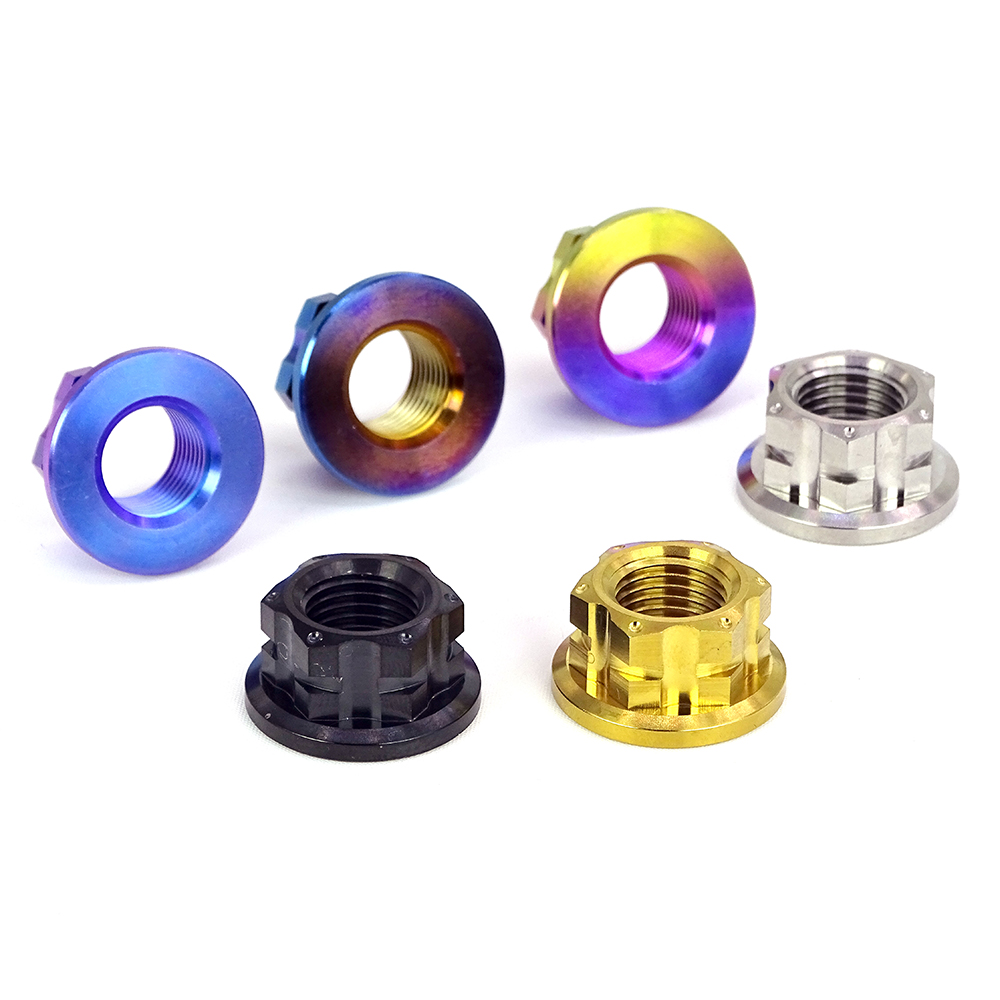
Equipped with modern CNC turning, 4/5-axis milling centers, and thread rolling machines. We manufacture caliper housings, hydraulic banjos, bleed nipples, and high-tensile mounting studs that seamlessly integrate into the most demanding assemblies.
Full Metallurgical Traceability
Operating under an audited ISO 9001:2015 quality management structure. We supply complete Mill Test Certificates (MTC), spectroscopic chemical composition reports, and RoHS/REACH compliance documentation with every export batch.
UKCA & CE Certified Exporting
With an export distribution footprint spanning the United Kingdom, Germany, the USA, and Canada, we handle specialized DDP freight logistics, EPR registrations, and deliver robust technical English support direct to British engineers.
Procurement Knowledgebase
Frequently Asked Questions by Bristol Procurement Engineers
Essential guidance addressing material selection, galling prevention, compliance certificates, and bespoke prototyping lead times.
Q: Should we specify Grade 2 or Grade 5 Titanium for brake caliper applications?
For brake calipers, piston assemblies, and caliper mounting brackets, Grade 5 (Ti-6Al-4V) is mandatory. It yields a minimum tensile strength of 895 MPa, matching or exceeding Class 10.9 high-tensile steel fasteners while offering superior fatigue thresholds. Grade 2 is commercially pure (tensile ~345 MPa) and should be reserved solely for non-structural fluid reservoirs, washers, or aesthetic heat shields.
Q: How does Wexra address titanium thread galling in high-torque caliper mounts?
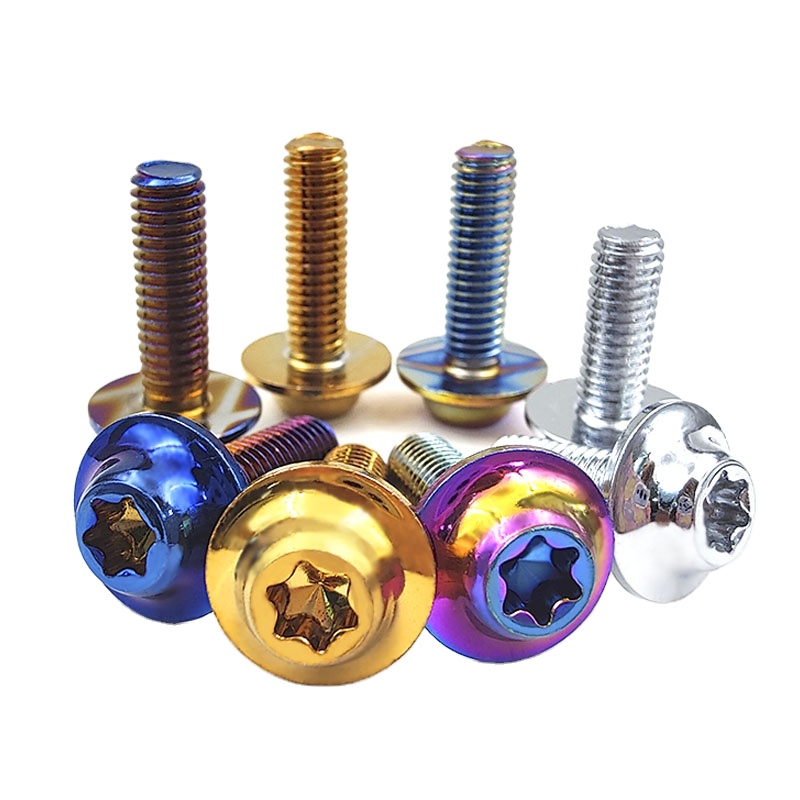
Thread galling occurs when friction strips the protective oxide layer under heavy clamping loads. We mitigate galling through rolled (cold-worked) thread forming rather than cut threading, imparting smoother root finishes. Furthermore, we provide specialized surface treatments including micro-polishing, PVD nitriding, and advise the application of anti-seize paste or copper slip during assembly.
Q: Can Wexra manufacture custom monoblock calipers directly from CAD models?
Yes. Our engineering division operates a streamlined OEM/ODM pipeline working directly from native STEP, IGES, or 2D dimensioned engineering drawings. We conduct rigorous Design for Manufacturability (DFM) reviews, suggest optimal tool clearances for hydraulic bore channels, and deliver initial rapid prototypes within 10 to 15 working days.
Q: What documentation is provided for UK aerospace and motorsport tier audits?
Every dispatch to UK clients includes complete traceability documentation: EN 10204 3.1 Mill Test Certificates verifying ASTM B348 chemical and mechanical compliance, full coordinate measuring machine (CMM) dimensional inspection reports, and UKCA / RoHS declarations ensuring frictionless regulatory approval.
Q: Does titanium anodizing alter the critical tolerances of hydraulic cylinder bores?
No. Unlike aluminum hard-anodizing which deposits significant material thickness (25–50 microns), titanium anodizing is an electrolytic oxidation process that alters light refraction by adjusting the microscopic titanium oxide (TiO₂) barrier without building measurable dimensions, preserving sub-micron hydraulic cylinder fits.
Q: What is the standard production and shipping lead time to Bristol and the South West?
Bespoke prototype samples typically require 2 to 3 weeks for CNC programming, billet cutting, and surface finishing. Volume production runs are delivered within 4 to 6 weeks. We support urgent express air couriers directly to Bristol Airport (BRS) or consolidated maritime arrivals via Port of Bristol (Avonmouth/Royal Portbury Docks).