Featured Titanium Fasteners for European Racing & Custom Builders
Direct factory supply of cold-forged and CNC-lathed Grade 5 (Ti-6Al-4V) components configured for superbike unsprung weight reduction, thermal endurance, and permanent corrosion resistance.
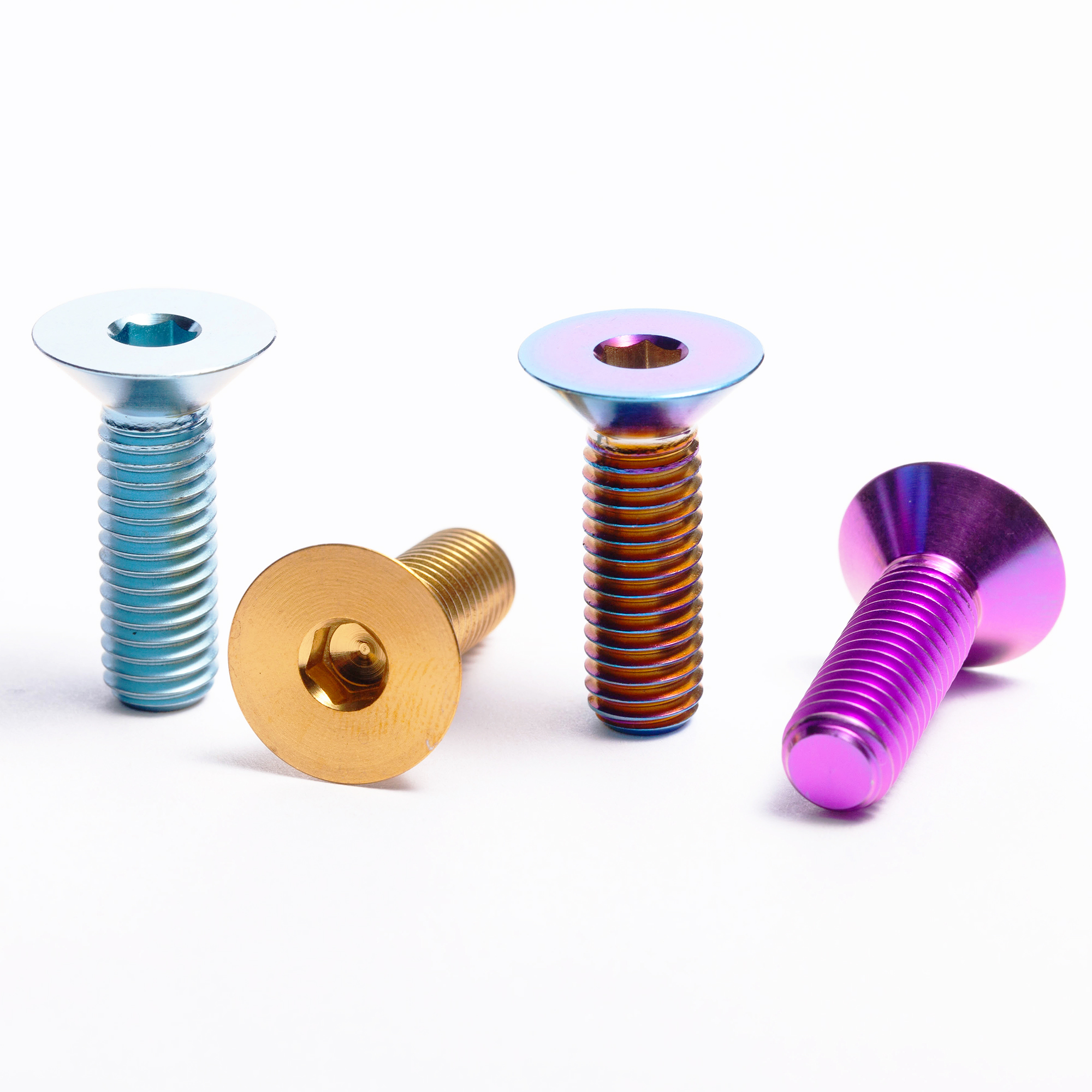
GR5 Titanium Alloy Hex/Torx Bicycle & Moto Allen Bolts
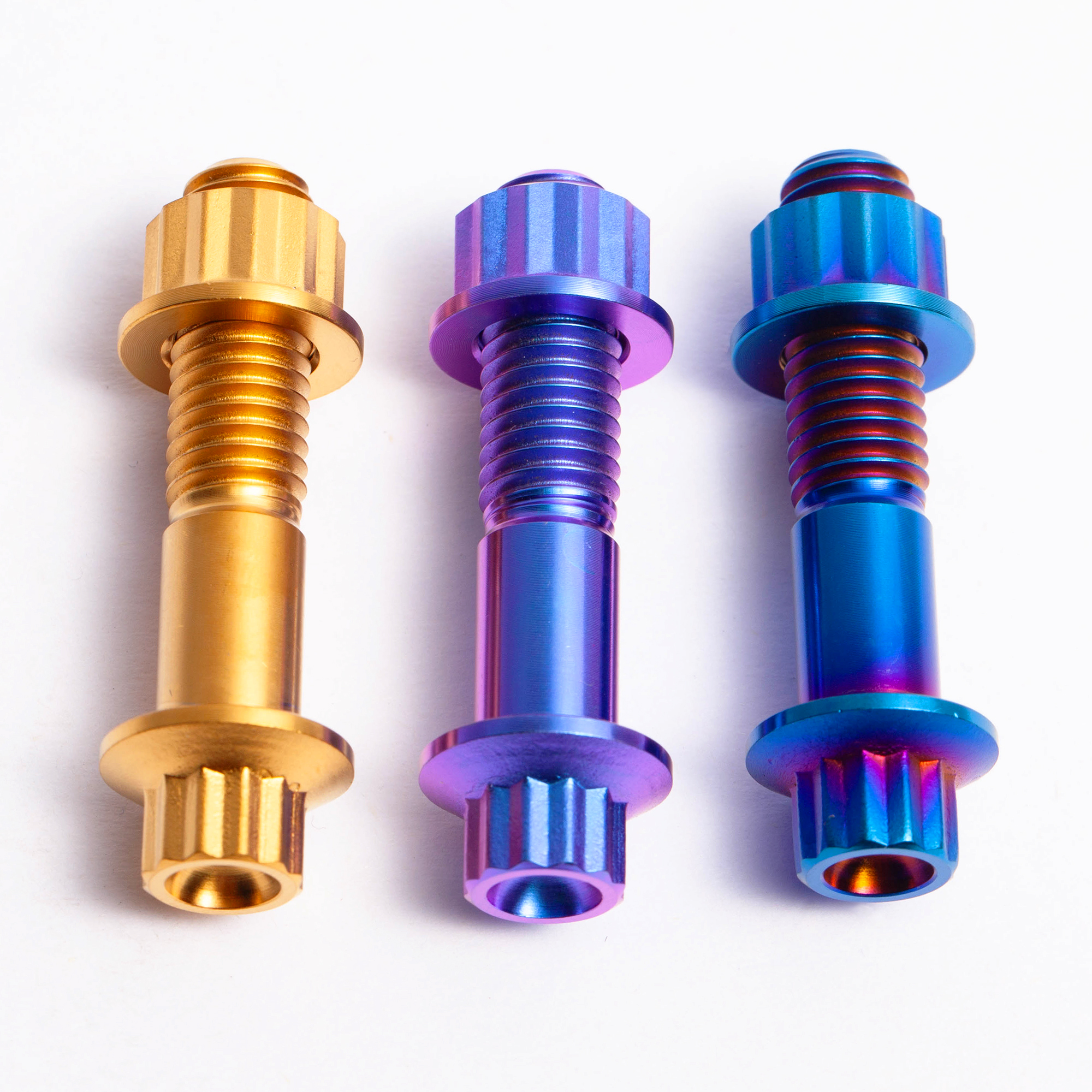
GR5 Titanium Alloy Double Stud Exhaust Pipe Studs M8/M10
LENS 13 Precision Light Multi-Color Temperature Assembly Lamp
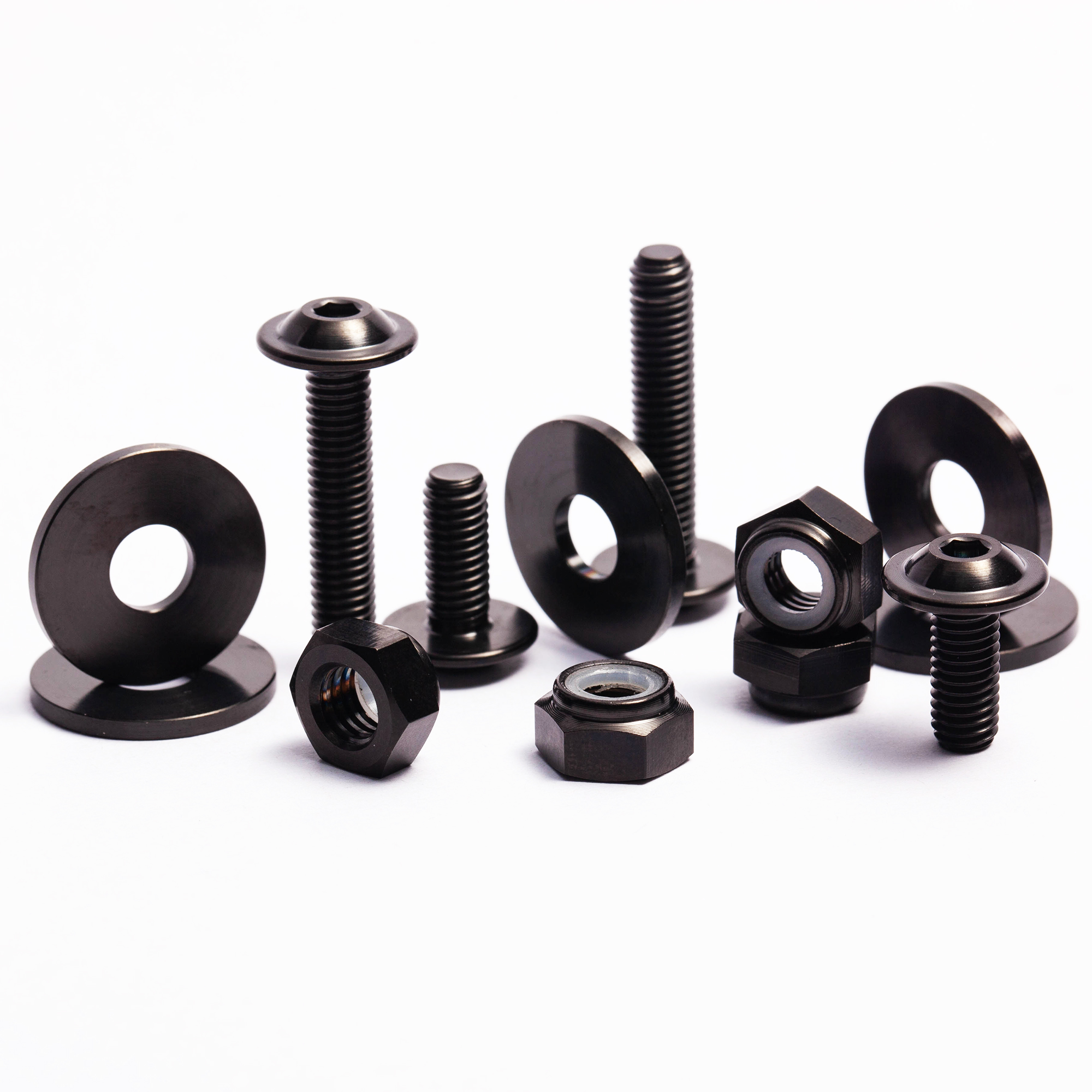
Customized Titanium Gr5 Torx Head Flange Bolts & Nuts
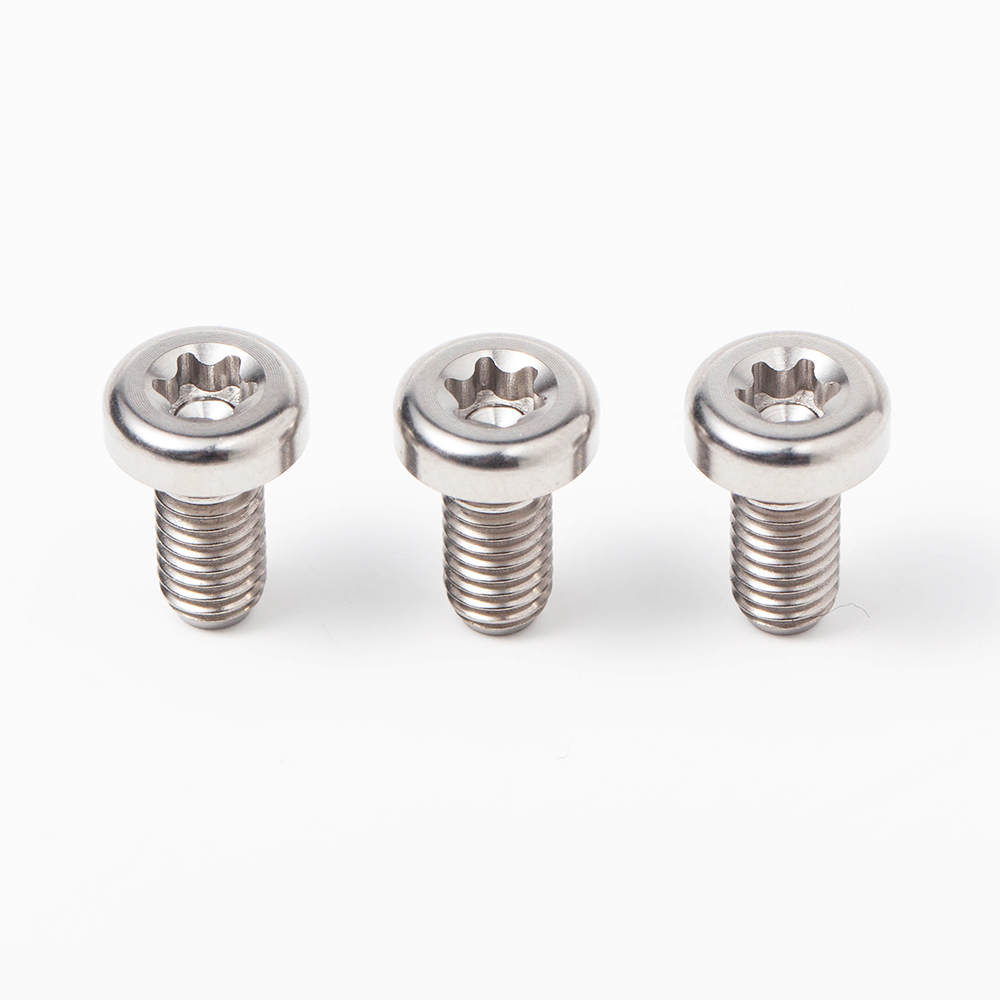
BST-TI M6 M8 High Strength Light Weight Hex Button Head Bolts

BSTTI Customized Violet Step Torx Head Grade 5 ISO Screws
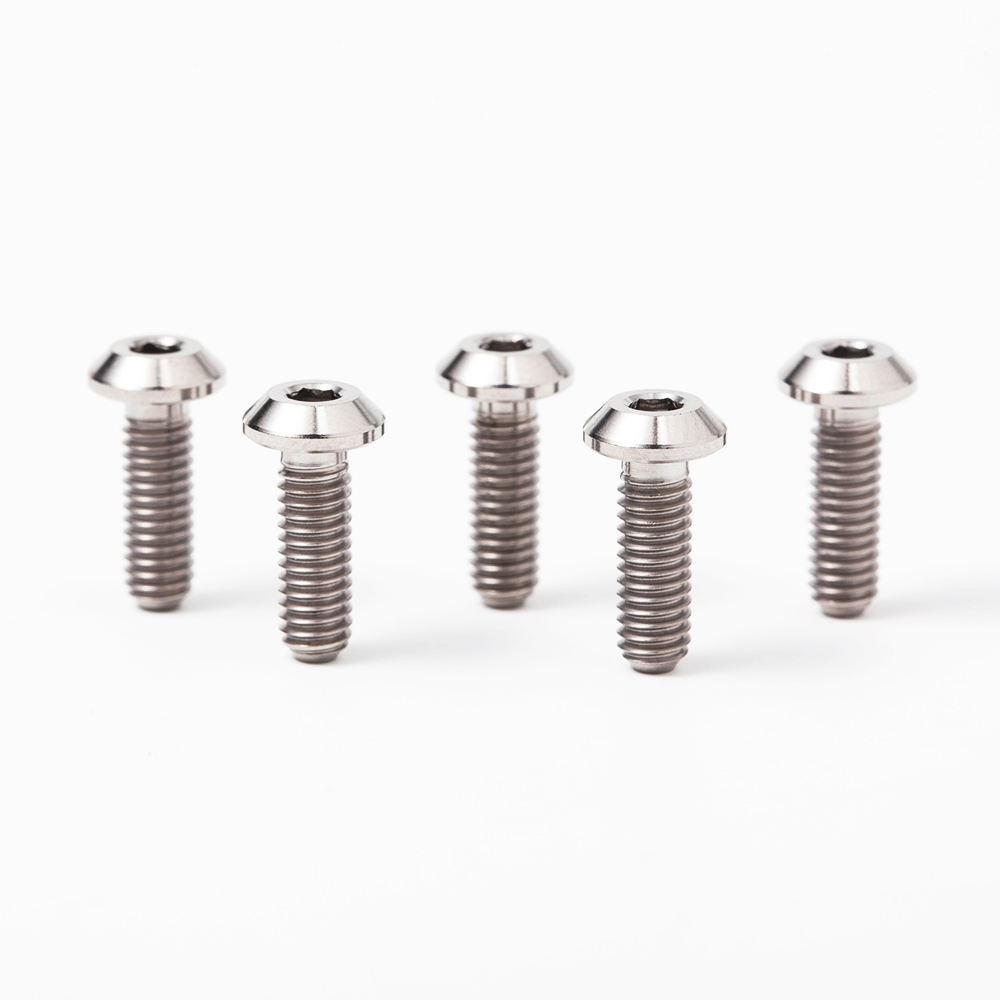
M5 M6 Metric Titanium Disc Brake Screws Grade 5 (ASTM F136)
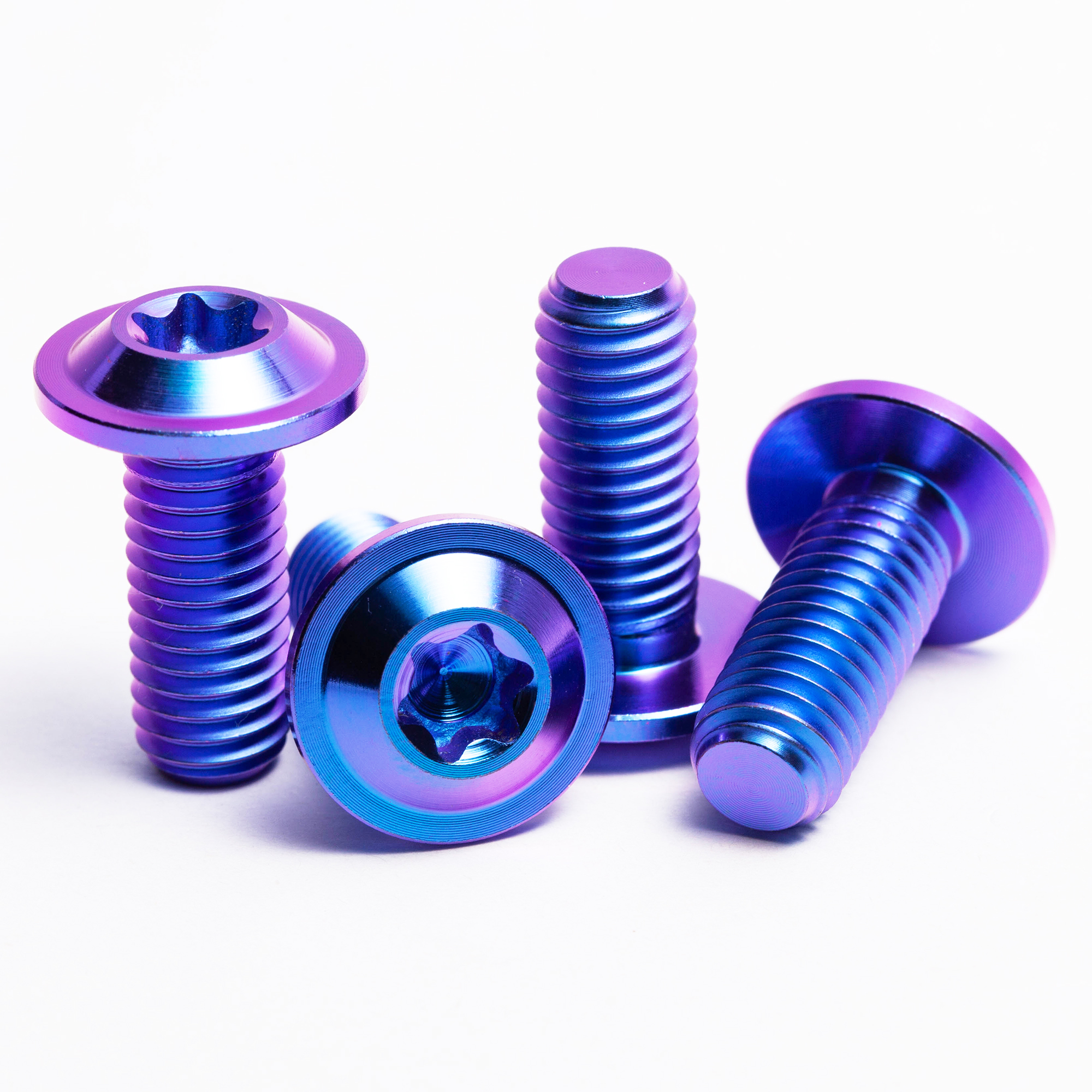
Customized Titanium Disc Head Bolts M6/M8/M10 DIN6921 Flange
Engineering Whitepaper: Metallurgical Superiority of Ti-6Al-4V in High-Stress Two-Wheeler Dynamics
For motorcycle racing teams, aftermarket parts suppliers, and high-performance workshop fabricators across Frankfurt am Main and the broader Hessen region, reducing unsprung mass while safeguarding torsional clamping force represents the core benchmark of mechanical tuning. As an ISO 9001:2015 certified manufacturer with dedicated CNC production centers in Jiaxing, Wexra Titanium delivers OEM/ODM fastener solutions engineered specifically to address the extreme mechanical stresses encountered on European tracks and high-speed Autobahn corridors.
Standard automotive fasteners rely on quenched and tempered alloy steels (Property Class 8.8, 10.9, or 12.9) or austenitic stainless steels (A2-70, A4-80). While Class 10.9 bolts achieve high yield strength, their density of approximately 7.85 g/cm³ imparts significant gyroscopic inertia and unsprung mass to spinning wheel assemblies, brake carriers, and oscillating swingarm linkages. Conversely, standard stainless fasteners present lower fatigue thresholds and are prone to galling and brittle shearing under cyclical shock loads. Wexra's aerospace-derived Grade 5 Titanium (Ti-6Al-4V, Werkstoff 3.7165) provides the optimum metallurgical middle ground: a density of 4.43 g/cm³ coupled with tensile strength exceeding 950 MPa.
| Material Specification | Density (g/cm³) | Tensile Strength (MPa) | Yield Strength (MPa) | Fatigue Strength (10₷ cycles) | Corrosion Mechanism (Winter Salt/De-icer) |
|---|---|---|---|---|---|
| Wexra Gr5 Titanium (Ti-6Al-4V) | 4.43 | 950 – 1050 | 880 – 920 | 510 MPa | Zero Chemical Degradation (Passivated TiO₂) |
| Class 10.9 Carbon / Alloy Steel | 7.85 | 1040 | 940 | 420 MPa | Pitting, galvanic surface rust upon zinc wear |
| Stainless Steel A2-70 (AISI 304) | 7.93 | 700 | 450 | 240 MPa | Vulnerable to crevice and chloride stress cracking |
| 7075-T6 Billet Aluminum | 2.81 | 570 | 505 | 160 MPa | Rapid stress-corrosion under road brine; shear prone |
A vital point of engineering differentiation in Wexra titanium fasteners is our utilization of CNC cold thread rolling rather than conventional chip-cutting lathe thread milling. Thread rolling reshapes the titanium alpha-beta grain flow continuously along the root and crest contours rather than shearing the crystalline structure. This process induces compressive residual surface stresses, increasing fatigue resistance by over 30% and eliminating stress risers that cause spontaneous head-shearing under severe high-frequency engine vibration.
Precision Localization: Application Scenarios Across Frankfurt & Hessen
Frankfurt is a critical logistics node and engineering crossroads in Germany. Our titanium hardware is purposefully developed to meet the severe structural and regulatory demands of local transport environments.
Unsprung & Rotating Mass Reduction for Track Days
Motorcycle tuning specialists in the Frankfurt-Rhein-Main metropolitan region regularly prepare superbikes for track outings at Hockenheimring and the Nürburgring Nordschleife. Rotating and unsprung mass is the enemy of corner entry responsiveness.
- Brake Rotor Fasteners: M6 & M8 low-profile Torx head bolts reduce gyroscopic inertia at high lean angles.
- Radial Brake Caliper Mounting: M10x1.25 hollowed-race bolts sustain peak hydraulic clamping forces without thermal expansion drift.
- Rear Sprocket Hardware: High-shear Grade 5 stud and locking flange nut kits delivering instantaneous throttle torque transfer.
Autobahn Endurance & Thermal Expansion Stability
The uninterrupted, high-speed stretches of the A3 and A5 Autobahns surrounding Frankfurt subject powerplants to prolonged redline thermal cycles. Standard steel studs corrode and seize inside cast aluminum cylinder heads due to disparate expansion rates.
- Exhaust Manifold Double Studs: M8/M10 studs withstand cylinder exit temperatures exceeding 600°C without crystalline embrittlement.
- Thermal Compatibility: Titanium's low coefficient of thermal expansion (8.6 × 10⁻⁶/K) matches modern alloy cylinder blocks, ending thread stripping.
- Permanent Anti-Galling Coated: Optional PVD and anti-friction treatments ensure effortless exhaust disassembly during maintenance.
Winter Salt & Aggressive De-Icing Brine Immunity
German winters involve intensive wet-salting (calcium chloride and sodium chloride) on urban motorways and secondary roads in the Taunus hills. Galvanized and cad-plated steel fasteners corrode within two seasons.
- Continuous Passivation: The instant formation of an invisible TiO₂ surface oxide layer guarantees zero galvanic or oxidation attack.
- Chassis & Subframe Bolts: M8, M10, and M12 chassis bolts maintain pristine appearance and torque ratings year-round.
- Aesthetic Retainers: Type-II anodized violet, gold, and burnt-blue finishes preserve showcase quality for custom builds and streetfighters.
Market Trends Reshaping Fastener Procurement in Germany & the EU
Key technological, regulatory, and environmental shifts driving Frankfurt-based OEM designers, distributors, and race teams to migrate from steel to titanium.
Rapid Electrification of Performance Two-Wheelers
Frankfurt's urban mobility initiatives are driving rapid growth in high-performance electric motorcycles, e-scooters, and lightweight urban commuters. With heavy battery packs concentrating mass low on the chassis, engineers face intense pressure to shave weight from subframes, brackets, and motor casings.
Replacing traditional Class 8.8 steel hardware with Gr5 titanium provides immediate component-level weight reductions of 42% to 45% without compromising structural integrity or rider safety.
Strict TÜV, DIN & EU Regulatory Verification
German aftermarket component distribution demands meticulous regulatory alignment. Importers and custom bike builders must satisfy TÜV homologation standards, including strict traceability to EN 10204 3.1 Mill Test Certificates.
Purchasers reject anonymous marketplace fasteners that lack material traceability. Wexra provides complete chemical composition analysis, batch-level tensile test data, and RoHS/REACH certificates of compliance with every production shipment into Germany.
EPR Packaging Compliance & Direct-to-Hub Freight
Germany's Verpackungsgesetz (VerpackG) mandates rigorous Extended Producer Responsibility (EPR) registration (LUCID) for transport and secondary product packaging entering Frankfurt Airport (FRA) or distribution centers in Hessen.
Wexra maintains active, audited German EPR compliance, enabling frictionless customs clearance and direct fulfillment to European logistics hubs with no compliance liabilities for importing partners.
Enterprise Capabilities & Manufacturing Advantages
Decoupling from brokers and traders: Work directly with an engineering-first titanium specialist backed by modern CNC machine shops, verified raw stock, and global distribution logistics.
ISO 9001:2015 Quality System
Complete traceability from certified titanium billet through 5-stage automated CNC processing to thread optical inspection. Every production batch is indexed to mill test certificates detailing chemical purity and mechanical limits.
OEM / ODM Drawing Customization
Rapid prototyping from STEP, IGES, or 2D technical drawings. We machine complex head geometries, weight-reducing dish recesses, wire-lock safety holes for FIM regulation racing, and bespoke thread lengths with ±0.01 mm tolerances.
Established German Market Presence
Continuous exhibitor presence at major European trade platforms including EUROBIKE in Frankfurt. With an export ratio exceeding 91% across Germany, North America, and the UK, our technical and logistics workflows are refined for European business.
Advanced Anodizing & Surface Metallurgy
Proprietary anodizing produces vibrant, batch-consistent colors (deep gold, royal purple, electric cyan, burnt flame) through controlled oxide thin-film interference. Because this process alters no thread dimensions, fitment remains flawless.
Frequently Asked Questions: Sourcing Titanium Fasteners in Germany
Direct technical answers addressing TÜV certification, installation torque ratings, anti-galling protocols, and Frankfurt customs clearance.
How do Wexra Grade 5 titanium fasteners compare to DIN Class 10.9 steel motorcycle bolts?
Wexra manufactures Grade 5 (Ti-6Al-4V) fasteners with a tensile yield strength between 950 and 1050 MPa, closely matching the 1040 MPa benchmark of DIN Class 10.9 steel. However, our titanium bolts weigh approximately 44% less (density 4.43 g/cm³ vs 7.85 g/cm³). They are fully suited for critical structural applications including brake caliper mounts, suspension links, and subframe anchors, while providing complete immunity to salt corrosion and winter weathering without protective surface coatings.
What quality and inspection documentation is provided for German import and TÜV homologation?
Every commercial consignment exported to Frankfurt or German distribution centers includes complete documentation: EN 10204 3.1 Inspection Mill Certificates covering raw titanium ingot composition, optical thread-pitch coordinate measurement reports (±0.01 mm), hardness testing data, and certificate copies for RoHS and EU REACH chemical compliance. This documentation gives European distributors the verification records necessary to support component-level TÜV Teilegutachten and ABE approval workflows.
What installation torque and anti-seize specifications should German workshop technicians apply?
Titanium threads have a higher coefficient of dry friction than oiled carbon steel. When fastening titanium into aluminum engine cases or titanium nuts, technicians must apply an anti-seize paste (such as copper-paste, ceramic anti-friction grease, or molybdenum disulfide). Because anti-seize lowers thread friction, torque ratings should typically be adjusted to approximately 80% to 85% of standard OEM dry-steel values to achieve optimal bolt stretch and clamping load without over-stressing the female threads.
Does decorative anodizing (violet, gold, blue, burnt-blue) affect thread engagement tolerances?
No. Unlike anodizing aluminum or powder coating steel, titanium anodizing is an electrochemical passivation process that creates an microscopic titanium dioxide (TiO₂) barrier film between 10 and 200 nanometers thick. The resulting colors are created entirely through light-wave interference rather than added pigments. Thread dimensions and pitch diameters remain completely unchanged, ensuring class 6g/6H metric thread fitment remains exact and within DIN tolerances.
What are your minimum order quantities (MOQ), prototyping lead times, and shipping terms to Frankfurt?
For standard metric catalog bolts (M5–M12 flanged hex, Torx head, button head, disc screws), our factory maintains ready-to-ship stock with low MOQs of 50–100 pieces per SKU. For custom OEM/ODM CNC fabrications to technical drawings, prototype runs are completed in 7–12 working days. High-volume air shipments clear Frankfurt Airport (FRA) in 4–7 business days via DHL/FedEx, and consolidated sea freight routes deliver to Hamburg/Rotterdam with onward transit to Frankfurt distribution facilities in 28–35 days under DDP, DAP, or FOB terms.
Partner with an Engineering-First Titanium Manufacturer
Whether you require custom-machined motorsport hardware for championship racing or an established OEM supply chain for European distribution, our engineering team in Jiaxing is ready to review your CAD files and bill of materials.
Send an Inquiry