Advanced Titanium Fastener Engineering for Demanding Operational Terrains
As modern transportation hardware and industrial assembly operations demand exceptional strength-to-weight performance and total environmental inertness, Grade 5 (Ti-6Al-4V) aerospace-grade titanium wheel studs represent the leading frontier in severe-duty fastening solutions.
Engineering Executive Summary: Standard grade 8.8 and 10.9 zinc-plated carbon steel studs suffer from stress corrosion cracking (SCC), thread galling under severe thermal cycles, and excessive unsprung mass. Wexra Titanium provides ISO 9001:2015 certified, precision CNC turned and thread-rolled titanium wheel studs, hub bolts, and structural fasteners engineered to withstand punishing climatic shifts, high corrosive exposure, and intensive cyclical mechanical loads.
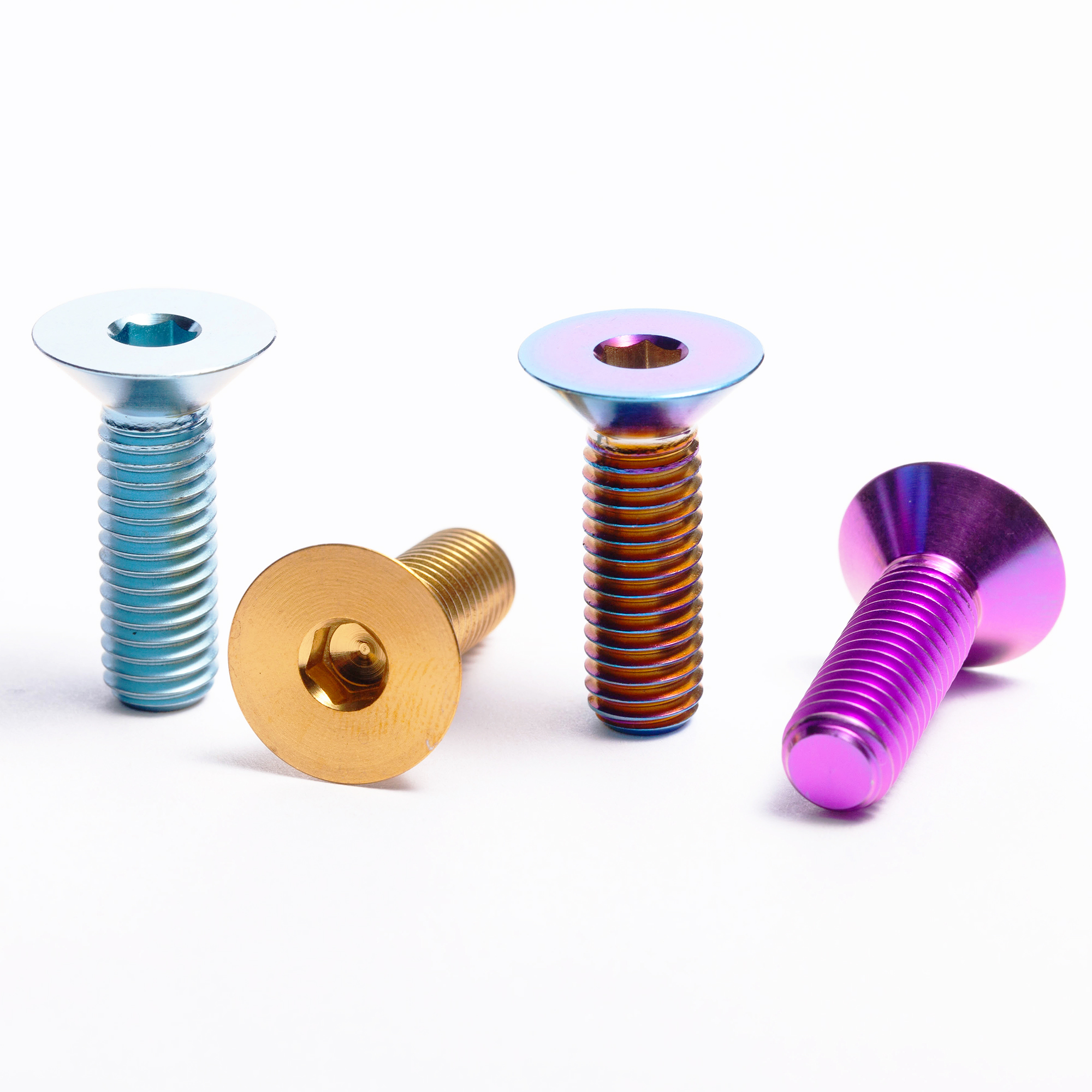
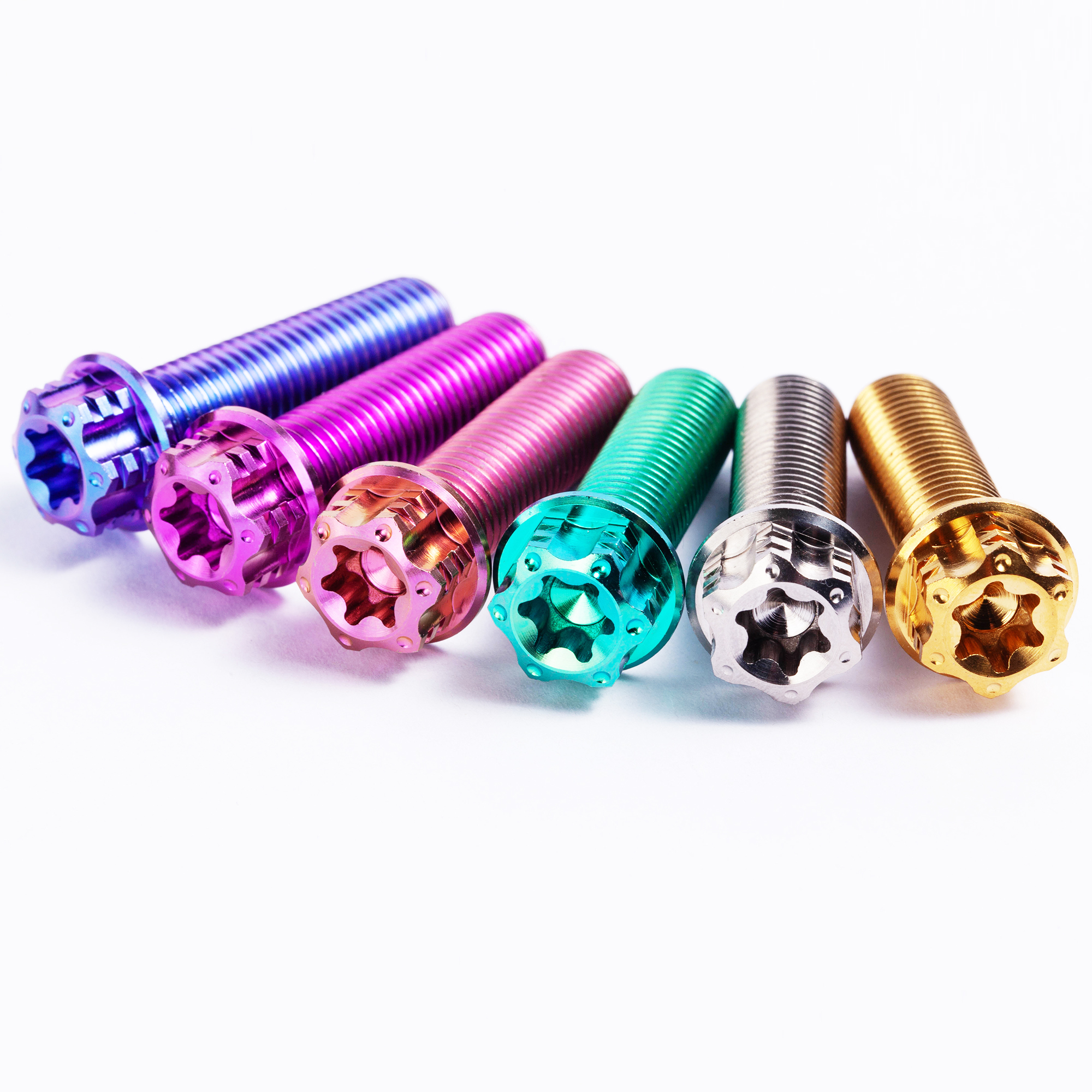
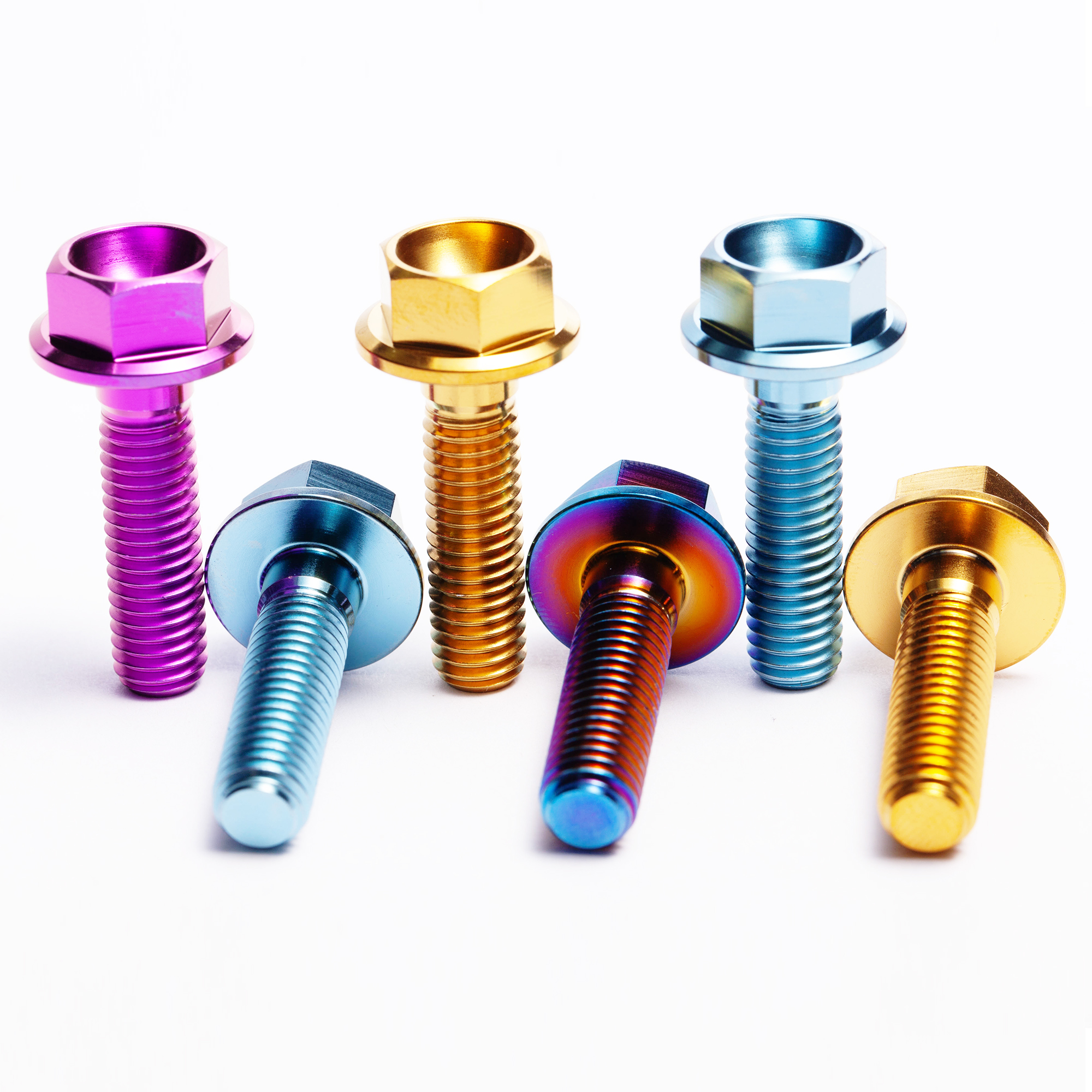
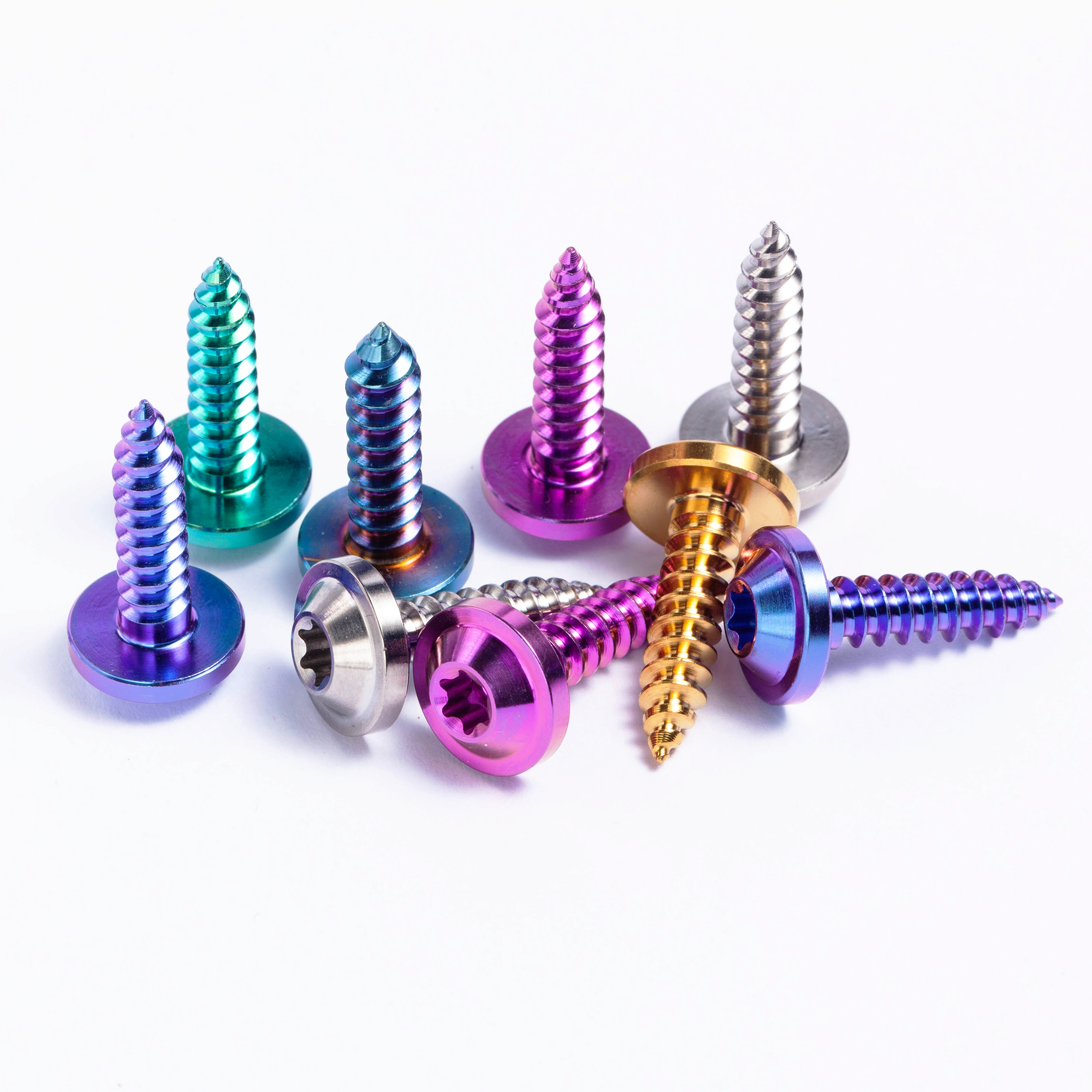
Precision Titanium Fastener Showcase
Direct from factory floor: High-tensile titanium wheel studs, bolts, and precision CNC components.
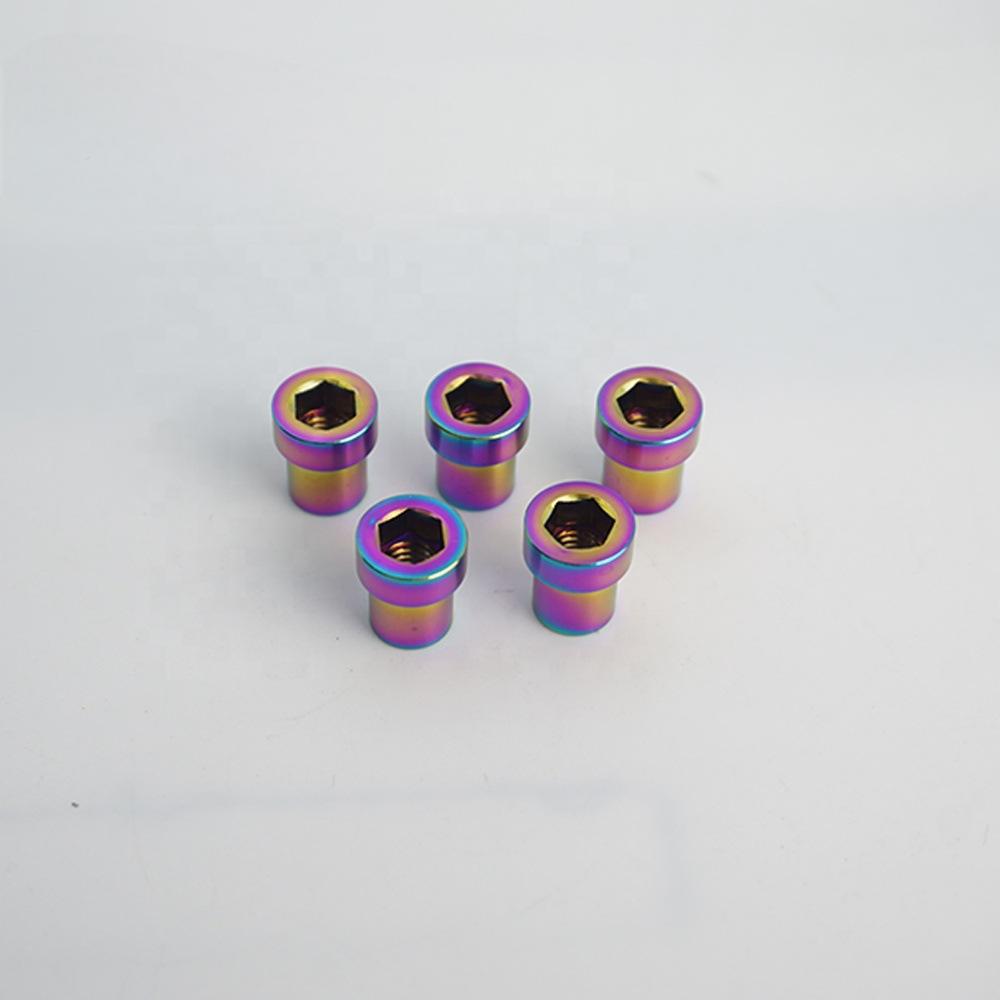
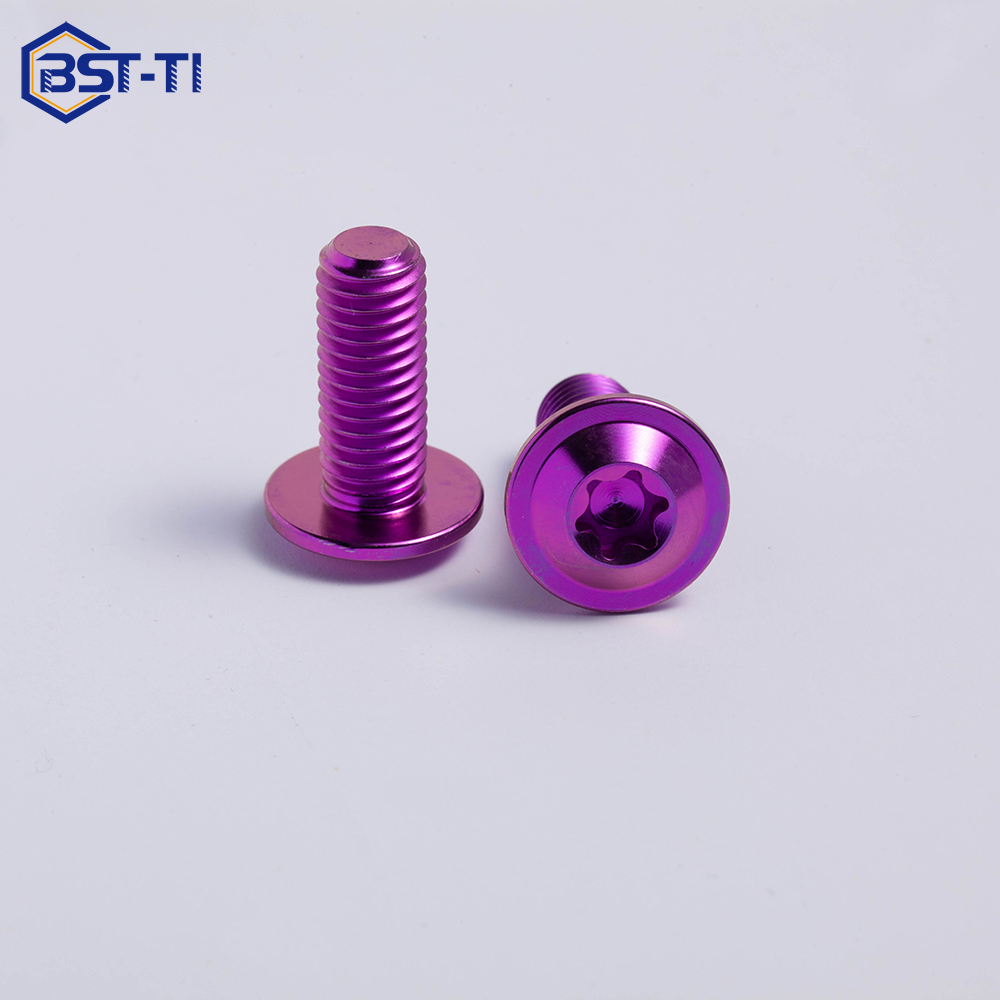
Technical Benchmark: Why Grade 5 Titanium Outperforms Steel in High-Vibration Hub Assemblies
Wheel studs are subjected to complex tri-axial dynamic stresses: shear loads from vehicle weight and torque transmission, tensile pre-loads from bolt tightening, and bending fatigue during sharp cornering or uneven roadway traversal.
| Mechanical & Physical Property | Titanium Gr5 (Ti-6Al-4V) | AISI 4140 Alloy Steel (Class 10.9) | 304 Stainless Steel | 6061-T6 Aluminum Alloy |
|---|---|---|---|---|
| Density (ρ) | 4.43 g/cm³ (~44% reduction) | 7.85 g/cm³ | 7.93 g/cm³ | 2.70 g/cm³ |
| Ultimate Tensile Strength (σuts) | 950 – 1050 MPa | 1040 MPa | 515 – 620 MPa | 310 MPa |
| Yield Strength (σy) | 880 – 920 MPa | 940 MPa | 205 – 240 MPa | 276 MPa |
| Modulus of Elasticity (E) | 114 GPa (Superior shock damping) | 205 GPa | 193 GPa | 69 GPa |
| Fatigue Limit (Reversed Bending) | 510 MPa (Infinite fatigue life curve) | 490 MPa | 240 MPa | 95 MPa |
| Corrosion Resistance in Halides / Brine | Immune (Spontaneous TiO₂ Passivation) | Poor (Galvanic oxidation & rust) | Moderate (Pitting in chlorides) | Susceptible to intergranular attack |
| Thermal Expansion Coeff. (α) | 8.6 × 10⁻⁶ / °C | 12.2 × 10⁻⁶ / °C | 17.2 × 10⁻⁶ / °C | 23.2 × 10⁻⁶ / °C |
Specialized Application Scenarios for High-Reliability Fasteners
Analyzing operating environments where mechanical durability, resistance to temperature extremes, and chemical passivity are non-negotiable procurement prerequisites.
Heavy Transport & Severe Cold Hub Mounts
In high-latitude and mountainous zones across northern regions, seasonal temperatures plunge below -30°C. Conventional carbon steels undergo ductile-to-brittle transitions causing sudden stud fractures. Gr5 titanium retains exceptional impact toughness and ductile elongation down to cryogenic levels, averting catastrophic hub failures under shock impacts.
Mining, Heavy Aggregates & Chemical Haulage
Industrial machinery deployed around mineral processing facilities encounters severe chemical fallout, sulfuric acid vapors, and saline ground slurries. Titanium forms a self-repairing surface oxide (TiO₂) film within nanoseconds of exposure, permanently halting pitting, crevice corrosion, and thread seizing without requiring hazardous cadmium or nickel plating.
Precision Railway & Mass Infrastructure Rolling Stock
Wheelsets on high-cycling utility equipment and tracked vehicles generate massive rotating unsprung mass. Upgrading to Ti-6Al-4V wheel studs and lug bolts trims rotating inertia, reduces gyroscopic resistance on bearings, and extends suspension maintenance intervals significantly over multi-year cycles.
Emerging Procurement Trends in North Asian & Regional Industrial Belts
Understanding shifting manufacturing paradigms towards long-lifecycle, zero-maintenance engineered components.
Shift Toward Total Lifecycle Economics (TCO)
While standard low-alloy steel bolts boast a smaller upfront material cost, their recurring maintenance penalty—frequent rust-seizing, bolt shearing, hub damage during extraction, and downtime—exceeds the capital expense of titanium hardware. Sourcing managers increasingly calculate TCO, making Gr5 studs the economically sound choice for capital equipment.
Strict Tolerance Standardization (ISO / DIN / JIS)
Regional production hubs are aggressively moving away from uncalibrated local smithing toward standardized metric and imperial specifications (DIN 6921, ISO 898-1 geometry). Our factory guarantees ±0.01 mm CNC turned tolerances, class 6g thread fits, and 100% optical inspection.
Roll-Threaded Grain Flow Integrity
Unlike cut threads that tear internal metal fibers, industrial buyers prioritize rolled threads. Wexra Titanium incorporates cold CNC thread rolling post-turning, which continuously redirects material grain alignment along the thread flanks, raising root shear strength and fatigue life by over 30%.
Wexra Titanium: ISO 9001:2015 Precision Production Infrastructure
Operating dedicated titanium CNC turning, multi-axis milling, cold forming, and testing laboratories in Jiaxing, Zhejiang, China.
Certified Raw Materials
100% sourced from prime vacuum-arc remelted (VAR) titanium sponge. Every production lot is paired with EN 10204 3.1 Mill Test Certificates (MTC) detailing complete chemical and tensile data.
High-Precision CNC Suite
Equipped with modern CNC turning-milling centers capable of maintaining micro-tolerances within ±0.01 mm across complex knurled necks, stepped studs, and custom thread pitches.
Surface Passivation & PVD
Offering raw polished, micro-bead sandblasted, rainbow/blue/gold anodized, and physical vapor deposition (PVD) DLC coatings for enhanced surface hardness and non-galling properties.
Audited Quality Control
Operating under strict ISO 9001:2015 frameworks with automated thread-profile optical projectors, tensile pull testers, coordinate measuring machines (CMM), and metallographic grain checks.
Frequently Asked Questions: Sourcing Titanium Wheel Studs & Fasteners
Direct technical answers addressing installation mechanics, material choices, thread safety, and shipping protocols.
Why choose Grade 5 (Ti-6Al-4V) over commercially pure Grade 2 for wheel studs?
Grade 2 titanium possesses an ultimate tensile strength of around 345–450 MPa, which is well-suited for chemical tanks, decorative trim, or non-structural plumbing. However, wheel studs are critical drive components subject to high torque pre-tensioning and dynamic shear stresses. Grade 5 offers an engineered tensile yield strength of 895–1050 MPa and higher fatigue limits, meeting and exceeding standard ISO property class 10.9 fastener demands with less than half the density of steel.
How is thread galling prevented during titanium stud installation?
Titanium fasteners develop a spontaneous oxide film that, under severe dry friction or over-torquing against matching titanium or stainless steel nuts, can generate local friction welds known as galling. We resolve this by providing precision cold-rolled threads with Ra ≤ 0.4 μm surface finishes, offering optional PVD low-friction anti-wear coatings, and advising the mandatory application of high-quality molybdenum disulfide (MoS₂) or copper-based anti-seize paste during torquing.
Can Wexra Titanium produce custom wheel studs based on 2D blueprints or OEM samples?
Yes. Our in-house technical center provides end-to-end OEM and ODM support. Sourcing engineers can submit CAD models (.STEP, .IGES, .DWG) or physical legacy studs. We execute rapid prototyping, check knurl diameter press-fit tolerances, calibrate thread lead pitches (M12x1.25, M12x1.5, M14x1.5, M16x1.5, 1/2-20 UNF), and initiate volume production runs according to your project schedule.
What quality verification documents accompany our shipment?
Every dispatch includes comprehensive quality dossiers: ISO 9001:2015 compliant certificates of conformity, EN 10204 Type 3.1 Material Test Reports verifying chemical composition (spectrometric analysis of Ti, Al, V, Fe, C, O, N) and mechanical values (tensile, yield, elongation), batch dimensional inspection reports, and surface treatment audit files.
What are the standard lead times and export packaging arrangements?
For standard catalog configurations (such as M12 and M14 titanium hub studs and DIN 6921 flange bolts), inventory is maintained for dispatch within 5–7 business days. Custom CNC fabrications generally run 2–4 weeks from technical drawing sign-off. Fasteners are individually bagged with thread thread-guards, desiccant sealed, and packed into reinforced export cartons secured on heat-treated seaworthy pallets.
Upgrade Your Fastener Specifications with Wexra Titanium
Consult with our metallurgists and senior fastener engineers today. Send your required thread dimensions, knurl specifications, annual volume targets, or custom CAD files for a competitive direct-factory quotation.
Send an Inquiry