Technical Overview: The Evolution of Titanium Milling in China
Over the past decade, China’s advanced precision manufacturing corridor—spanning the industrial hubs of Zhejiang and Shaanxi—has revolutionized the global supply chain for milled titanium components. Transitioning from basic raw material processing to high-tier 5-axis CNC titanium milling, top-tier Chinese manufacturers now deliver structural, aerospace, and medical-grade hardware with tolerances reaching sub-0.01 mm precision.
Titanium alloys, particularly Grade 5 (Ti-6Al-4V) and Grade 2 Commercially Pure (CP) Titanium, present unique machining challenges due to their low thermal conductivity (~6.7 W/m·K) and high chemical reactivity at elevated temperatures. Solving these mechanical bottlenecks requires specialized high-rigidity CNC machining centers, custom diamond-like carbon (DLC) or AlCrN coated solid carbide tooling, high-pressure coolant (HPC) delivery systems operating at 70+ bar, and optimized trochoidal toolpaths to prevent work hardening.
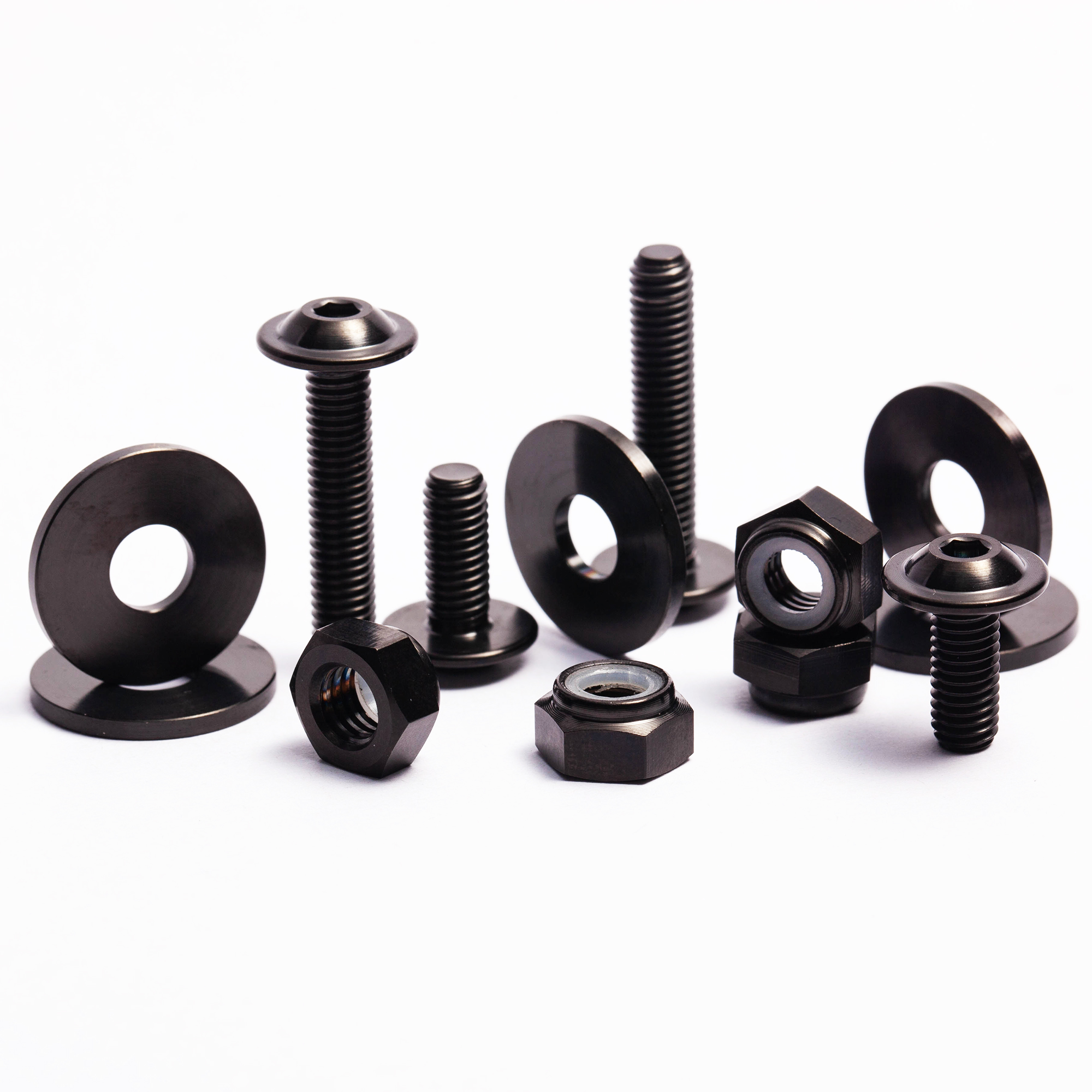
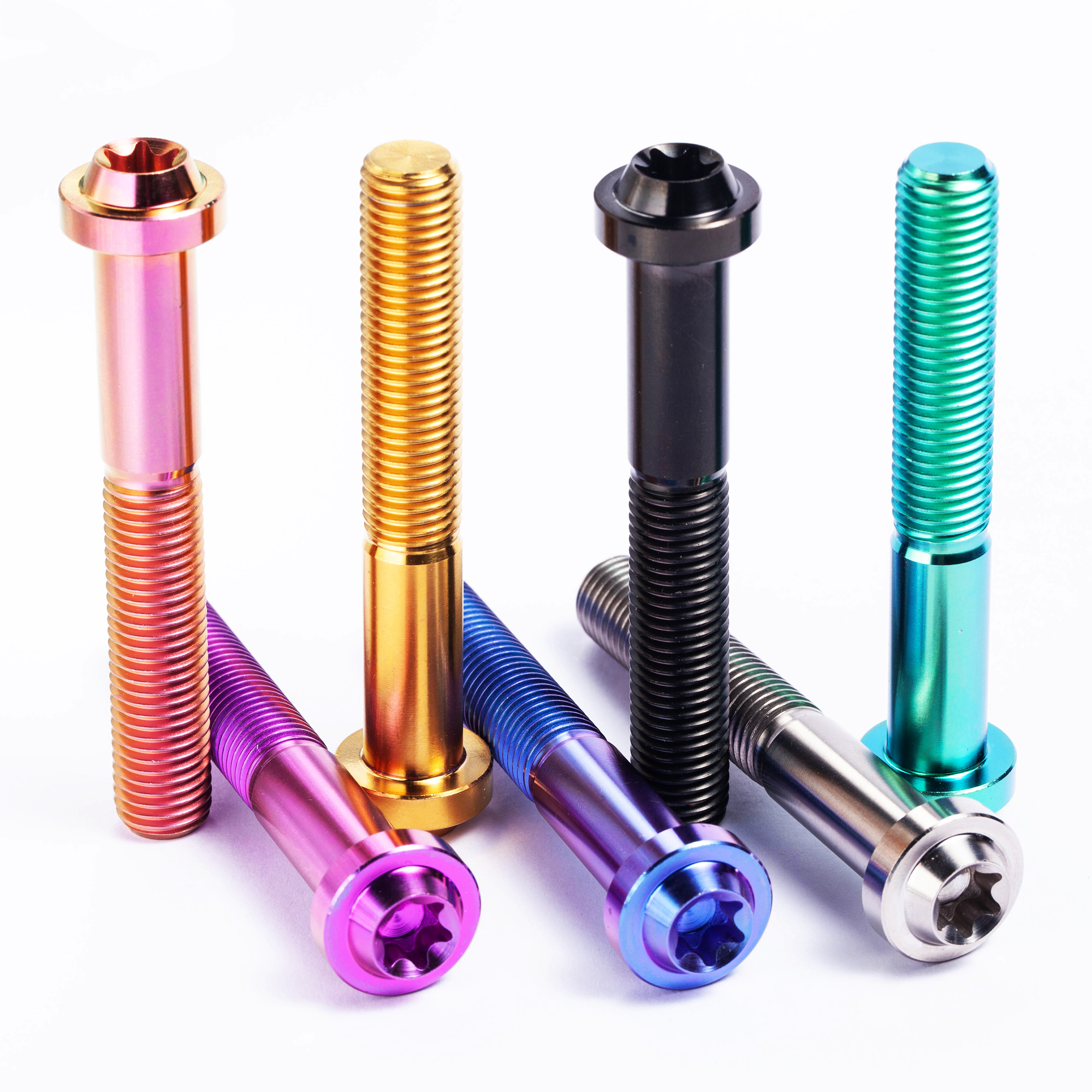
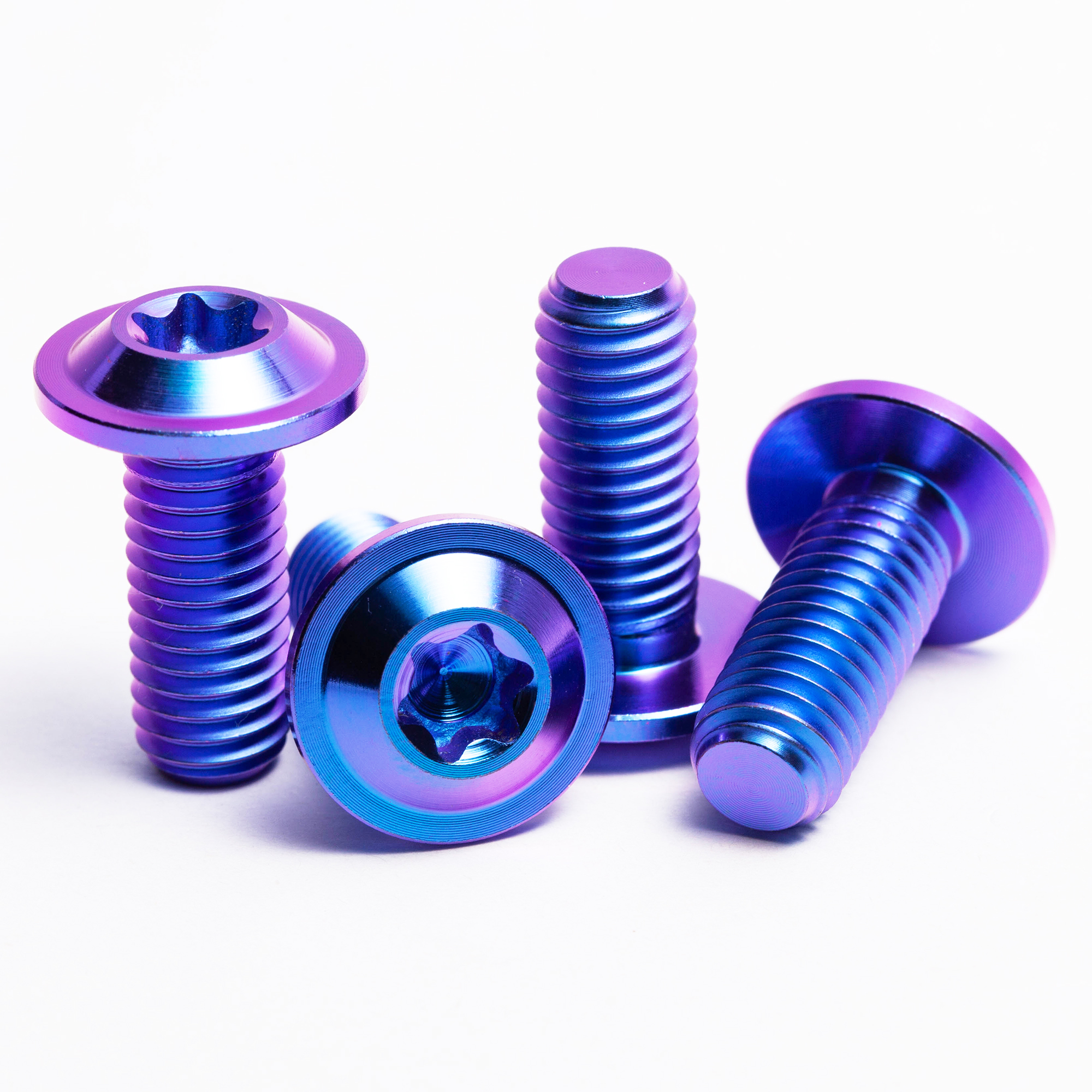
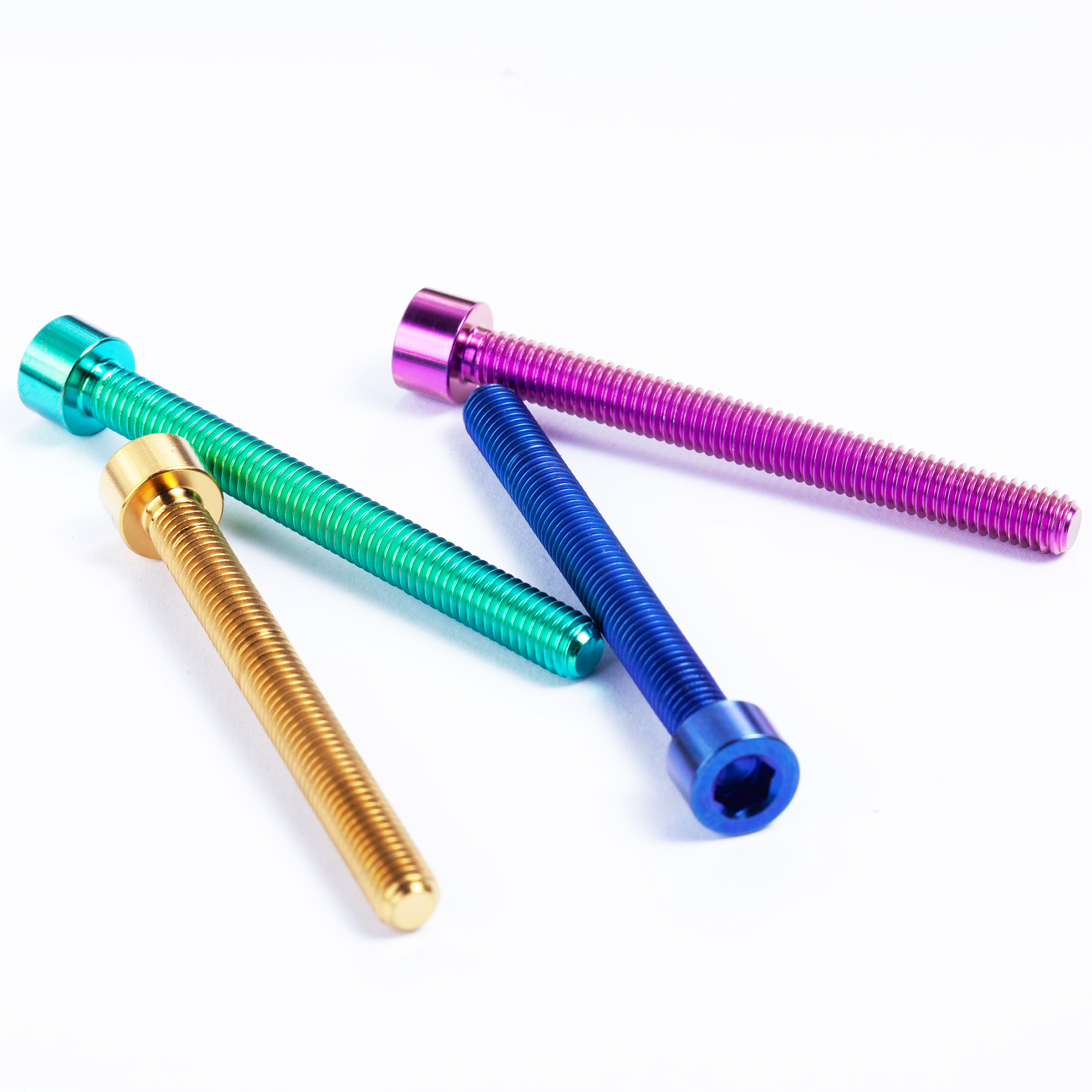
Featured Titanium CNC Fasteners & Hardware Showcase
Below is our benchmark collection of precision-milled titanium fasteners and hardware, engineered specifically for high-stress automotive, motorsport, marine, and cycling applications.
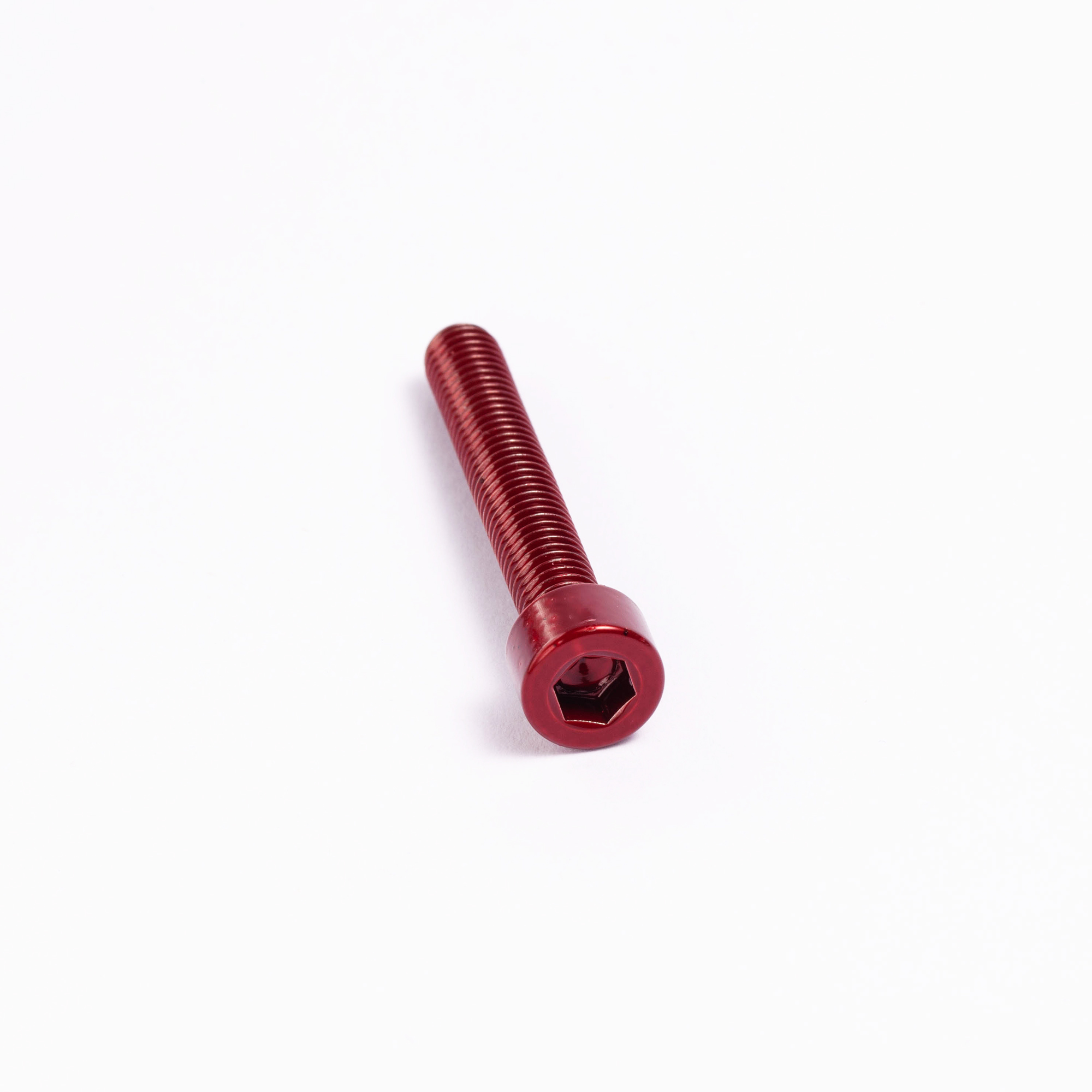
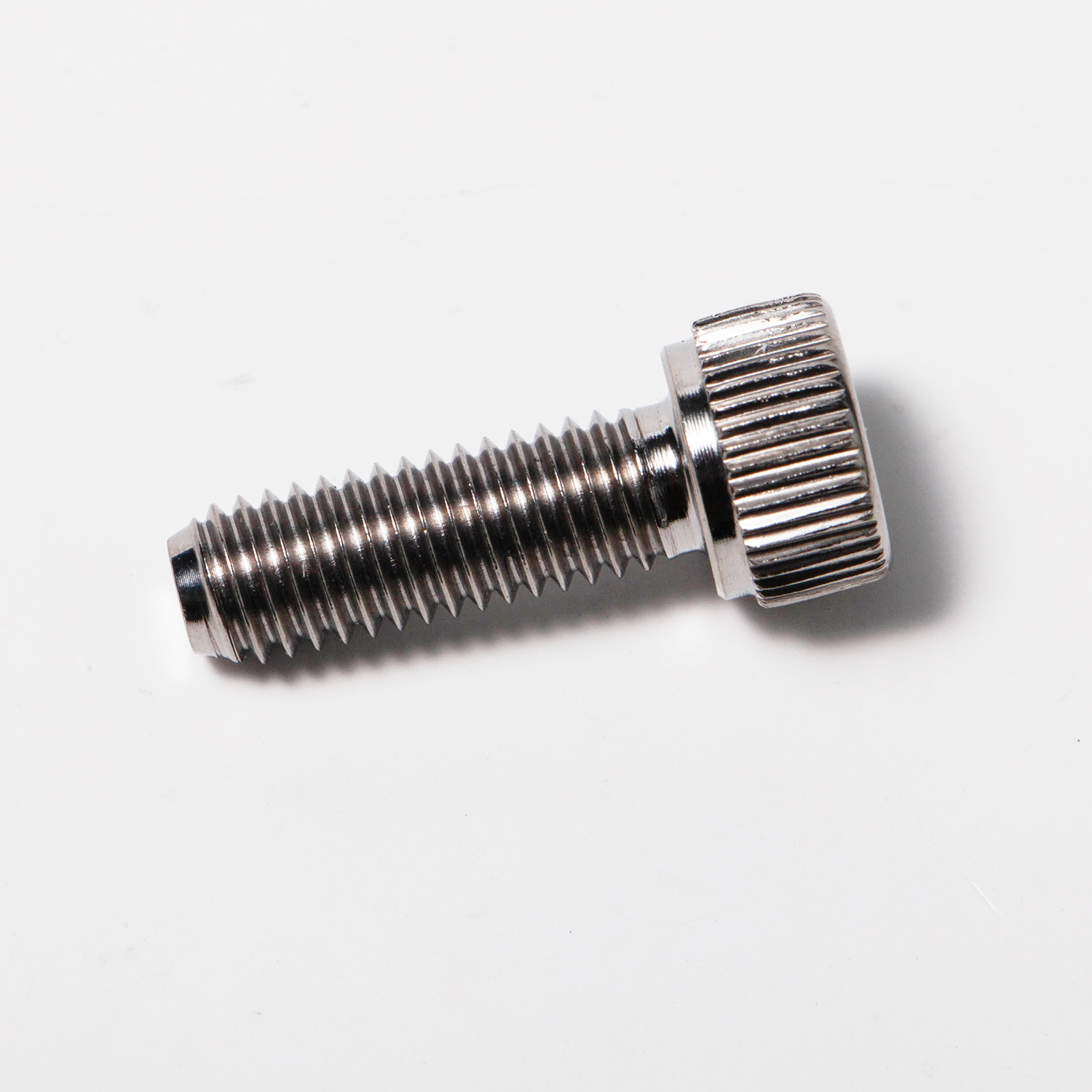
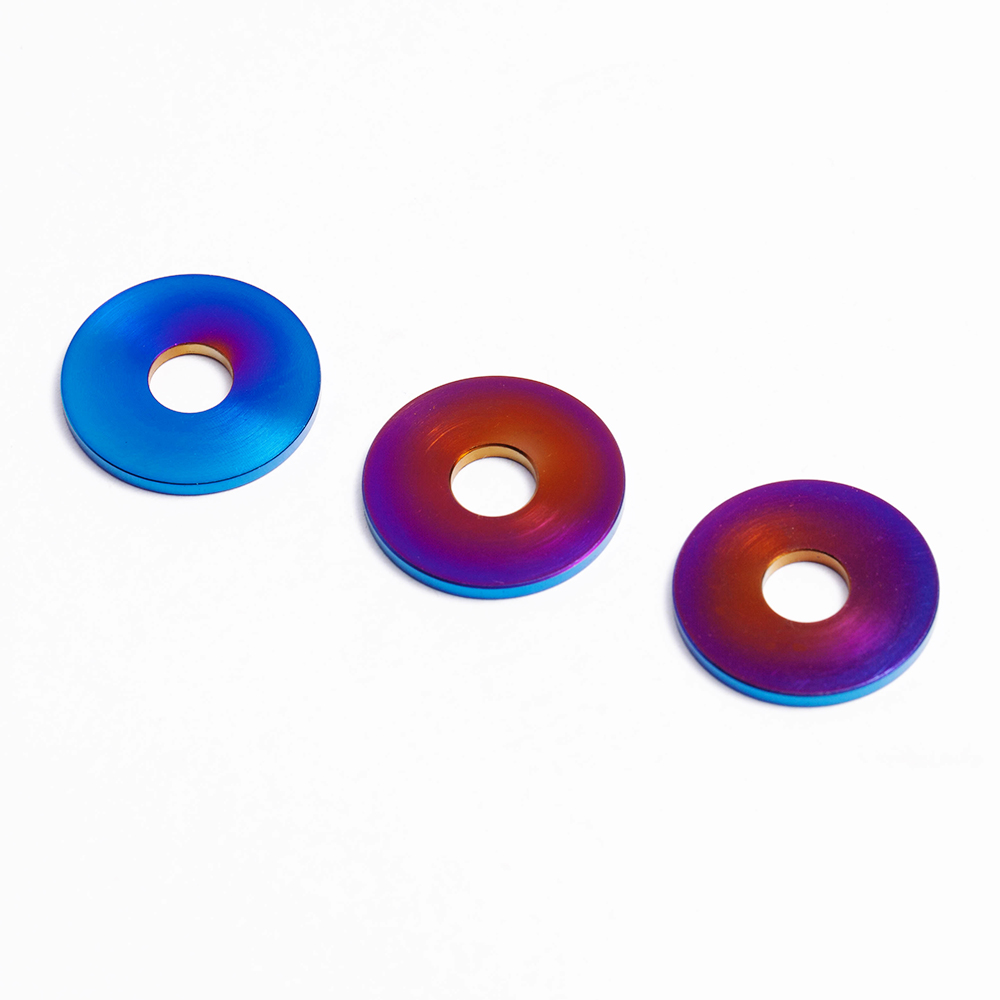
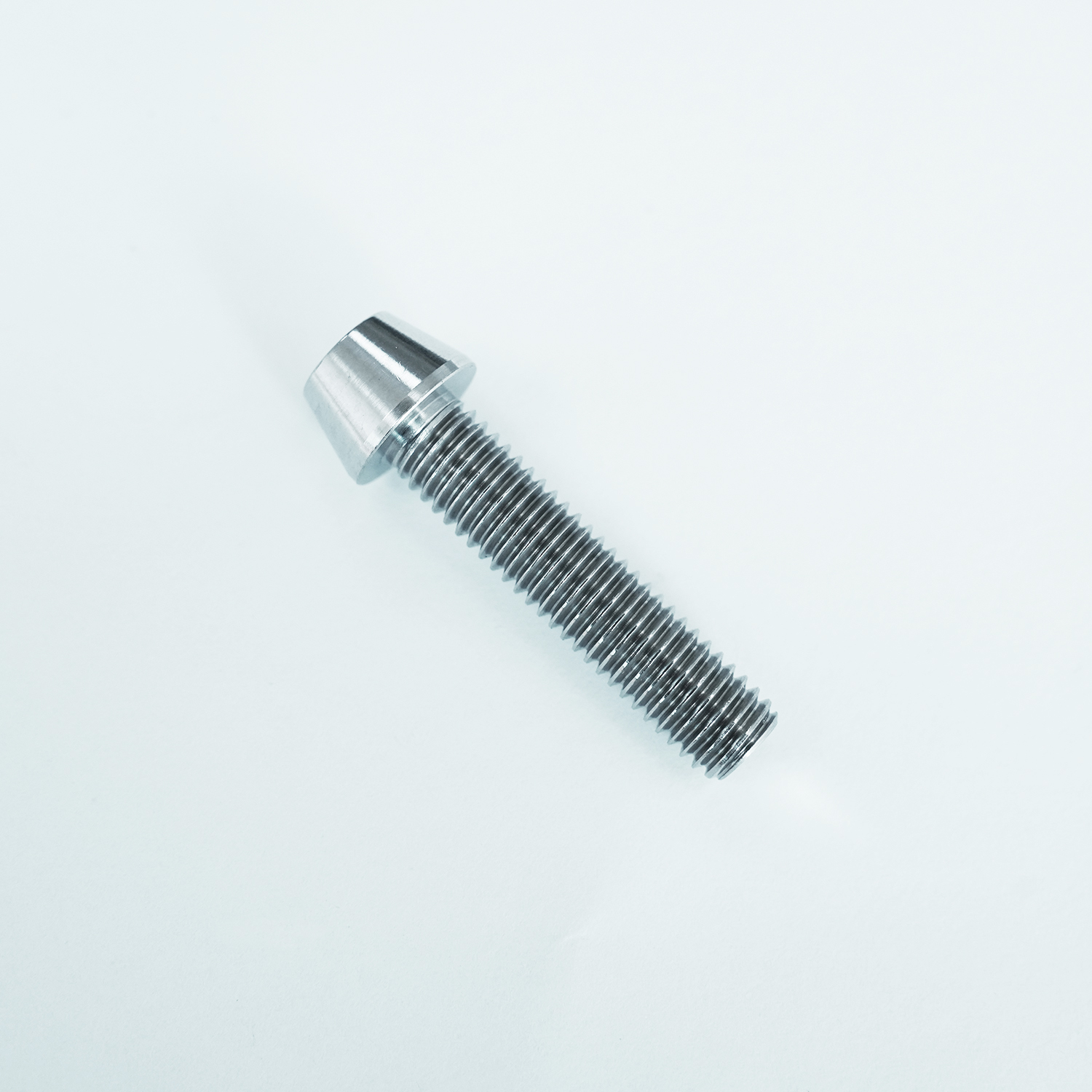
Engineering Benchmark: Titanium Grade 5 vs. Alternative Structural Alloys
To assist procurement directors and mechanical design engineers in selecting optimal hardware materials, the comparative metallurgical matrix below details physical properties, fatigue resistance, and weight savings metrics comparing Grade 5 Titanium against conventional stainless steel and aluminum 7075-T6.
| Material Specification | Density (g/cm³) | Tensile Strength (MPa) | Yield Strength (MPa) | Thermal Conductivity | Corrosion Resistance | Machinability Index |
|---|---|---|---|---|---|---|
| Ti-6Al-4V (Grade 5 Titanium) | 4.43 | 895 - 1000 | 828 | 6.7 W/m·K | Outstanding (Passive Oxide Layer) | 40% (Ref. 1212 Steel) |
| CP Titanium (Grade 2) | 4.51 | 345 | 275 | 21.9 W/m·K | Exceptional (Chemical/Marine) | 45% |
| 316L Stainless Steel | 8.00 | 485 | 170 | 16.3 W/m·K | Moderate to High | 50% |
| Aluminum 7075-T6 | 2.81 | 572 | 503 | 130.0 W/m·K | Low (Prone to Galvanic Corrosion) | 180% |
| Class 10.9 Alloy Steel | 7.85 | 1040 | 940 | 42.6 W/m·K | Poor (Requires Coating) | 65% |
Enterprise Infrastructure & Export Strengths
As an industry-leading exporter based in Jiaxing, Zhejiang, Jiaxing Wexra Titanium Products Co., Ltd. operates an advanced 1000+ m² manufacturing center equipped with multi-axis CNC turning and milling centers, precision thread rollers, laser cutting arrays, and automated PVD/Anodizing surface finishing lines.
In-House Milling Precision
Equipped with Japanese and Taiwanese 4-axis and 5-axis CNC machining centers capable of maintaining ultra-tight tolerances (±0.01mm) on complex geometries, keyways, and custom thread pitch profiles.
Rigorous QA & Traceability
Full ISO 9001:2015 system compliance. Every shipment is backed by Material Test Certificates (MTC EN 10204 3.1), chemical composition spectral analysis, optical comparator inspection, and RoHS/REACH validation.
Global Logistics Reach
Direct B2B supplier to premium tier-1 motorsport teams, high-end bicycle manufacturers, and industrial engineering clients across the United States, Germany, the United Kingdom, Canada, and Australia.
Future Procurement Trends in Titanium CNC Manufacturing (2025–2030)
As OEM buyers and supply chain managers evaluate long-term vendor partnerships in China, several paradigm shifts are transforming the procurement landscape for milled titanium hardware:
- Near-Net-Shape (NNS) Hybrid Additive-Milling Production: Leading Chinese exporters are combining selective laser melting (SLM) 3D printing with 5-axis CNC finishing to create internal cooling channels and honeycombed lightweight structural titanium parts impossible to produce via traditional subtractive milling alone.
- Closed-Loop Titanium Chip Recycling & Sustainability: Environmental, Social, and Governance (ESG) compliance is driving top factories to implement strict scrap segregation programs. Clean titanium turnings and chips are vacuum-remelted into certified secondary ingots, reducing raw material carbon footprints by up to 60%.
- Advanced Anodizing and PVD Color Uniformity: Modern buyer demand extends beyond mechanical fit to high-level cosmetics. Vacuum Physical Vapor Deposition (PVD) coating processes allow production of ultra-hard TiN (gold), TiCN (black), and electrochemical iridescent anodizing with zero dimensional buildup on critical metric threads.
- Digital Twin Inspection & CMM Integration: Automatic optical sorting and automated Coordinate Measuring Machine (CMM) routines are replacing manual sampling, delivering zero-defect Quality Assurance for high-volume OEM fast-line assemblies.
Technical Trends in Precision Titanium CNC Milling
Due to titanium's low elastic modulus (114 GPa compared to steel's 210 GPa), parts are prone to flex and chatter during heavy end-milling cuts. Staying ahead of industry requirements involves master-level toolpath design and mechanical engineering adjustments:
1. High-Pressure Coolant (HPC) Integration
Directing 70 to 100 bar coolant spray directly into the cutting zone breaks micro-chips, quenches temperature spikes instantaneously, and prevents thermal degradation of solid carbide tool tips.
2. Rolled vs. Cut Thread Geometry
While thread milling is suitable for custom low-volume tapped holes, high-fatigue bolts utilize thread rolling post-CNC turning. Rolling reshapes the titanium grain structure continuously, elevating fatigue strength by 30% over cut threads.
3. Anti-Galling Surface Treatments
Bare titanium threads installed into titanium or aluminum blocks without anti-seize can seize due to friction galling. Modern treatments such as micro-bead blasting and dry-film lubricant coatings resolve thread friction risks completely.
B2B Sourcing FAQ: Titanium CNC Milling & Export
Request a Precision Titanium CNC Milling Quote
Have custom drawings, CAD models, or OEM titanium bolt requirements? Our technical engineering team provides fast DFM feedback and competitive factory-direct pricing within 24 hours.