Featured OEM Titanium Fasteners & Components
Precision-engineered Grade 5 (Ti-6Al-4V) and Grade 2 titanium hardware manufactured to DIN, ISO, ASTM, and custom drawing specifications.
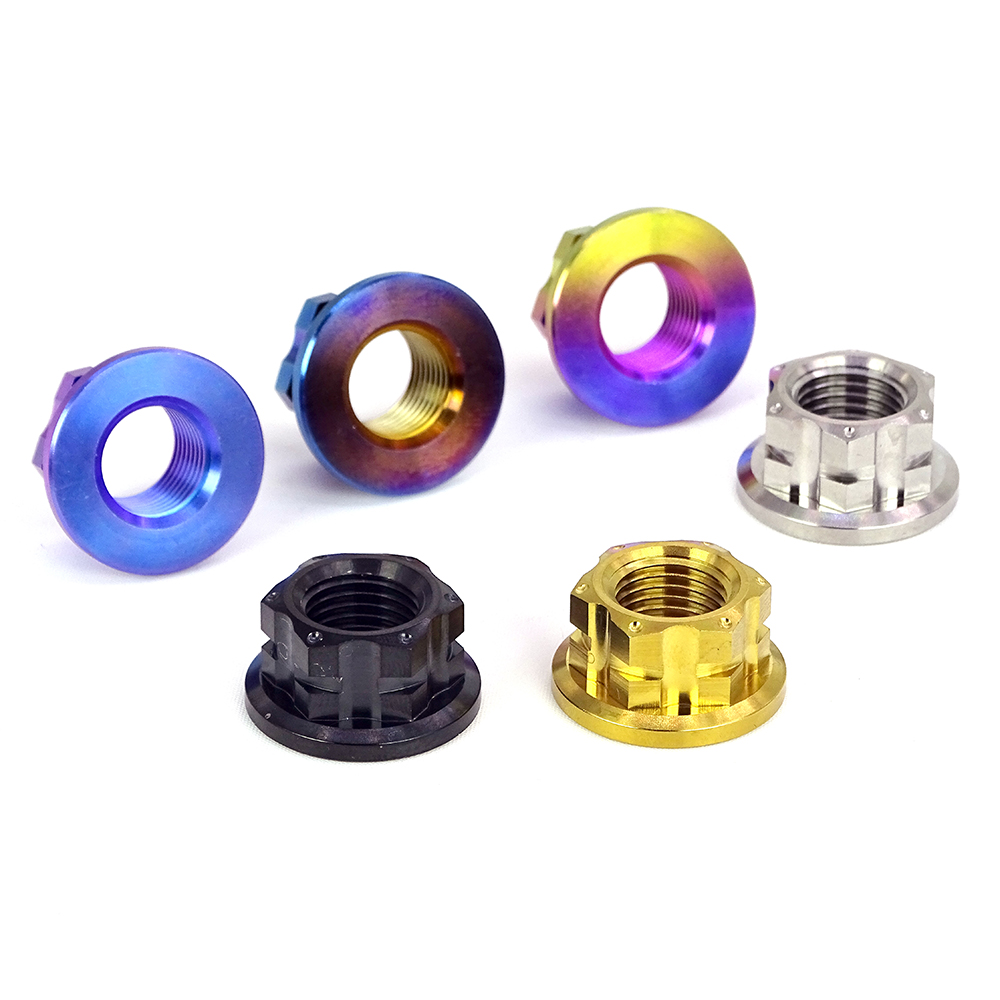
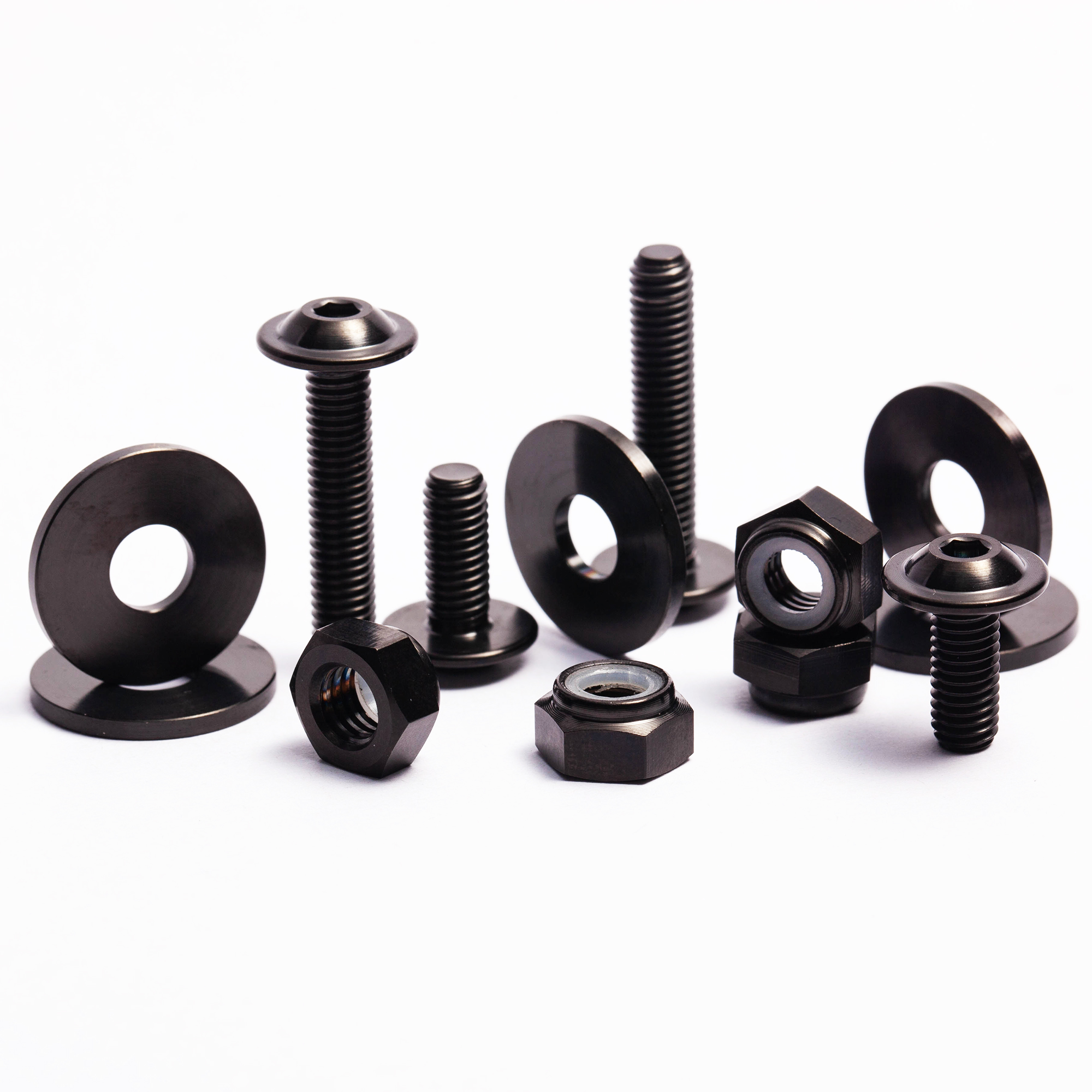
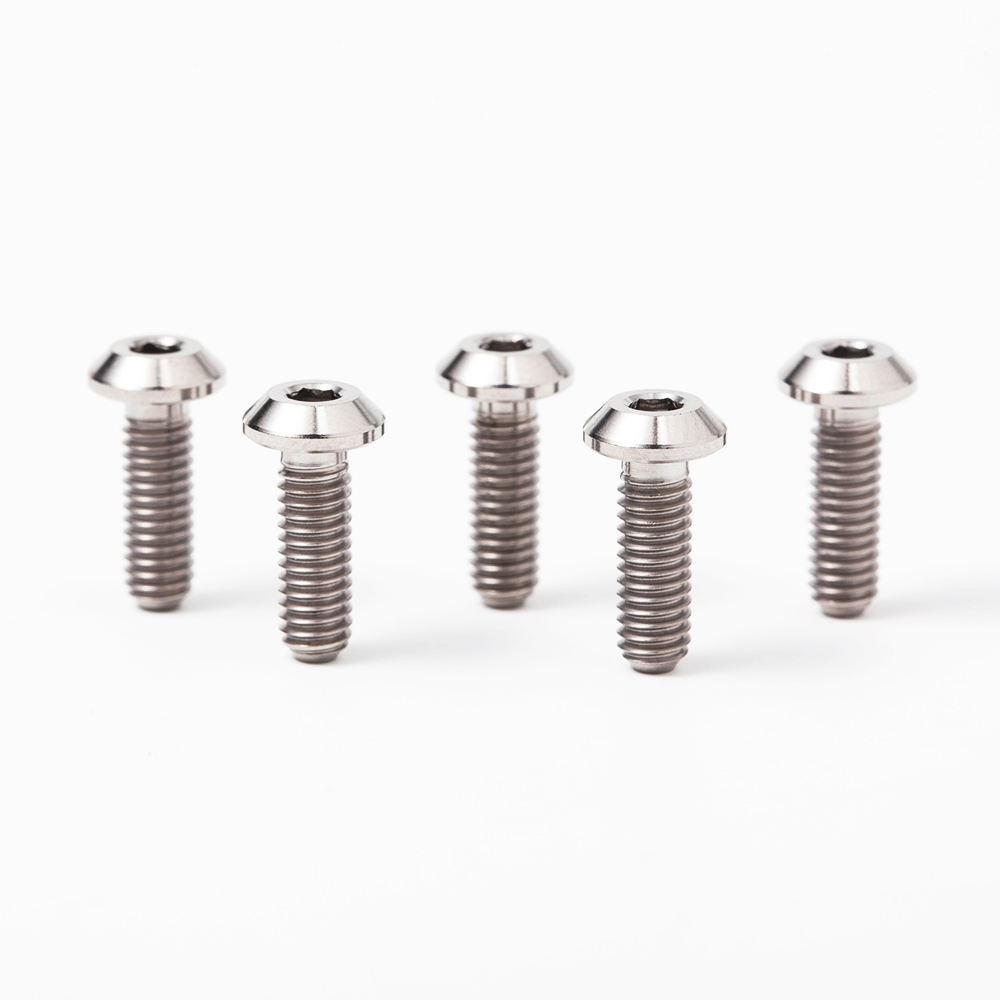
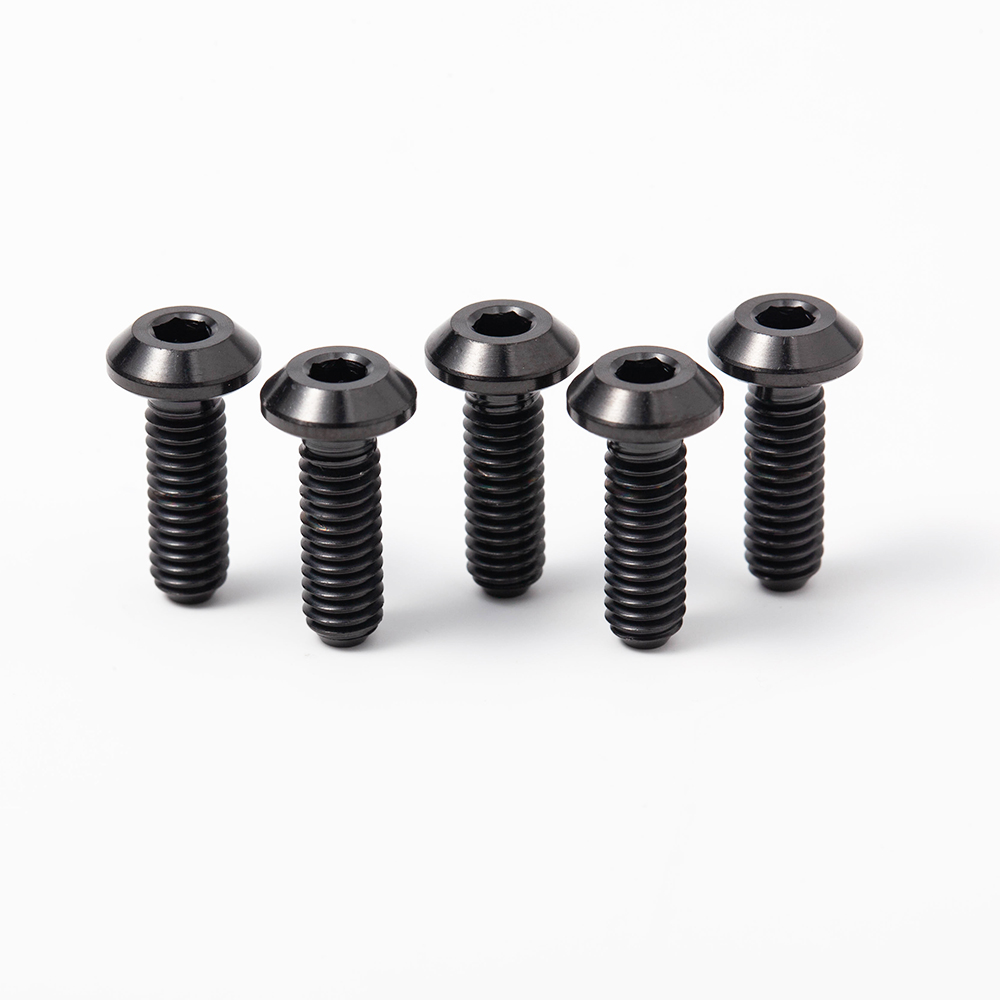
Metallurgical Architecture: Grade 2 CP vs. Grade 5 (Ti-6Al-4V) Titanium Engineering
In modern precision manufacturing, selecting the optimal titanium grade requires a thorough evaluation of yield strength, fatigue endurance, operating temperatures, and environmental exposure. As a premier Custom OEM Anodized Titanium Parts Exporter, Jiaxing Wexra Titanium Products Co., Ltd. supplies two primary metallurgical classifications engineered for demanding global industries: Commercially Pure Grade 2 (CP Ti) and Alpha-Beta Alloy Grade 5 (Ti-6Al-4V / ASTM F136).
Grade 5 (Ti-6Al-4V): High-Strength Structural Fasteners
Grade 5 titanium is an alpha-beta alloy containing 6% aluminum and 4% vanadium. It represents the structural backbone of high-performance automotive, aerospace, marine, and cycling fastener applications. Delivering a ultimate tensile strength (UTS) exceeding 895 MPa (130,000 psi) and a yield strength above 828 MPa, Ti-6Al-4V matches or exceeds the yield limits of Class 8.8 and Class 10.9 steel fasteners while reducing total mass by approximately 44%. The material exhibits superior strength-to-weight ratios, excellent fatigue resistance, and structural stability up to 400°C.
Grade 2 (Commercially Pure Titanium): Maximum Chemical Immunity
Grade 2 CP titanium offers an unalloyed structure with exceptionally high ductileness and cold formability. With a typical tensile strength of 345–480 MPa, it is specifically specified for non-structural or moderate-load components exposed to aggressive chemical environments, saltwater immersion, and bio-medical assemblies. Its instant passivation forms an impenetrable, self-healing titanium dioxide ($TiO_2$) protective film that eliminates pitting and galvanic corrosion in marine and chemical processing infrastructure.
| Property Parameter | Titanium Grade 2 (CP) | Titanium Grade 5 (Ti-6Al-4V) | Stainless Steel 316L | Alloy Steel (10.9) |
|---|---|---|---|---|
| Density (g/cm³) | 4.51 | 4.43 | 8.00 | 7.85 |
| Tensile Strength (MPa) | 345 - 480 | ≥ 895 - 1000 | 580 - 620 | 1040 |
| Yield Strength (0.2% MPa) | 275 | ≥ 828 | 290 | 940 |
| Strength-to-Weight Ratio | Moderate High | Extremely High | Moderate | Moderate |
| Corrosion Resistance (Chloride/Marine) | Outstanding (Immune) | Superior | Good (Pitting risk) | Poor (Requires Plating) |
| Magnetic Permeability | Non-Magnetic (1.00005) | Non-Magnetic (1.00005) | Non-Magnetic / Slight | Ferromagnetic |
Electrochemical Physics of Titanium Surface Anodization
Unlike organic paints or traditional electroplated coatings on steel that can chip, flake, or alter precise thread tolerances, titanium anodization is an controlled electrochemical oxidation process. The component acts as an anode submerged in an electrolyte solution (such as mild aqueous solutions of trisodium phosphate or sulfuric acid). As controlled direct current (DC) voltage is passed through the bath, oxygen ions migrate to the titanium surface, growing an ultra-dense, transparent Titanium Dioxide ($TiO_2$) dielectric crystalline layer.
Optical Interference Colors Without Chemical Dyes
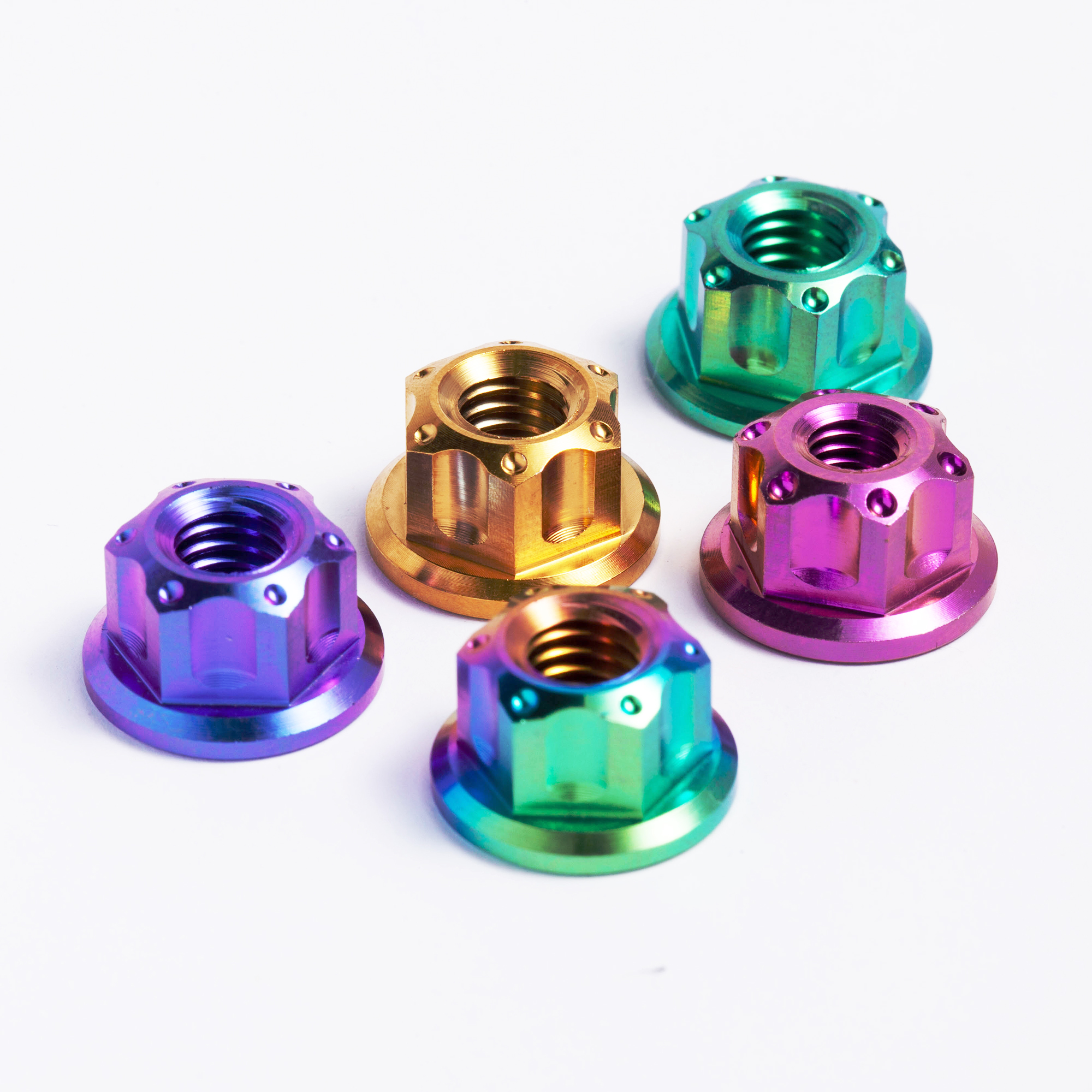
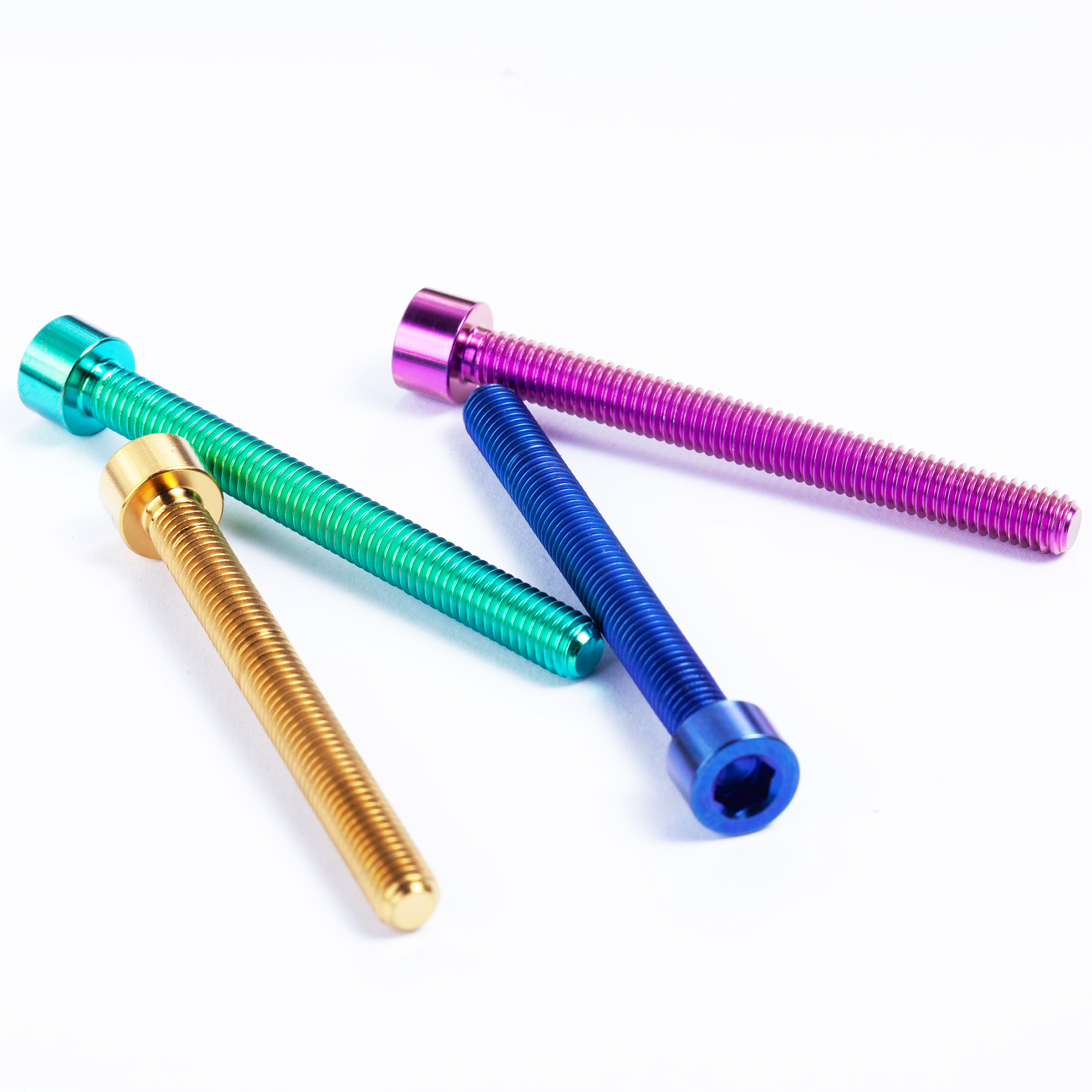
The vivid hues associated with anodized titanium—such as Gold (15V–18V), Bronze (12V–14V), Purple (28V–30V), Deep Blue (30V–35V), Sky Blue (45V–50V), Green (60V–65V), and Rainbow gradients—are produced by thin-film optical interference light refraction. As incident light strikes the component, a portion reflects off the outer surface of the oxide film while the remaining light traverses the transparent film and reflects off the underlying metal substrate. The phase shift between these reflected light waves constructively cancels certain wavelengths while amplifying others, creating rich spectrum colors.
Dimensional Integrity & AMS 2488 Compliance
Because the oxide film thickness ranges from 10 nanometers to 300 nanometers, titanium anodizing causes negligible dimensional growth on critical male and female thread geometries (such as M5, M6, M8, M10, and M12 fine pitches). Our advanced anodizing setup strictly conforms to Type II AMS 2488 specifications, increasing anti-galling performance, surface hardness, and wear resistance across high-stress racing torque assemblies.
Manufacturing Rigor & Enterprise Advantages (Jiaxing Wexra Titanium)
Operating under an certified ISO 9001:2015 Quality Management System, Jiaxing Wexra Titanium Products Co., Ltd. maintains full control over the titanium supply chain—from certified bar stock procurement to final 5-axis CNC machining, thread rolling, automated surface finishing, and quality inspection.
Micro-Tolerance Precision CNC
Equipped with multi-axis CNC turning and milling centers delivering machining tolerances down to ±0.01 mm for aerospace, medical, and motorsport components.
Grain-Flow Thread Rolling
Instead of single-point thread cutting, critical fasteners utilize precision thread rolling dies. This preserves continuous material grain flow, increasing fatigue life by 300%.
Strict Quality Compliance
Every shipment is backed by Material Test Certificates (MTC EN 10204 3.1), chemical spectro-analysis, dimensional inspection reports, and full RoHS / REACH compliance.
Industry Trends & Future Development in Titanium Fabrication
The global demand for custom titanium OEM solutions is accelerating rapidly across four dominant sectors: Automotive Electrification (EVs), High-Performance E-Mobility, Medical Implants/Instruments, and Lightweight Everyday Carry (EDC) Gear. As procurement managers look toward the next decade, three key technological shifts define the future of titanium engineering:
1. Integration of Additive Manufacturing (3D Printing) with CNC Hybrid Machining
Direct Metal Laser Sintering (DMLS) and Selective Laser Melting (SLM) in Grade 5 titanium enable complex internal cooling channels and lattice topology optimization unattainable via conventional machining. Post-print CNC secondary machining ensures interface mating faces meet exact ISO metric tolerances while achieving up to 60% mass reduction in structural bracketry.
2. EV Mass Reduction & Dynamic Unsprung Weight Elimination
In electric hypercars and premium motorcycles, every kilogram removed directly improves battery range, acceleration, and dynamic steering response. Replacing steel lug nuts, brake disc rotor bolts, and axle nuts with Grade 5 Titanium reduces unsprung and rotational mass, resulting in reduced inertia and sharper suspension responsiveness.
3. Micro-Arc Oxidation (MAO) & PVD Hard Coating Innovations
While anodic color oxidation remains popular for aesthetics, high-wear aerospace and marine applications are shifting toward Micro-Arc Oxidation (Plasma Electrolytic Oxidation) and Physical Vapor Deposition (PVD) TiN/DLC coatings. These techniques double surface hardness (up to 1000+ HV), practically eliminating thread galling and fretting corrosion under high-vibration conditions.
Future Sourcing Framework: Total Cost of Ownership (TCO) vs. Initial Material Cost
Strategic procurement officers in the US, Germany, UK, and Canada are re-evaluating sourcing models by moving away from simple piece-price comparisons toward holistic Total Cost of Ownership (TCO) models.
Lifecycle Economics of Titanium Fasteners: While raw titanium sponge and processing costs place initial hardware purchasing costs higher than steel or aluminum, titanium's immunity to atmospheric moisture, road salt, and harsh acids eliminates secondary field maintenance, re-torquing failures, and replacement labor costs. Over a 10-to-20-year equipment lifecycle, titanium hardware frequently yields a 40% net cost savings.
Direct Exporter Advantage: Partnering directly with an established Chinese exporter like Jiaxing Wexra Titanium eliminates tier-3 middleman markups while providing localized technical drawing support, CAD DFM reviews, flexible low-MOQ prototyping, and dependable volume manufacturing backed by EPR, RoHS, and REACH international export compliance.
Comprehensive B2B Procurement FAQ (Frequently Asked Questions)
Accelerate Your Titanium Supply Chain Today
Partner directly with Jiaxing Wexra Titanium Products Co., Ltd. for precision CNC machining, custom anodization finishes, and certified OEM Grade 5 / Grade 2 titanium manufacturing.
Get a Quote