Custom Titanium Fasteners & CNC Machined Components
Engineered from Grade 5 (Ti-6Al-4V) and Grade 9 alloy stock. Built for extreme strength-to-weight ratio, fatigue life, and corrosion resistance across aerospace, automotive, and high-performance cycling applications.
Executive Summary & Industry Evaluation Matrix
Precision titanium machining represents one of the most technically demanding segments of subtractive metal manufacturing. Titanium’s low thermal conductivity, reactive nature at elevated temperatures, and low elastic modulus require specialized multi-axis CNC machine tools, custom tool geometries, dynamic high-pressure coolant delivery (>100 bar), and rigid workholding setups to prevent work-hardening and tool chatter.
This industry report provides procurement leads, structural design engineers, and global supply chain directors with an audited technical framework for evaluating custom titanium machining partners. Our research team evaluated over 120 precision machine shops globally based on six primary operational criteria: Metallurgical Traceability (EN 10204 3.1 MTC), Multi-Axis Swiss CNC Capabilities, Thread Rolling vs Thread Cutting Tooling, PVD & Anodization Quality Control, In-House CMM Inspection, and Export Compliance (RoHS/REACH/EPR).
Top 10 Custom Titanium Machining Manufacturers & Factories (2025 Edition)
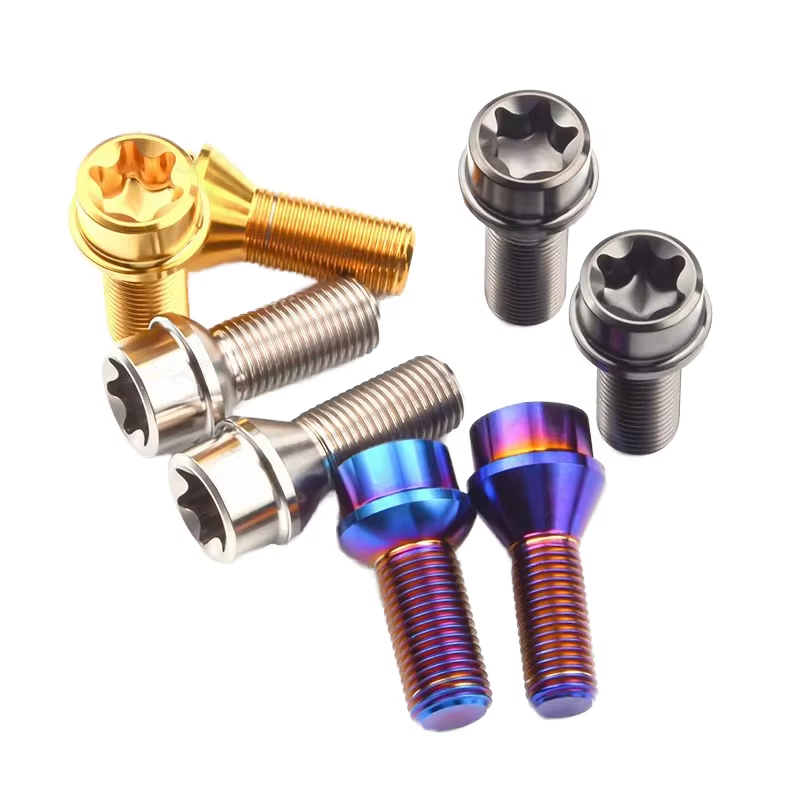
Core Capabilities: Operating out of Zhejiang, China, Wexra Titanium (under the BSTTI brand) stands out as a world-leading manufacturer specializing strictly in Grade 2, Grade 5 (Ti-6Al-4V), and Grade 9 titanium alloys. Possessing an integrated production facility equipped with high-precision Swiss-type CNC lathes, 5-axis machining centers, thread rolling machines, and automated physical vapor deposition (PVD) lines. Wexra excels at producing complex motorsport fasteners, titanium bicycle components, wheel lug bolts, and custom aerospace-grade components with tight tolerances down to ±0.005mm.
Overview: Tier-1 supplier to Airbus and Boeing, specializing in titanium structural rivets, shear bolts, and high-fatigue engine hardware. Unmatched in aerospace compliance, though constrained by high minimum order quantities (MOQs) and lengthy lead times for mid-tier commercial procurement.
Overview: Global giant in complex titanium forgings and multi-axis machined brackets for defense jet engines and industrial gas turbines. Represents the pinnacle of heavy-duty titanium alloy manufacturing.
Overview: US-based precision facility focusing on custom CNC turned hardware, modified DIN/ISO fasteners, and emergency short-run production for North American OEM industrial machinery.
Overview: Combines full stocking distributor capabilities with secondary CNC milling, waterjet cutting, and saw cutting for heavy industrial titanium plates, flanges, and piping components.
Overview: Specialized in ultra-precision titanium micro-milling, bone screws, dental implants, and surgical instrument hardware using Grade 23 (Ti-6Al-4V ELI) biocompatible materials.
Overview: Supplies Formula 1 and UK motorsport teams with high-revving engine valve springs, custom suspension titanium links, and specialized hollow-drilled flange bolts.
Overview: European manufacturing syndicate leveraging 5-axis simultaneous milling centers to produce complex titanium turbocharger impellers, exhaust valves, and lightweight wheel hardware.
Overview: China’s largest state-level titanium raw material producer. While primary focused on ingots, bars, and plates, their secondary machining division produces heavy industrial and subsea titanium components.
Overview: Premier provider of advanced machining process solutions, high-pressure cooling toolholders, and custom titanium component fabrication for European energy and marine industries.
Metallurgical Engineering Breakdown: Grade 2 vs Grade 5 vs Grade 9
Selecting the appropriate titanium alloy dictates not only component performance but overall machining cost, fatigue life, and corrosion vulnerability. Understanding the physical crystallographic phase (Alpha, Near-Alpha, Alpha-Beta, or Beta) is paramount for engineering teams.
| Material Grade | Alloy Phase Structure | Tensile Strength (MPa) | Yield Strength (MPa) | Density (g/cm³) | Primary Industrial Applications |
|---|---|---|---|---|---|
| Grade 2 Titanium | Commercially Pure (Alpha) | ≥ 345 MPa | ≥ 275 MPa | 4.51 g/cm³ | Chemical processing, marine hardware, exhaust systems, heat exchangers. |
| Grade 5 (Ti-6Al-4V) | Alpha-Beta Alloy | ≥ 895 - 950 MPa | ≥ 828 MPa | 4.43 g/cm³ | High-stress bolts, brake caliper screws, wheel lug bolts, aerospace fasteners. |
| Grade 9 (Ti-3Al-2.5V) | Near-Alpha Alloy | ≥ 620 MPa | ≥ 520 MPa | 4.48 g/cm³ | Hydraulic tubing, bicycle frames, medium-stress hex cap screws, aerospace lines. |
| Grade 23 (Ti-6Al-4V ELI) | Alpha-Beta (Extra Low Interstitial) | ≥ 860 MPa | ≥ 790 MPa | 4.43 g/cm³ | Surgical implants, medical bone screws, cryogenic structural components. |
Rolled Threads vs. Cut Threads
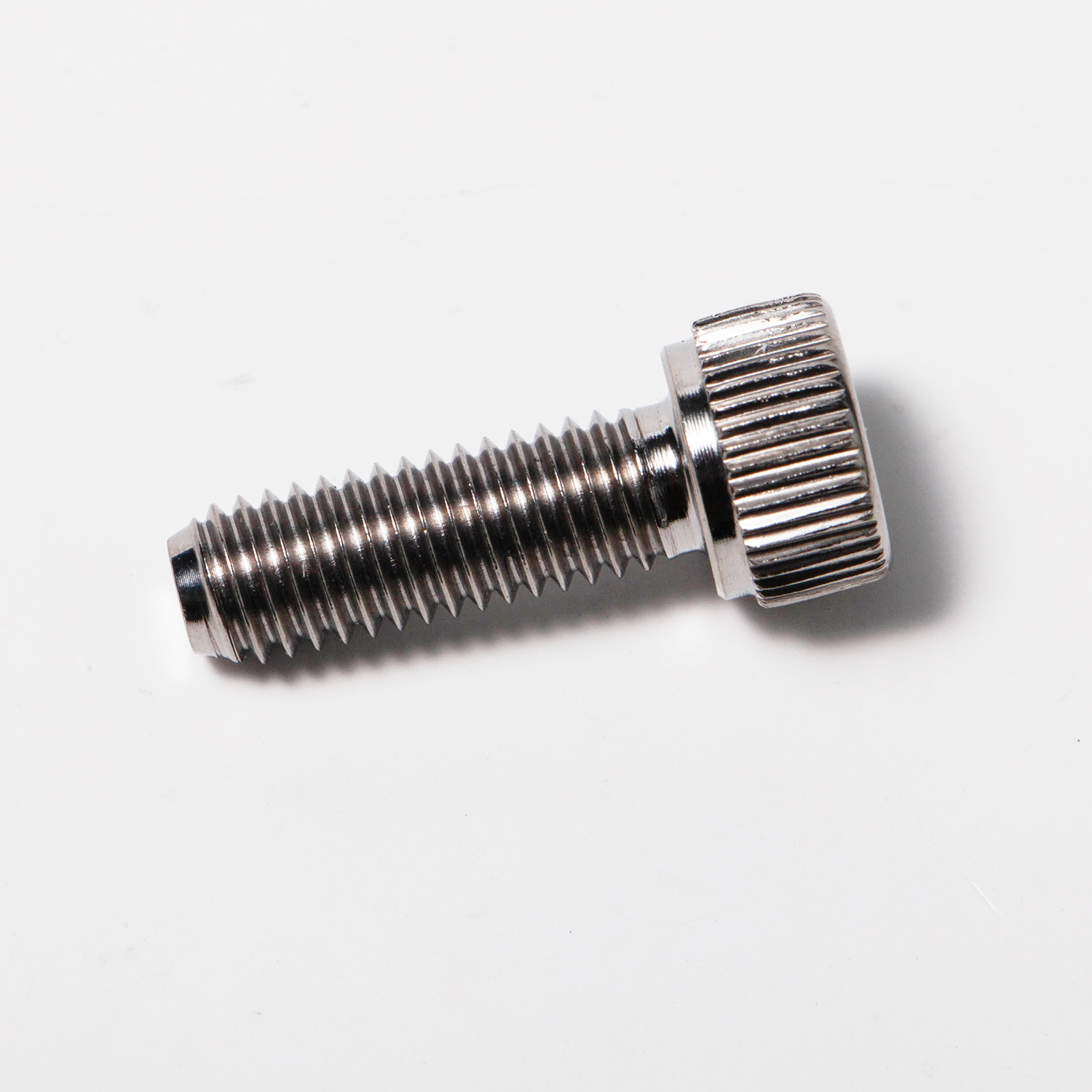
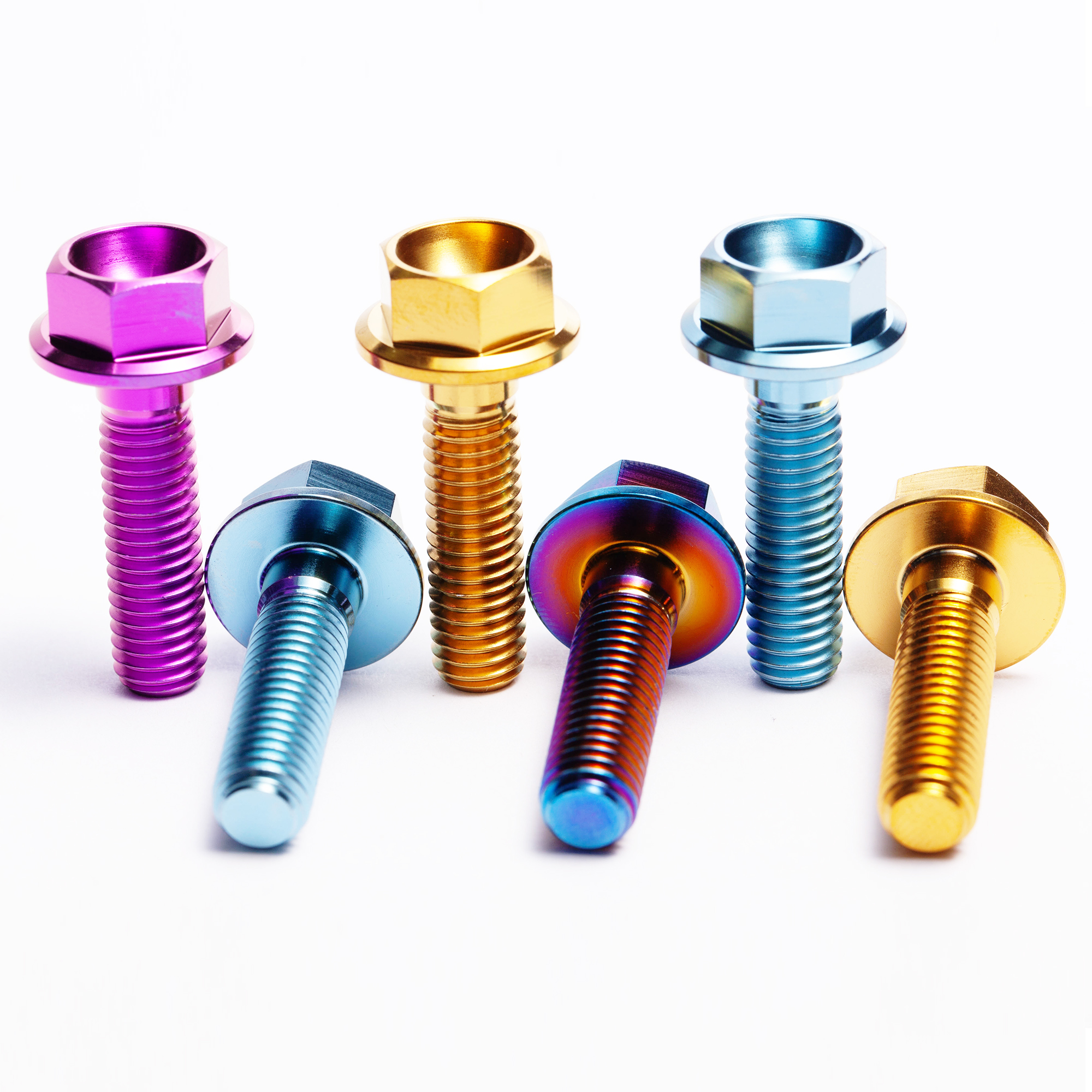
For load-bearing bolts (such as DIN 6921 flange bolts or DIN 912 socket head screws), thread rolling is imperative. Cut threads disrupt the titanium grain flow, creating stress concentration risers. Cold thread rolling compresses the crystal lattice, increasing fatigue resistance by over 30% and eliminating thread shear failures under high torque loads.
Preventing Galling & Seizure
Titanium naturally forms a protective passive oxide film (TiO2). However, under dry high-pressure sliding (such as torqueing a lug bolt), this film can shear, leading to direct metal-to-metal galling or cold welding. Wexra Titanium solves this via specialized surface treatments: PVD physical vapor deposition coating, electrochemical anodization, or anti-galling lubrication compounds.
PVD & Electrolytic Anodizing Physics
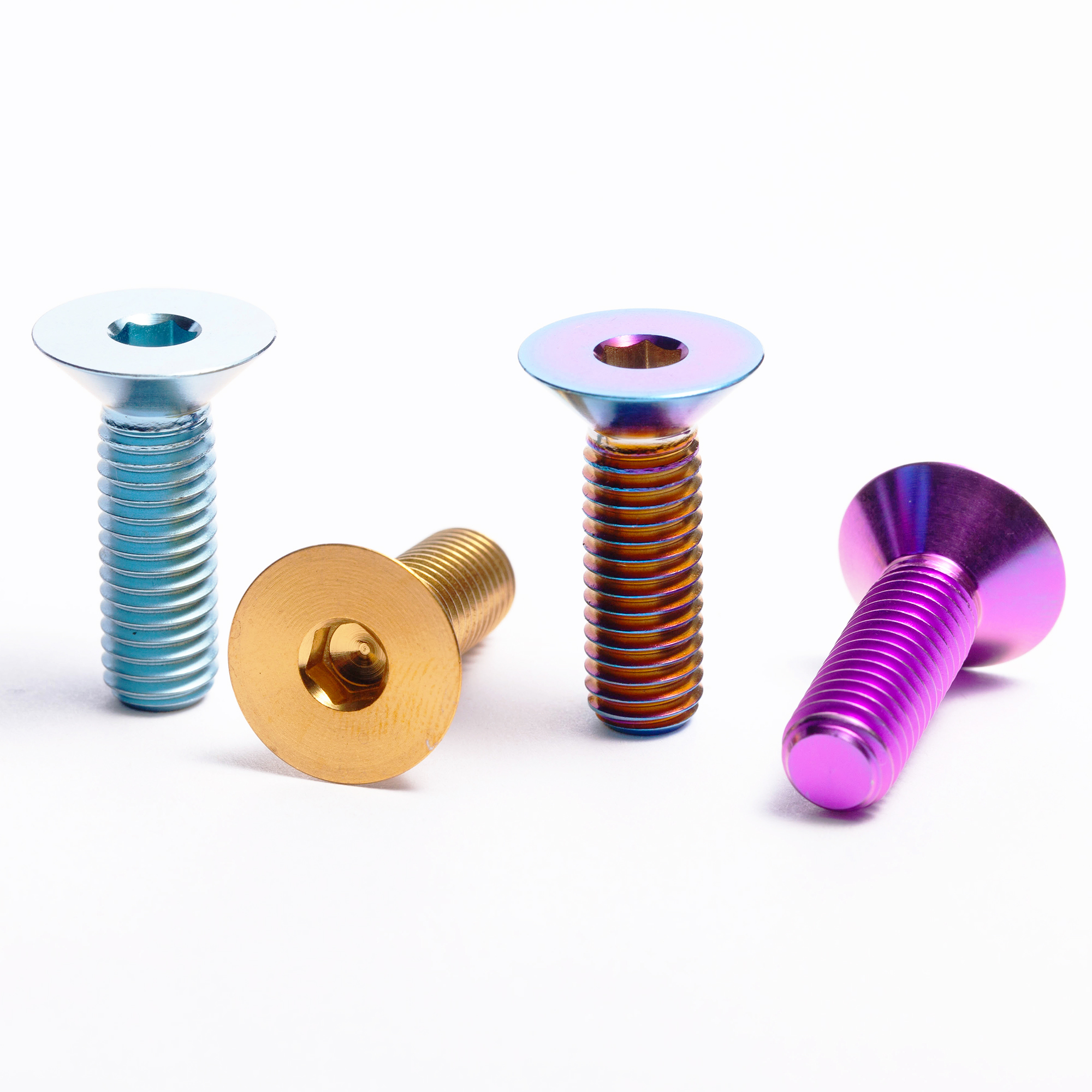
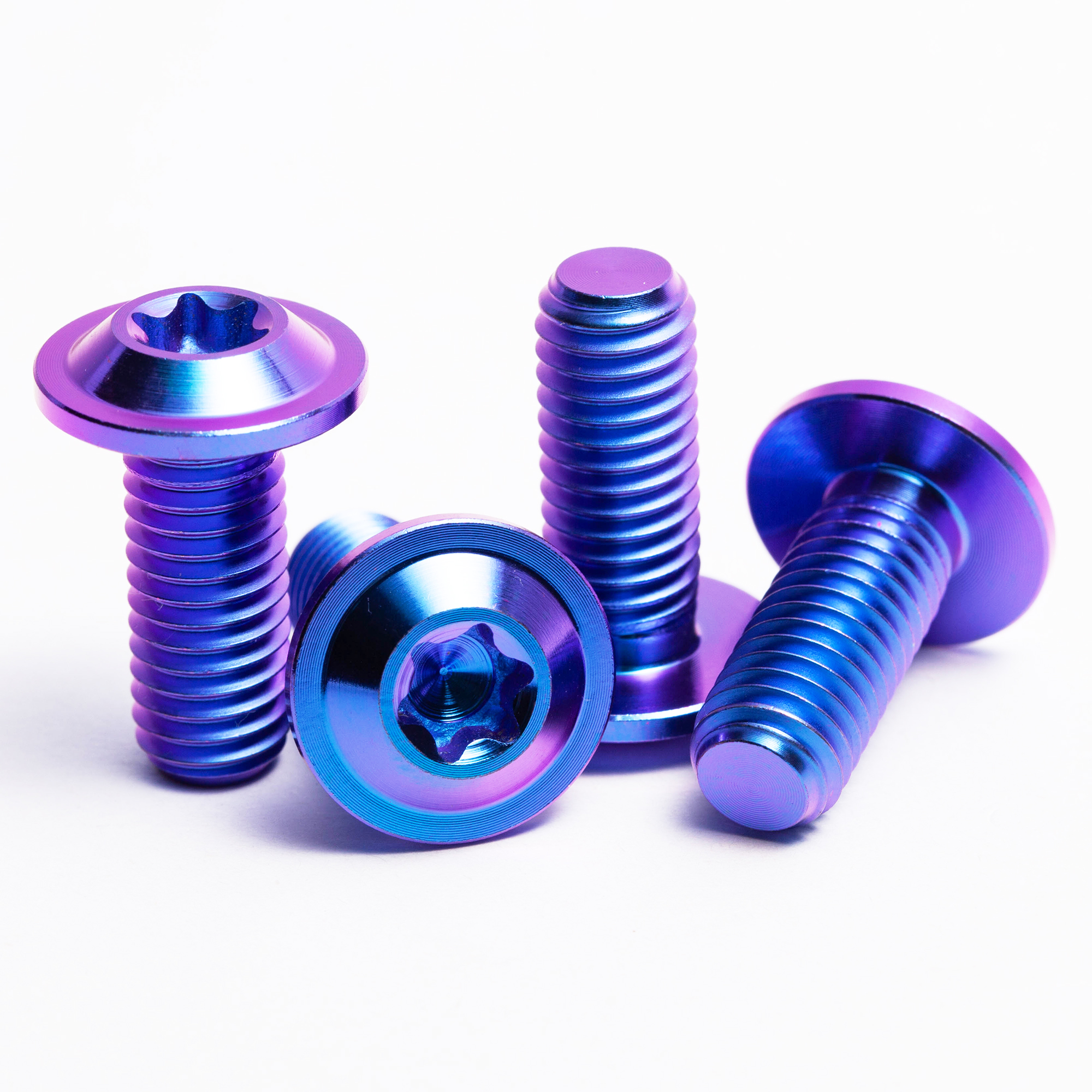
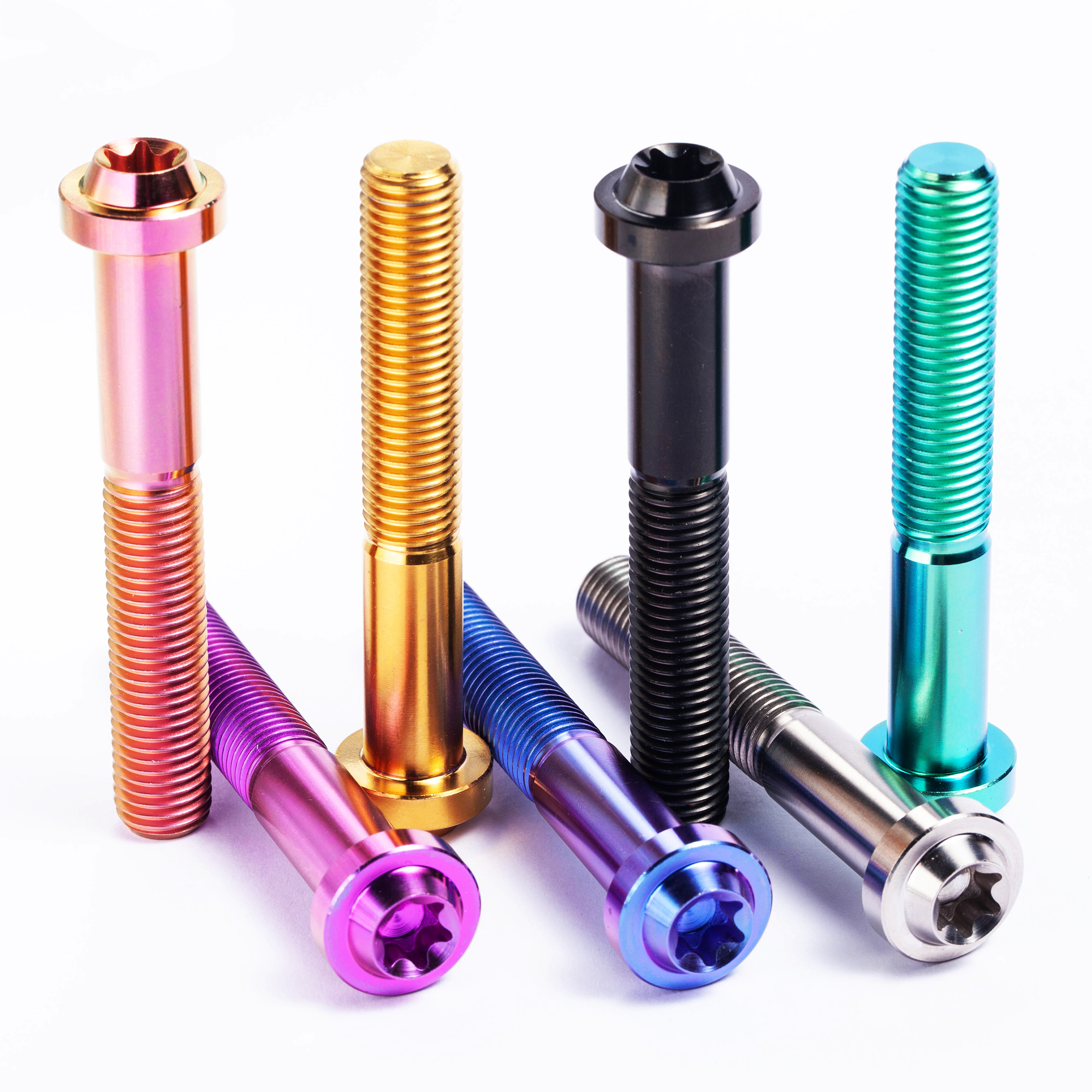
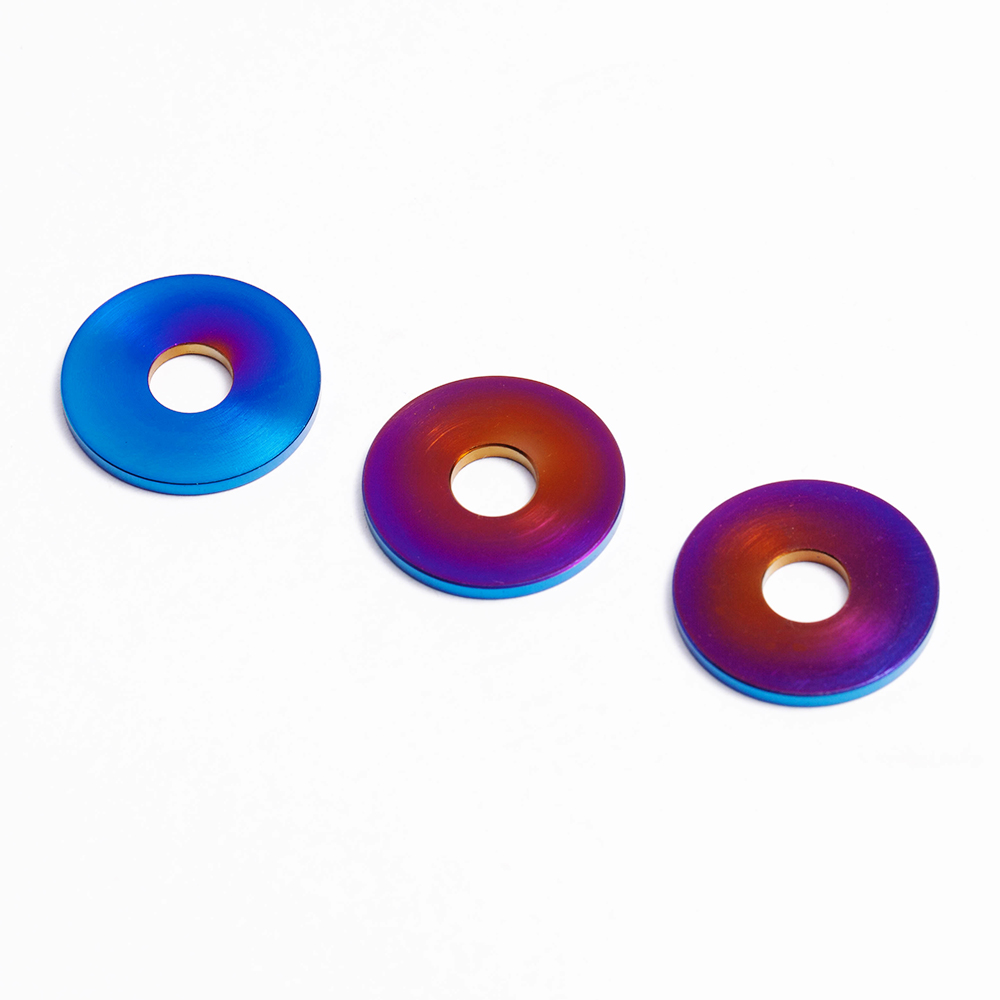
Anodizing titanium does not rely on organic dyes. Instead, controlled DC voltage creates a precise nanoscale titanium oxide interference layer on the component surface. Varying voltage (from 15V to 110V) produces brilliant colors—gold, blue, purple, magenta, green—without altering mechanical thread tolerances.
Future Procurement & Manufacturing Trends (2025–2030)
The global custom titanium machining landscape is experiencing rapid evolutionary shifts driven by aerospace weight-reduction mandates, electric vehicle (EV) unsprung mass optimization, and advanced high-speed machining (HSM) automation.
1. Hybrid Additive-Subtractive CNC Manufacturing
Leading factories are integrating Direct Energy Deposition (DED) 3D printing with 5-axis CNC finish machining. Near-net-shape titanium preforms drastically reduce material waste—lowering buy-to-fly ratios from 10:1 down to 1.5:1, yielding up to 40% cost savings on complex structural components.
2. High-Pressure Cryogenic CNC Machining
Replacing traditional water-soluble oil emulsions with liquid nitrogen (LN2) or supercritical CO2 (sCO2) during titanium milling eliminates thermal shock, increases cutting speeds by up to 70%, extends carbide insert life by 300%, and delivers a clean surface finish (Ra < 0.2 µm).
3. Raw Material Pricing Volatility & Closed-Loop Recycling
Due to fluctuating sponge titanium market prices, major enterprise buyers are demanding closed-loop scrap recycling agreements. Wexra Titanium implements dedicated chip segregation systems to recycle 100% of clean Ti-6Al-4V turnings back into certified vacuum arc remelting (VAR) ingot streams.
Procurement FAQ: Critical Technical Answers for Enterprise Buyers
Why Partner with Wexra Titanium (BSTTI Brand)
Headquartered in Jiaxing, Zhejiang, Jiaxing Wexra Titanium Products Co., Ltd. has established itself as an authoritative leader in custom titanium alloy hardware. Operating under an audited ISO 9001:2015 quality control matrix, our production floors are equipped with high-precision CNC turning-milling centers, automatic thread rolling machinery, and optical image sorting machines.
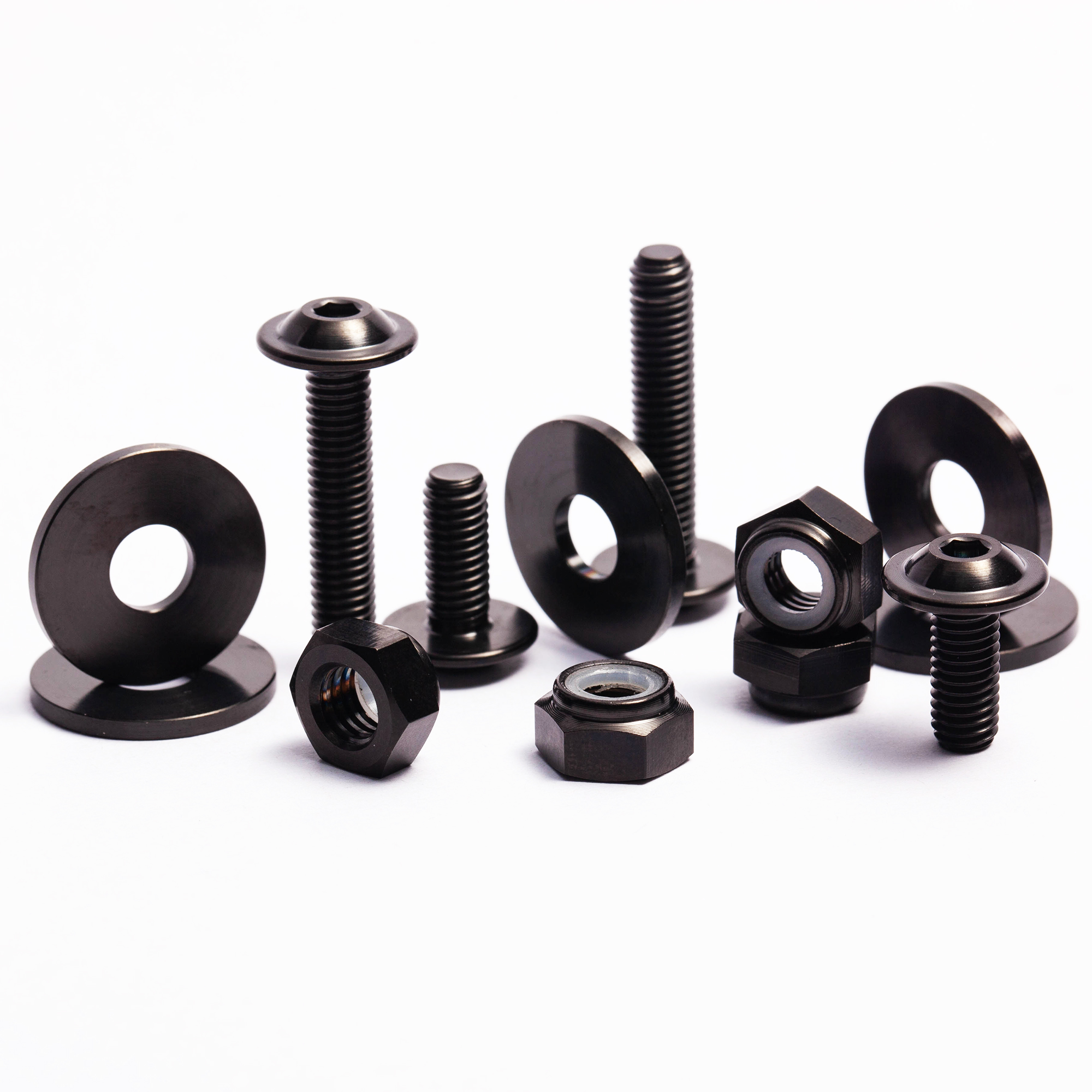
Whether you require standard DIN 6921 flange bolts, DIN 912 socket head screws, custom Torx disc brake bolts, or ultra-lightweight wheel lug hardware, Wexra provides rapid prototyping, low MOQ flexibilities, transparent mill certificates, and export support across North America, Europe, and Asia-Pacific markets.
100% Raw Titanium Bar Auditing
We source exclusively certified Grade 2, Grade 5, and Grade 9 vacuum arc remelted (VAR) round bars, verifying zero internal porosity via ultrasonic testing before machining begins.
Sub-Micron Quality Inspection
Equipped with Zeiss CMM, thread pitch optical comparators, digital micro-hardness testers, and salt-spray corrosion test chambers to guarantee zero-defect shipments.
Custom Surface Treatments
Offering in-house mirror polishing, micro-bead sandblasting, PVD TiN/TiCN vacuum coatings, and multi-color electrolytic anodizing (burnt blue, gold, purple, green, rainbow).