Featured OEM Titanium Fasteners & CNC Milled Components
High-strength, anti-galling, and lightweight titanium hardware engineered to ISO, DIN, and custom CAD specifications. Fully documented with EN 10204 Type 3.1 inspection certification.
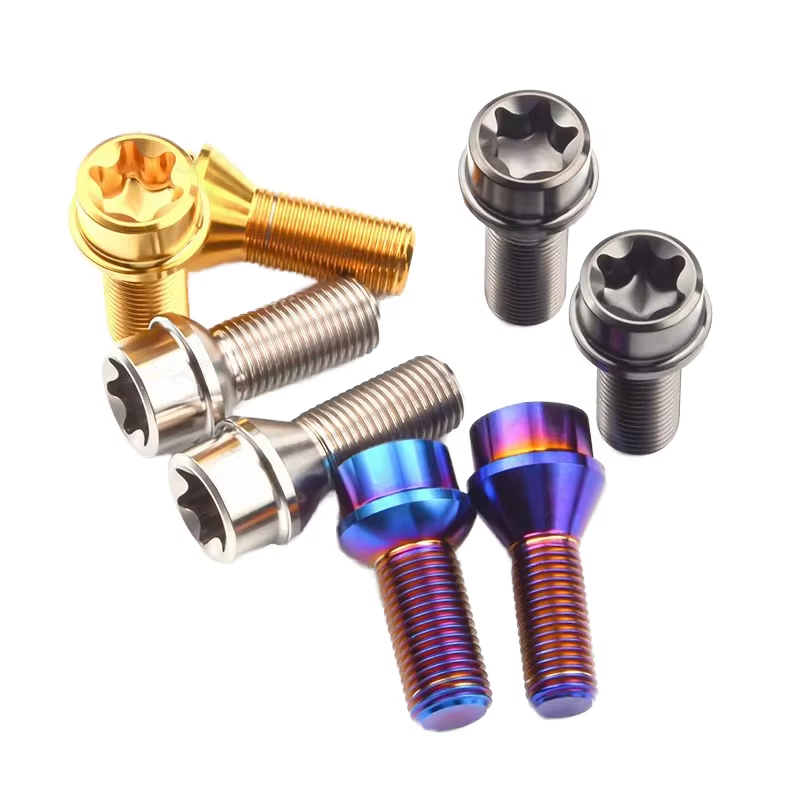
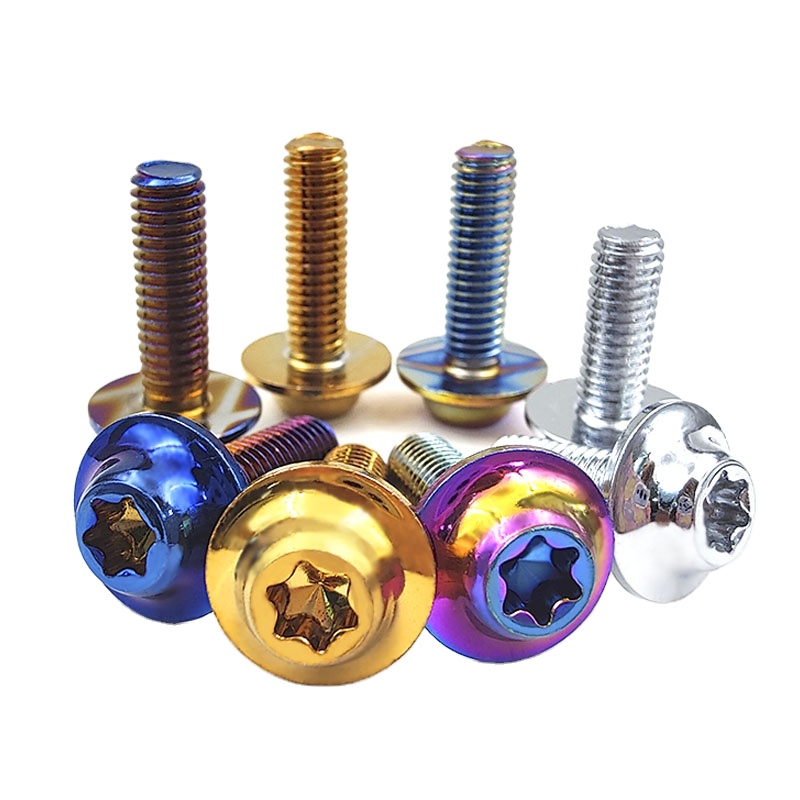
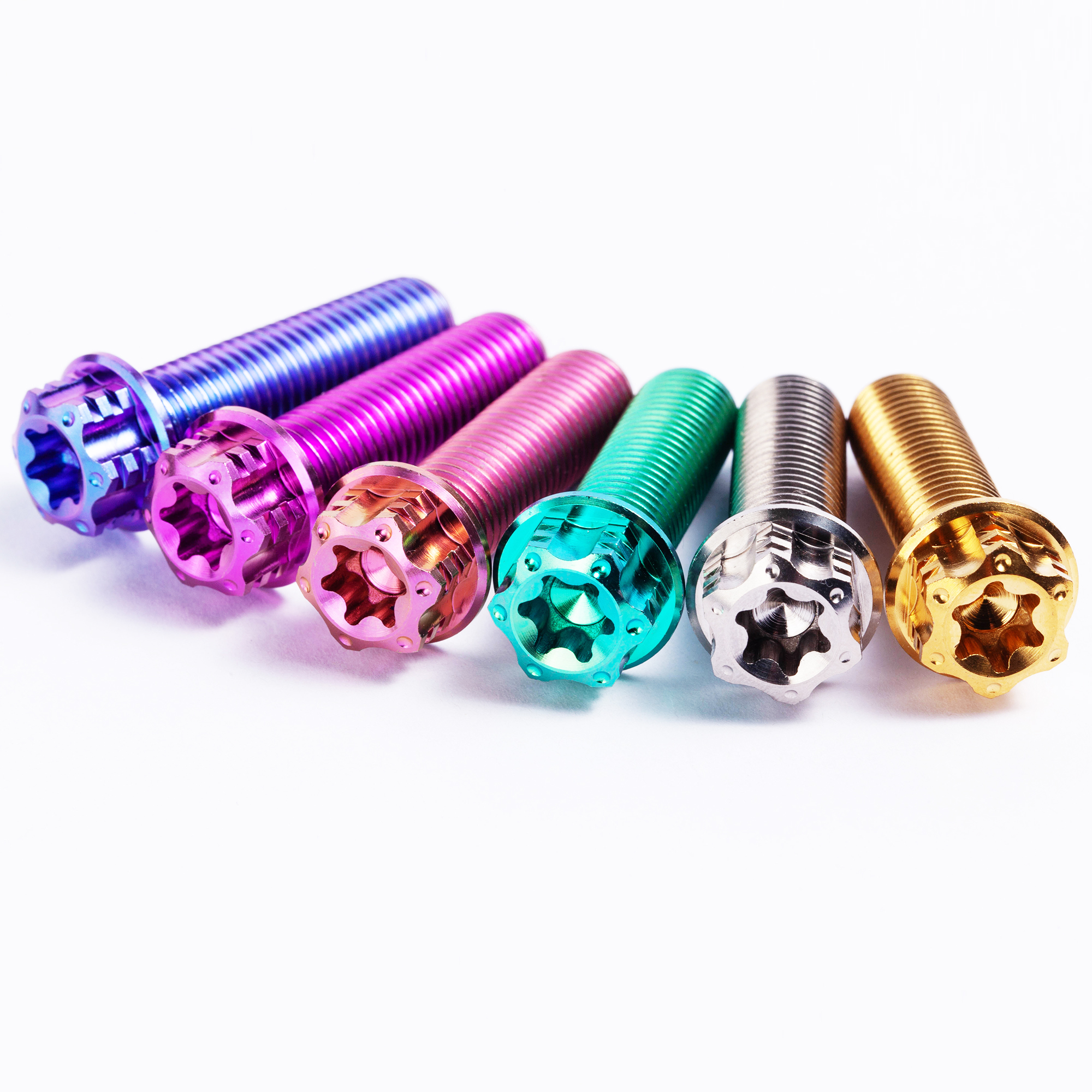
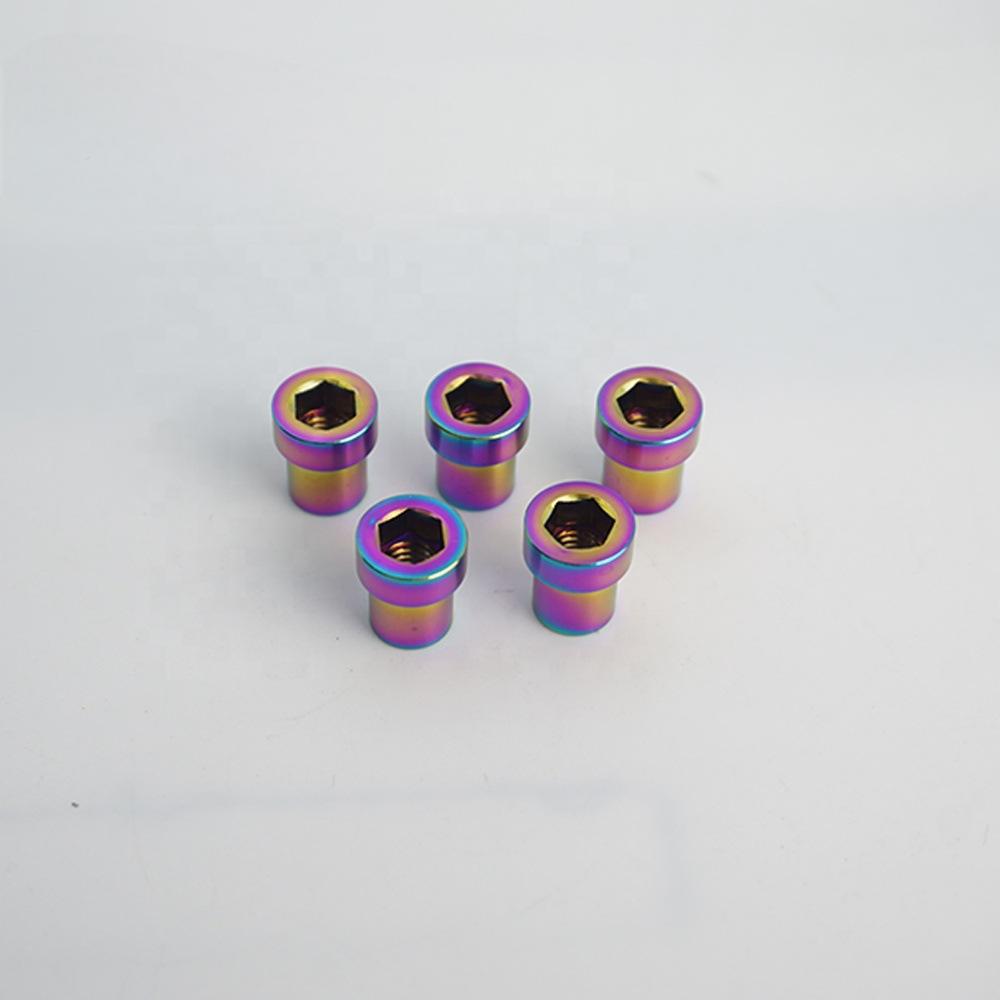
Subtractive CNC Milling of Titanium for Critical Applications
Navigating the low thermal conductivity, high adiabatic shear banding, and strain-hardening characteristics of Ti-6Al-4V (Grade 5) and Commercially Pure Grade 2 titanium in high-precision European supply chains.
Thermal Dissipation & HPC Coolant
Titanium exhibits an exceptionally poor thermal conductivity of approximately 6.7 W/(m·K), roughly one-fourth that of ferritic steels. This causes over 80% of generated cutting heat to concentrate directly at the cutting tool edge rather than dissipating through chips.
Our 5-axis CNC machining centers employ dedicated High-Pressure Coolant (HPC) delivery systems operating at 70 to 100 bar directly aimed at the tool-workpiece interface. This suppresses catastrophic thermal tool degradation, prevents alpha-case embrittlement on milled surfaces, and preserves geometric fidelity down to ±0.01 mm.
Vibration Suppression & Rigidity
With an elastic modulus of 110 to 114 GPa (roughly half that of structural carbon steel), titanium is inherently flexible. During thin-walled milling for aeronautic brackets or cycling components, workpieces tend to deflect away from cutter pressure, inducing chatter and geometric distortion.
We counteract flexural vibration through custom-engineered hydraulic clamping jigs, shrink-fit toolholders, and trochoidal milling strategies. Dynamically optimized radial depth of cut ($a_e$) and constant engagement angles maintain surface finishes to Ra ≤ 0.4 μm without secondary grinding.
Thread Rolling vs. Milled Threads
Tapped or milled threads in titanium components often exhibit micro-notches that act as primary initiation sites for high-cycle fatigue failure. For high-vibration applications in Spanish racing and aerospace assemblies, cut threads present severe operational risk.
Our facility incorporates progressive cylindrical die thread rolling. By cold-forming external threads, the continuous grain flow of the titanium alloy is plastically redirected rather than severed. This increases thread fatigue resistance by 30% to 45% and virtually eliminates micro-cracking under cyclic loading.
Material Property Matrix: Titanium vs. Conventional Aerospace & Motorsport Alloys
Values compiled in accordance with ASTM B348, ISO 5832-3, and EN 10088 standards. Tested for ambient temperature mechanical validation.
| Alloy Designation | Density (g/cm³) | Yield Strength Rp0.2 (MPa) | Tensile Strength Rm (MPa) | Elastic Modulus (GPa) | Corrosion Resistance | Machinability Index (%) |
|---|---|---|---|---|---|---|
| Ti-6Al-4V (Grade 5 / TC4) | 4.43 | 830 - 890 | 950 - 1050 | 114 | Exceptional / Seawater Proof | 22% |
| Ti-6Al-4V ELI (Grade 23 / Medical) | 4.43 | 790 - 830 | 860 - 920 | 110 | Biocompatible / ASTM F136 | 20% |
| Commercially Pure Ti (Grade 2) | 4.51 | 275 - 350 | 400 - 480 | 103 | Immune to Chloride Pitting | 40% |
| Stainless Steel 316L (1.4404) | 8.00 | 220 - 300 | 520 - 680 | 193 | Moderate (Prone to crevice attack) | 45% |
| Aluminium 7075-T6 (3.4365) | 2.81 | 480 - 505 | 540 - 570 | 72 | Poor (Galvanic susceptibility) | 100% (Baseline) |
| Alloy Steel 42CrMo4 (1.7225 / 10.9) | 7.85 | 900 | 1000 - 1200 | 210 | Unprotected: Severe Rusting | 65% |
Targeted Applications Across Spanish Manufacturing Hubs
From Andalusia's aeronautical corridor to Catalonia's high-performance motorsport workshops and the Basque Country's high-precision engineering clusters, our custom titanium components power mission-critical equipment.
Commercial & Military Aerostructures
In regions like Aerópolis (Seville) and Getafe (Madrid), tier subcontractors for major European aircraft programs require high strength-to-weight ratios for interior brackets, fuel pump housing fasteners, and sensor housings.
Titanium Grade 5's galvanic compatibility with carbon-fiber-reinforced polymers (CFRP) eliminates galvanic corrosion common with aluminum fasteners, ensuring zero corrosion degradation across long life cycles.
Motorsport, Supercar & Electric Racing
Surrounding the Circuit de Barcelona-Catalunya and the automotive engineering centers of Martorell, Spanish racing teams continuously target unsprung mass reduction.
Our CNC milled Grade 5 wheel lug nuts, brake caliper pins, and turbocharger flange studs shed up to 45% rotational mass compared to Class 10.9 steel while maintaining ultimate shear strengths above 900 MPa under dynamic heat loads up to 400°C.
Pro-Peloton & Ultralight Bicycle Hardware
Spain's cycling legacy—centered around Eibar’s precision tooling traditions and Girona’s gravel/road cycling design hubs—demands bespoke CNC cockpit components.
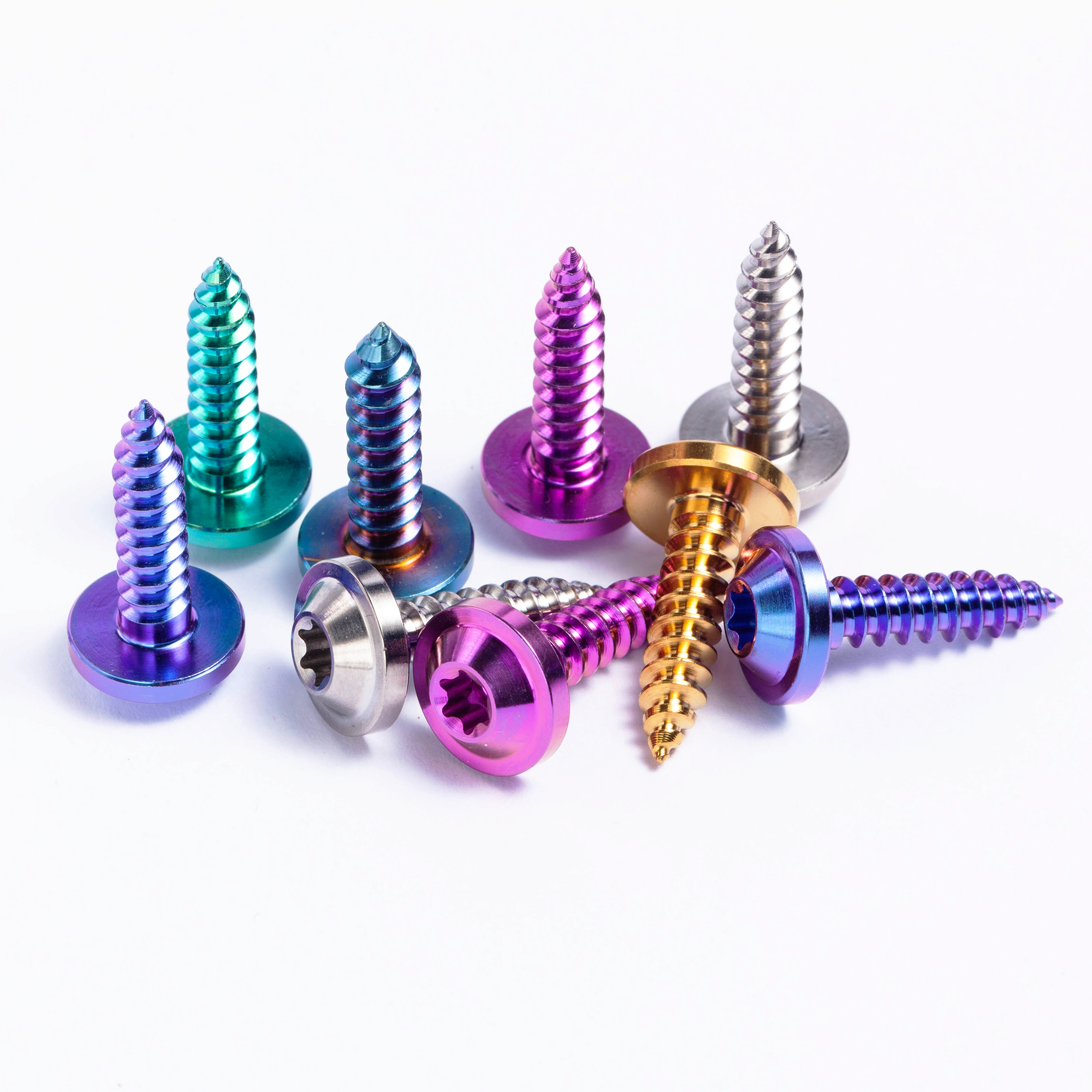
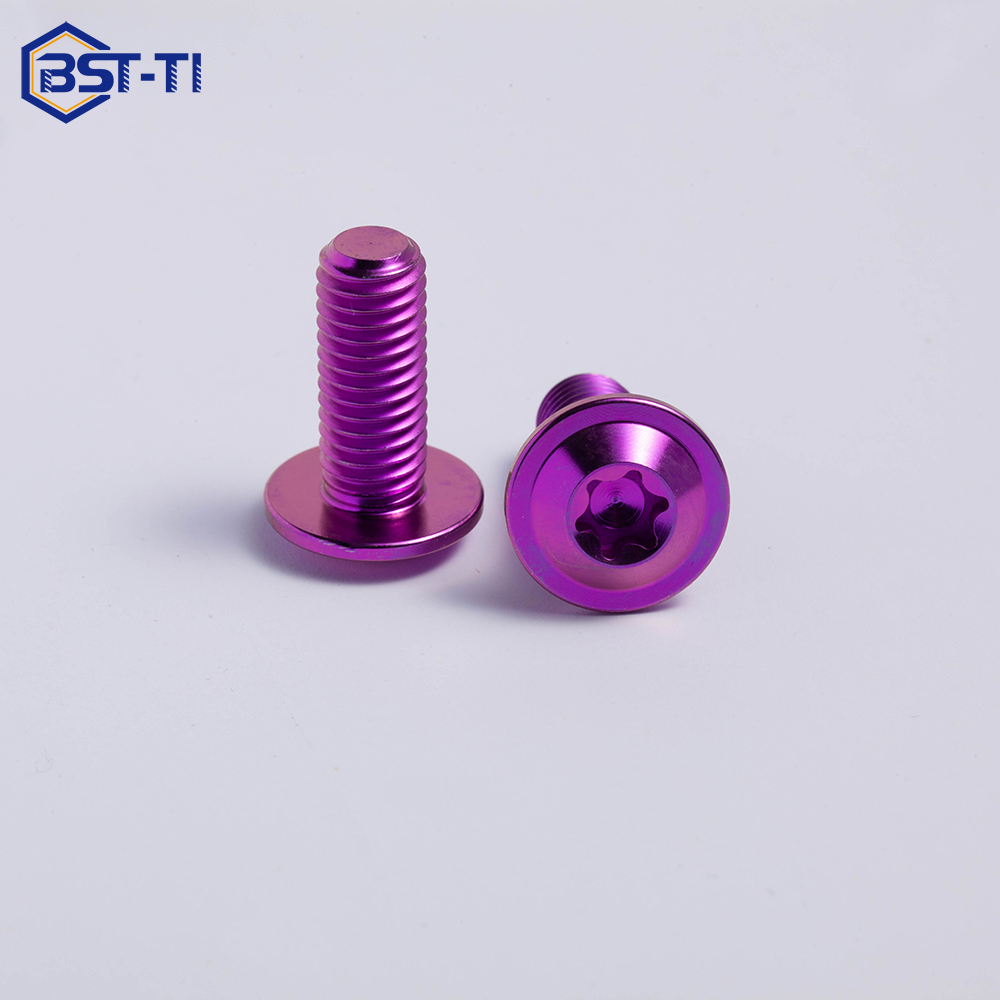
We mill custom hollow stem bolts, disc brake adapter bolts, and seatpost cradles with physical vapor deposition (PVD) rainbow, burnt blue, and mirror-polished finishes that resist extreme coastal sweat corrosion.
Marine, Naval & Subsea Offshore Infrastructure
The Atlantic shipyards of Galicia and Mediterranean naval engineering bases require subsea components that survive perpetual salt fog immersion without pitting.
Commercially Pure Grade 2 and Grade 5 milled valve seats, transducer housings, and underwater sensor couplings provide continuous immunity to chloride ion pitting, dramatically reducing maintenance turnaround for vessel retrofits.
Medical Implants & Bio-Chemical Robotics
Medical device and surgical fixture fabricators in Eastern Spain rely on ASTM F136 Grade 23 (ELI) CNC milled orthopaedic tooling and laboratory automation manifolds.
Our production strictly isolates titanium processing from carbon steel contamination to prevent iron cross-contamination, ensuring complete biocompatibility and non-magnetic operation in MRI-adjacent clinical hardware.
Custom Replacement Fastener Inventories
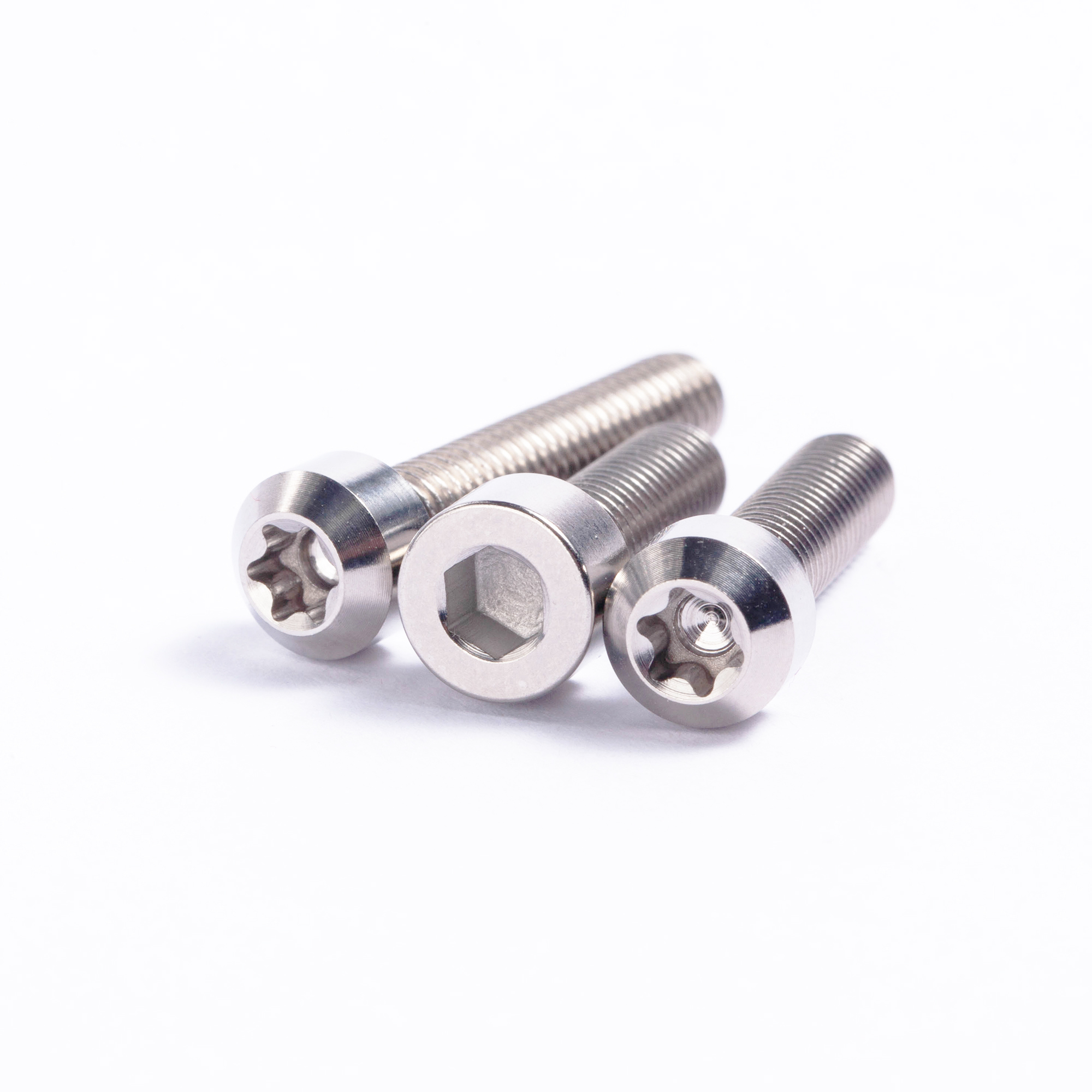
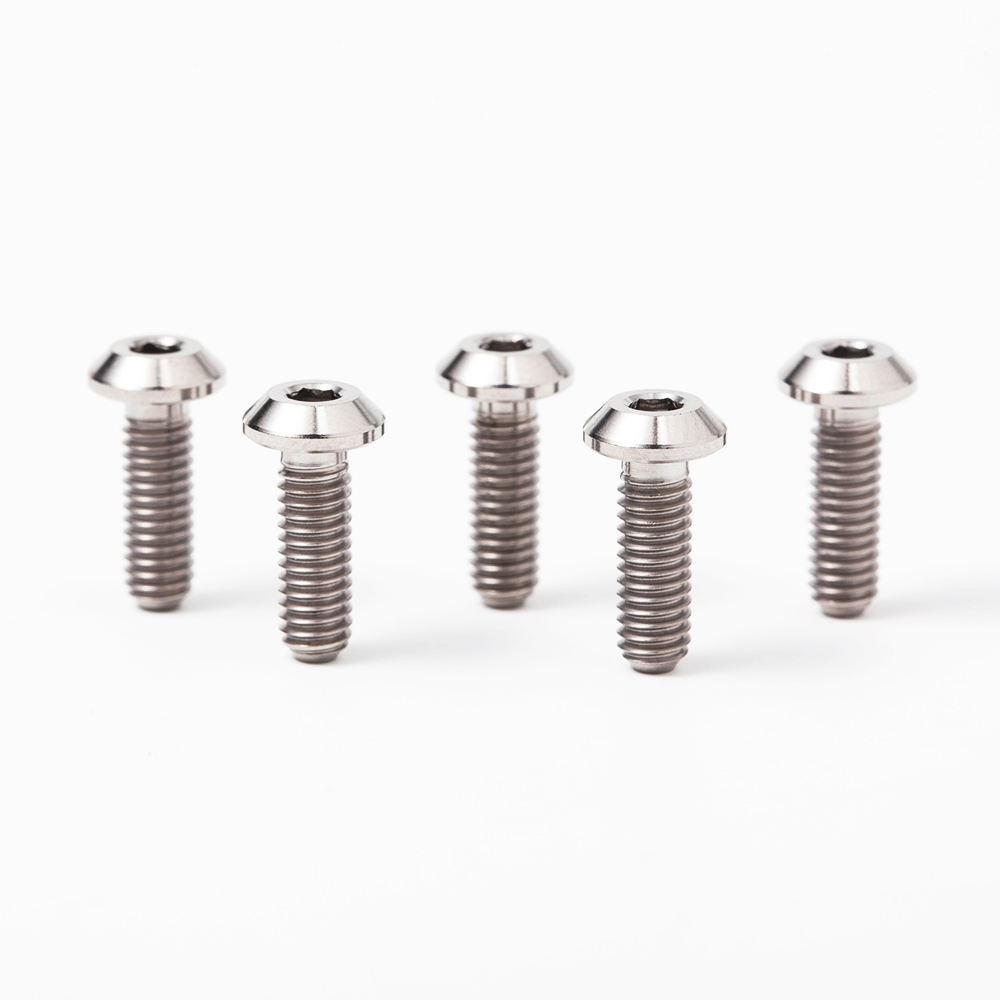
Spanish industrial supply distributors in Bilbao, Madrid, and Valencia require scheduled batch deliveries of high-tensile titanium hex flange bolts, socket head cap screws, and self-tapping fasteners.
We provide turnkey OEM custom packaging, laser etching of client part numbers, and barcoded traceability that seamlessly integrate into Spanish automated ERP warehousing systems.
Spain's Industrial Modernization & Titanium Demand
How strategic investments under the PERTE frameworks and European Green Deal initiatives are accelerating the structural transition from legacy heavy metals to lightweight, corrosion-immune titanium.
PERTE Aerospace & Defense Scaling
Spain's Strategic Project for Economic Recovery and Transformation (PERTE Aeroespacial) has mobilized over €2.4 billion into domestic aerospace supply chains. This push mandates immediate weight optimization across satellites, unmanned aerial vehicles (UAVs), and commercial airframes.
Subcontractors are replacing high-alloy stainless steel components with precision CNC milled titanium to cut parasitic mass, enabling extended loiter times and increased satellite payload capacities without compromising yield strength.
Electric Vehicle & Battery Lightweighting
Spain is Europe’s second-largest automotive producer. As the country rapidly scales production lines for commercial EVs and battery gigafactories in Sagunto and Martorell, vehicle curb weight has become a critical engineering constraint.
Titanium CNC milled chassis pivot bolts, battery enclosure fasteners, and suspension linkage brackets deliver high mechanical damping alongside 44% weight reductions, neutralizing the structural mass penalty of high-capacity lithium-ion battery packs.
EU REACH & ESG Compliant Finishing
Stricter European chemical safety regulations have restricted traditional hexavalent chromium cadmium plating on steel hardware. Spanish buyers must find inherently corrosion-resistant alternatives that require no toxic protective electroplating.
Titanium naturally generates an instantaneous, self-healing TiO₂ passive oxide film that guarantees lifelong atmospheric and galvanic stability, completely complying with EU REACH and RoHS mandates without chemical post-coatings.
Integrated Manufacturing & Quality Verification
Based in Jiaxing, Zhejiang, Jiaxing Wexra Titanium Products Co., Ltd. combines specialized metallurgical expertise with advanced multi-axis CNC machine tools, delivering complete traceability for Spanish industrial buyers.
Single-Facility Production Flow
We manage the full manufacturing cycle across our 1000+ m² facility—from certified titanium bar stock cutting and high-speed CNC turning/milling to thread rolling, automated vibratory polishing, and precision PVD color anodizing.
Eliminating outside subcontractors ensures absolute oversight of tool geometry, surface integrity, cleanliness, and delivery schedules for every batch entering European transit.
Metrological Quality Control
Our metrology laboratory uses Keyence optical coordinate measuring machines (CMM), Mitutoyo digital micrometers, and thread go/no-go ring gauges inspected against calibrated master sets.
Every shipment to Spain is accompanied by full chemical composition analysis, hardness test records (HRC 32–38 for Gr5), and EN 10204 Type 3.1 Material Test Certificates (MTC) verifying titanium ingot origin.
Rapid DFM & Prototype Agility
Spanish design engineers can send 2D STEP, IGES, DXF drawings, or reverse-engineering physical samples for a complete Design for Manufacturability (DFM) review within 8 working hours.
We support small-batch pilot prototyping (from 50 to 500 units) to validate dynamic fit and physical stress test performance before transitioning seamlessly into full-scale mass production runs.
Frequently Asked Questions by Spanish Sourcing Engineers
Clear answers addressing customs duties, EU compliance documents, galling mitigation, and shipping protocols for imports into the Kingdom of Spain.
What TARIC / HS codes apply to custom CNC titanium parts entering Spain?
Titanium CNC milled components typically clear Spanish customs under TARIC code 8108.90.90 (Other articles of titanium), which generally carries a low baseline third-country duty rate across EU borders. Standard threaded titanium fasteners fall under 8108.90.70 or 7318.15.95 equivalents depending on customs classification. We supply clean commercial invoices, packing lists, and detailed product descriptions to prevent clearance delays at Madrid Barajas, Barcelona El Prat, or the Port of Valencia.
Do you supply EN 10204 Type 3.1 material test certificates for traceability?
Yes. Every export lot comes with an authentic EN 10204 Type 3.1 Mill Test Certificate (MTC). This document details raw ingot melt origin, heat/lot numbers, precise chemical composition (Aluminum, Vanadium, Iron, Oxygen, Carbon, Nitrogen, Hydrogen limits), and mechanical properties including yield strength ($Rp_{0.2}$), ultimate tensile strength ($R_m$), and elongation percentage ($A$).
How do you prevent thread galling (gripado) during installation?
Titanium has a high friction coefficient against itself and other metals, which can cause micro-welding and thread galling under high torque. We address this by rolled micro-smooth root finishes, controlled micro-tolerancing, and specialized surface treatments. We offer hard anodization, PVD physical vapor deposition, and factory-applied dry-film lubricants (MoS₂). We also provide Spanish engineering teams with precise reduced torque specs and recommend anti-seize pastes for titanium-on-titanium interfaces.
Can you manage DDP (Delivered Duty Paid) shipments directly to Spanish facilities?
Yes, we regularly arrange DDP air freight (via DHL, FedEx, UPS) and DDP ocean/rail consolidations directly to our clients' loading docks across Spain—including Madrid, Barcelona, Bilbao, Seville, and Valencia. Under DDP Incoterms, all import tariffs, administrative handling, and Spanish import VAT (IVA) clearance are fully managed by our bonded forwarders, saving your procurement team from local customs administration.
What are your standard lead times for custom CNC titanium milled parts?
Prototype batches (5 to 50 parts) typically machine, inspect, and ship within 10 to 15 calendar days from drawing sign-off. Full mass-production runs of 1,000 to 50,000 units generally average 25 to 35 business days depending on geometric complexity and anodizing requirements. We also offer buffer-stock inventory agreements for long-term Spanish supply partners to ensure dispatch within 48 hours upon purchase order call-off.
Does titanium anodizing alter external thread tolerances and dimensions?
Unlike aluminum anodizing, which builds up a measurable anodic oxide layer of 10 to 50 μm, titanium anodizing is an electrolytic oxidation process that creates an interference oxide film measured in nanometers (typically 20 to 200 nm). As a result, titanium anodization does not alter external thread pitch, diameter, or fit class. Threads retain their precision 6g / 4h tolerance fits without stripping or post-finishing thread cleanout.