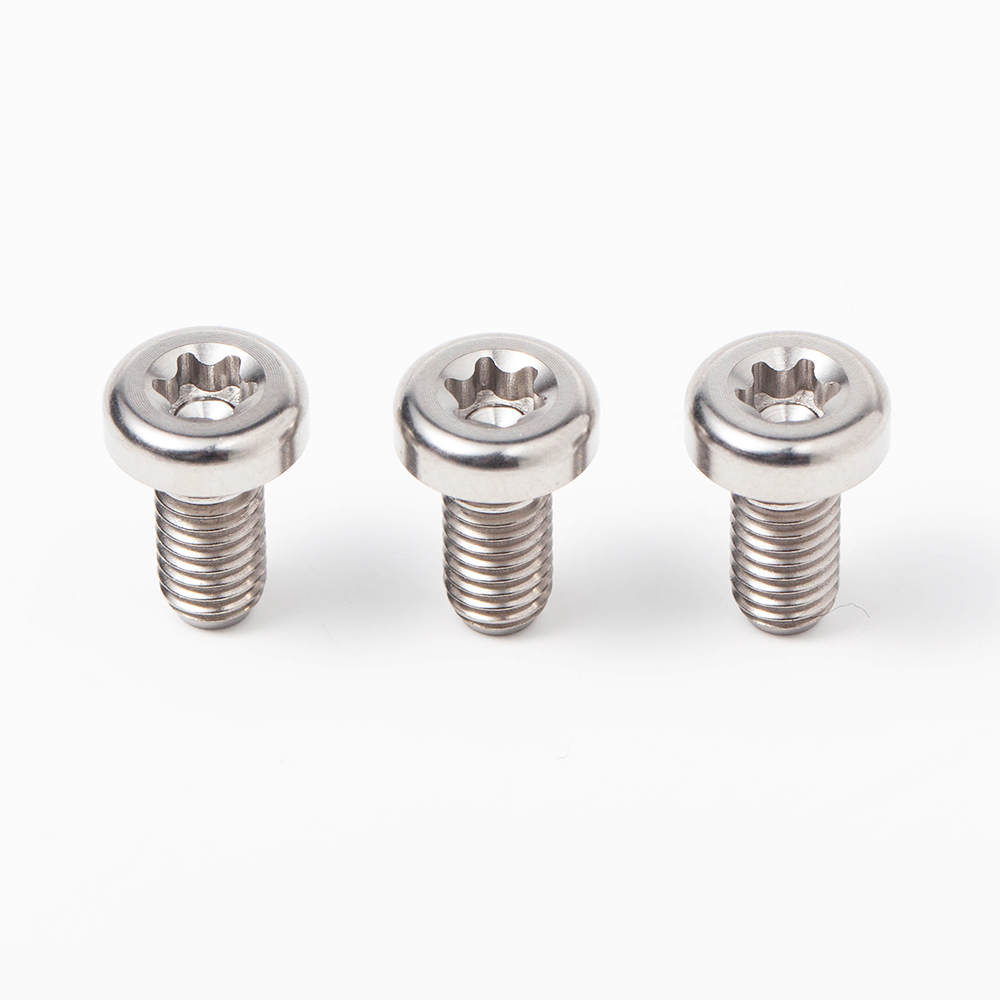
Precision Mechanical Lineup
High-Integrity Titanium Braking & Fastening Assemblies
Precision-engineered components meeting DIN, ISO, and motorsport-grade dimensional specifications. Specially calibrated for low thermal conductivity, high fatigue limits, and extreme environmental resilience.
6.7 W/m·K
Thermal Conductivity (Gr5)
±0.005 mm
Piston Bore Precision
Ra < 0.2 µm
Micro-Polished Skirt Finish
100% Non-Corrosive
Baltic De-Icing Salt Resistance
Comprehensive Engineering White Paper: Titanium Brake Piston Integration for Tartu & the Baltic Automotive Sphere
In high-performance braking, track racing, and municipal winter transport throughout Tartu County (Tartumaa) and Southern Estonia, mechanical integrity is perpetually challenged by thermal saturation and aggressive salt-induced oxidation. Jiaxing Wexra Titanium Products Co., Ltd. serves as a primary OEM/ODM manufacturer and specialized exporter, delivering metallurgical solutions tailored to Baltic operational demands. Our precision CNC-machined Grade 5 (Ti-6Al-4V) titanium brake pistons directly resolve the catastrophic hydraulic fluid boil, pedal fade, and caliper bore seizure that plague conventional aluminum (6061/7075-T6) and chromed steel pistons.
1. The Thermodynamic Imperative: Eliminating Brake Fluid Vaporization
Tartu’s unique geographic and seasonal automotive profile requires extreme braking modulation. Whether navigating the rigorous deceleration zones of local rally stages (such as Rally Estonia routes traversing Tartumaa and Otepää gravel and tarmac) or handling heavy daily braking on urban corridors across the Emajõgi river, heat accumulation remains an operational liability.
Standard OEM aluminum brake caliper pistons exhibit a high thermal conductivity rate of approximately 130 to 160 W/(m·K). Under persistent severe friction, heat generated at the brake pad friction boundary transmits unimpeded through the piston body into the caliper fluid chamber. Once temperatures surpass the boiling point of typical DOT 4 or DOT 5.1 hydraulic fluids (230°C to 260°C dry, declining to 155°C wet), micro-vapor pockets develop. The resulting gaseous compression causes spongy pedal travel, sudden loss of hydraulic clamping force, and potential total system degradation.
In contrast, Wexra Grade 5 Titanium Pistons feature an intrinsic thermal conductivity of approximately 6.7 W/(m·K)—over 95% lower than aluminum and substantially less than standard cast or ductile steels (~50 W/m·K). By functioning as an organic thermal barrier, our titanium pistons limit the conduction of destructive kinetic heat into the hydraulic fluid channels. The caliper maintains stable fluid temperatures, completely bypassing fluid vaporization cycles without requiring bulky auxiliary heat shields.
| Material Classification | Thermal Conductivity [W/(m·K)] | Density [g/cm³] | Tensile Strength [MPa] | Resistance to CaCl₂ / NaCl Corrosion |
|---|---|---|---|---|
| Wexra Grade 5 (Ti-6Al-4V) | 6.7 | 4.43 | 895 – 1050 | Immune (Self-Passivating TiO₂ Layer) |
| Aerospace Aluminum 7075-T6 | 130.0 | 2.81 | 572 | Susceptible to Pitting and Exfoliation |
| Hard Chromed OEM Carbon Steel | 52.0 | 7.85 | 450 – 620 | Prone to Flaking and Piston Bore Rust |
| Stainless Steel 304 / 316 | 16.2 | 8.00 | 515 – 580 | Moderate; High Weight Penalty |
2. Localized Operational Challenges in Tartu and Southern Estonia
Tartu presents a unique set of geographic, climate, and mechanical variables that engineers must address when specifying caliper piston materials:
Severe Baltic Winter Road Chemistry: Estonian transport authorities apply intensive de-icing regimes throughout November to April. The recurrent exposure to sodium chloride, calcium chloride, and magnesium chloride generates an aggressive galvanic cell when coupled with standard plated steel or aluminum pistons. Over time, pitting corrosion forms around the piston skirt, tearing fragile hydraulic pressure seals and dust boots. Once these seals are compromised, caliper retraction fails, causing continuous brake dragging, accelerated rotor warpage, and fuel efficiency loss. Wexra Grade 5 Titanium develops an immediate, self-healing stoichiometric Titanium Dioxide (TiO₂) passivating film, rendering the piston impervious to salt-water corrosion, road sludge, and electrochemical degradation.
Motorsport & Fast-Road Engineering (Rally Estonia Ecosystem): The motorsport ecosystem surrounding Tartu demands structural resilience against immense hydraulic line pressures. Racing calipers frequently experience peak line pressures exceeding 80 to 100 bar. At these thresholds, lightweight aluminum pistons suffer elastic deformation and micro-ovality, binding within the caliper bores during rapid transition braking. With a tensile yield strength exceeding 825 MPa and a high elastic modulus, Wexra titanium brake pistons eliminate bore-binding deflection while simultaneously delivering up to a 44% weight reduction compared to steel counterparts.
Castellation Venting
Crown designs engineered with radial slots to promote convective airflow between the pad backing plate and the hydraulic piston face.
Low-Friction Micro Finish
Cylindrical grinding and diamond polishing deliver Ra < 0.2 µm, ensuring minimal friction against Viton and EPDM caliper seals.
PVD & Anodized Hard-Coating
Optional Physical Vapor Deposition (PVD) DLC (Diamond-Like Carbon) coatings provide surface hardness ratings exceeding 2000 HV.
3. Enterprise Sourcing Strengths: Wexra Titanium Advantages
Sourcing directly from Jiaxing Wexra Titanium Products Co., Ltd. offers engineering managers, automotive workshops, and wholesale distributors in Tartu complete manufacturing control, comprehensive traceability, and favorable B2B economies of scale:
1. Strict ISO 9001:2015 Aerospace-Grade Verification: Every batch of titanium raw material imported into our production stream is analyzed via spectrometer analysis. We provide standardized EN 10204 Type 3.1 Mill Test Certificates (MTC) alongside ultrasonic testing logs, ensuring zero internal porosity, micro-cracking, or inclusion voids in critical braking components.
2. Multi-Axis CNC Turning Capabilities: Operating an advanced machine shop configured with live-tooled multi-axis CNC lathes, Wexra achieves tight dimensional limits (±0.005 mm) on critical piston outer diameters (OD). This prevents caliper bore leakage and seal bind across extreme thermal cycles (-40°C to +400°C).
3. Tailored OEM/ODM Blueprint Realization: We engineer pistons for legacy, modern, and motorsport calipers including Brembo, AP Racing, Alcon, Wilwood, Akebono, and proprietary electric vehicle (EV) brake platforms. Whether Tartu clients require thin-wall weight-optimized pistons or reinforced heavy-duty utility fleet variants, our design-for-manufacturing (DFM) engineering group delivers rapid prototypes within 7 to 10 days.
4. Export Logistics and Regulatory Compliance: We maintain comprehensive documentation for seamless clearance into the European Union single market. Our parts fully comply with RoHS and REACH standards, backed by EPR-compliant sustainable packaging solutions.
Emerging Regional Trends: Titanium Braking Systems Across Tartumaa
The engineering landscape of Tartu—recognized as Estonia’s academic and technological heart—is rapidly evolving around lightweighting, motorsport performance, and autonomous electric mobility:
Electric Vehicle (EV) Thermal Management: The sharp increase in passenger EV adoption in Estonia poses specific braking challenges. Heavy battery payloads substantially amplify vehicular inertia, resulting in heightened kinetic energy absorption requirements at the disc boundary. Furthermore, the regenerative braking cycle causes mechanical brakes to sit idle for long stretches, exposing caliper pistons to cold, damp, salt-laden environments before sudden emergency braking is required. Grade 5 titanium pistons are increasingly specified by regional EV engineering initiatives to counter corrosion-induced sticking while managing heat during continuous hard stops.
Autonomous Delivery & Light Utility Fleets: With the development of autonomous commercial vehicles, unmanned delivery fleets, and smart-city transport initiatives across Tartu, mechanical reliability is paramount. Unscheduled downtime caused by seized brake calipers represents direct financial loss. Transitioning commercial fleet calipers to titanium internal components extends maintenance intervals from annual rebuilds to multi-year duty cycles.
Sustainable Circular Engineering: Baltic public and commercial sectors prioritize equipment longevity and life-cycle carbon reduction. Unlike plated carbon steel pistons that degrade and require replacement during routine servicing, titanium pistons do not corrode, wear, or degrade. They can be inspected, cleaned, and fitted with fresh seals indefinitely, aligning with circular economy initiatives.
Frequently Asked Questions: Sourcing Titanium Brake Pistons in Tartu
Why should Tartu workshops prefer Ti-6Al-4V over Stainless Steel for brake pistons?
While stainless steel (304 or 316) offers acceptable corrosion resistance and lower thermal conductivity than aluminum, it introduces a severe weight penalty (density ~8.0 g/cm³). Grade 5 Titanium is nearly half the weight (4.43 g/cm³) while delivering higher yield strength and an even lower thermal conductivity profile (6.7 vs 16.2 W/m·K), lowering unsprung weight and improving suspension response on uneven gravel surfaces.
How does Wexra manage customs clearance and EU trade compliance for Estonia?
All commercial consignments destined for Estonia include complete HS Code classifications, commercial invoices, packing lists, and certified Certificates of Origin. Our operations fully comply with EU product safety directives, RoHS/REACH compliance frameworks, and CE certifications, ensuring direct processing through Estonian customs (Maksu- ja Tolliamet) without unexpected regulatory holds.
Can Wexra machine titanium pistons from legacy or non-standard caliper samples?
Yes. If CAD models or original blueprints are unavailable, clients in Tartu can dispatch physical samples to our technical center. Our metrology facility performs 3D optical coordinate scanning, micrometric tolerance profiling, and material spectroscopy to generate accurate CAD/CAM toolpaths for prototype and volume runs.
Will titanium pistons gall or seize inside an aluminum caliper body?
No. In hydraulic calipers, the piston skirt does not directly contact the bare caliper cylinder wall; it interfaces directly with flexible elastomer pressure seals and dust scrapers while being continually lubricated by brake fluid. Furthermore, Wexra precision micro-polishes all outer piston skirts to a surface roughness of Ra < 0.2 µm, completely mitigating micro-scuffing and extending seal working life.