High-Performance Titanium Hardware Catalog
Explore our aerospace-grade fasteners and CNC machined hardware engineered under stringent ISO 9001:2015 quality standards, built to withstand extreme dynamic stress.
The Kinematics of Valvetrain Inertia & Titanium Metallurgy
A rigorous engineering perspective on harmonic valve float mitigation, cyclical fatigue limits, and mass reduction in high-stress internal combustion architectures.
1. Reciprocating Mass Dynamics and Harmonics Valve Float Elimination
In modern high-performance engines, the valve spring retainer serves as the critical structural interface between the valve lock, the spring seat, and the inner/outer concentric valve springs. As engine speeds scale beyond 8,500 RPM—a common operational baseline for naturally aspirated racing engines and high-boost forced induction powertrains developed in the Southern California motorsport belt—the reciprocating mass of the valvetrain becomes the primary governing limitation. Every gram added to the valve side of the rocker arm multiplies exponentially with acceleration: F = m · a. When the acceleration forces exceed the restoring potential of the valve spring assembly, an uncontrolled separation known as "valve float" occurs. Valve float induces erratic valve timing, dramatic volumetric efficiency losses, bounce against the valve seat, and in severe interference configurations, cataclysmic piston-to-valve contact.
Conventional chrome-moly steel (such as quenched and tempered 4140 or 4340 alloy) retainers exhibit typical weights varying between 18 and 32 grams per unit depending on diameter and spring step configuration. By re-engineering the retainer architecture utilizing Ti-6Al-4V Grade 5 (UNS R56400 / ASTM B348), component mass is reduced by approximately 40% to 45% without compromising structural stiffness or modulus of resilience. This substantial reduction in parasitic oscillating weight yields immediate dynamic advantages: it raises the engine's natural valve-float threshold by 600 to 1,200 RPM, diminishes parasitic frictional drag across camshaft drive lobes, and allows race engine builders to utilize lower seat-pressure valve springs. Lower spring pressures directly mitigate premature camshaft lobe wear, reduce oil shearing temperatures, and improve overall mechanical powertrain efficiency.
| Material Specification | Density (g/cm³) | Tensile Strength (MPa) | Fatigue Limit (10⁷ Cycles) | Modulus of Elasticity (GPa) | Salt-Mist Corrosion Resistance | Engineering Assessment |
|---|---|---|---|---|---|---|
| Ti-6Al-4V (Grade 5 Titanium) | 4.43 | 950 - 1050 | 510 MPa | 114 | Immune / Self-Passivating | Ideal balance of inertia reduction, fatigue life & salt tolerance |
| Ti-6Al-2Sn-4Zr-2Mo (6242 Near-Alpha) | 4.54 | 1000 - 1120 | 540 MPa | 115 | Immune / Self-Passivating | High-temperature aerospace defense & turbo marine exhaust valves |
| 4140 Chromoly Steel (Quenched & Tempered) | 7.85 | 950 - 1080 | 480 MPa | 210 | Prone to Rapid Oxidation | Excessive reciprocating mass; high inertial load at >8000 RPM |
| 7075-T6 Hard-Anodized Aluminum | 2.81 | 510 - 540 | 160 MPa | 72 | Pitting in Marine Environments | Severe fatigue notch sensitivity; catastrophic sudden valvetrain shear risk |
2. Microstructure Integrity, Cold-Working, and Surface Tribology
A common engineering failure mode in low-grade titanium retainers is localized galling, micro-fretting, and step-wear induced by high-frequency spring resonance (spring dance). During operation, the top flat of the outermost spring coils micro-rotates against the retainer's undersurface flange. If the retainer is manufactured from commercially pure Grade 2 titanium or non-homogeneous bar stock containing alpha-case brittleness, micro-cracks propagate along the grain boundaries, culminating in catastrophic split retainers.
At our manufacturing facilities, every titanium valve retainer is precision-turned from vacuum-arc remelted (VAR) medical- and aerospace-certified Grade 5 Ti-6Al-4V stock. The raw material undergoes rigorous ultrasonic non-destructive testing (NDT) to eliminate internal voids or interstitial inclusions. Post CNC 5-axis contouring, retainers undergo micro-shot peening. This mechanical surface treatment induces a uniform layer of compressive residual stress along the fillet radii and the critical 7-degree or 10-degree lock taper interfaces. This compressive surface mantle effectively counteracts cyclical tensile stresses, elevating the component’s high-cycle fatigue threshold beyond 100,000,000 engine cycles. For extreme endurance racing—such as the SCORE Baja 1000 or continuous offshore boat throttle runs—our retainers can be specified with Physical Vapor Deposition (PVD) Diamond-Like Carbon (DLC) or Chromium Nitride (CrN) coatings, yielding a surface hardness exceeding 2,500 HV and dropping friction coefficients below 0.10.
Finite Element Stress Optimization
Iterative CAD/FEA simulation removes every non-structural microgram from the retainer body while reinforcing the high-shear taper collar that anchors the valve stem locks under violent rebound forces.
Total Passivation & Salt Immunity
Unlike chromoly or hardened tool steel that rapidly corrodes in Southern California's marine air boundary layer, Ti-6Al-4V spontaneously produces an impermeable TiO₂ passive film that prevents corrosion-induced stress risers.
Micron-Level CNC Tolerances
Machined on Swiss-type high-speed turning centers with concentricity held within ±0.005 mm, ensuring perfect axial load distribution across inner and outer dual-spring packages and zero valve stem binding.
San Diego Engineering Footprint & Mission Profiles
From desert off-road torture tests to littoral defense powerplants, our titanium valve retainers satisfy the most stringent aerospace and motorsport demands in Southern California.
East County Off-Road & Trophy Truck Platforms
San Diego County, specifically the machining corridors of El Cajon, Santee, and Lakeside, serves as the epicentral R&D launchpad for SCORE International desert racing, including the gruelling Baja 500 and Baja 1000. Trophy Trucks and Class 1 buggies powered by 1,000+ HP naturally aspirated big-block V8s endure tens of hours of violent throttle cycling, thermal shock, and dust-induced valve wear.
- Dual-spring step configurations for PAC Racing & PSI springs
- Shock-resistant 10-degree super lock angles prevent pull-through
- Withstands sustained 7,500 RPM full-throttle silt bed hammering
San Diego Bay Naval & Offshore Marine Power
Operating across Mission Bay, San Diego Harbor, and Point Loma naval testing installations, marine engine builders face severe saline atmospheric degradation. Supercharged offshore racing catamarans and tactical rigid-hull inflatable boats (RHIBs) utilize high-boost marine engines where salt spray ingression rapidly pits conventional steel retainers, catalyzing structural failure.
- Zero oxidation risk in persistent salt-fog littoral conditions
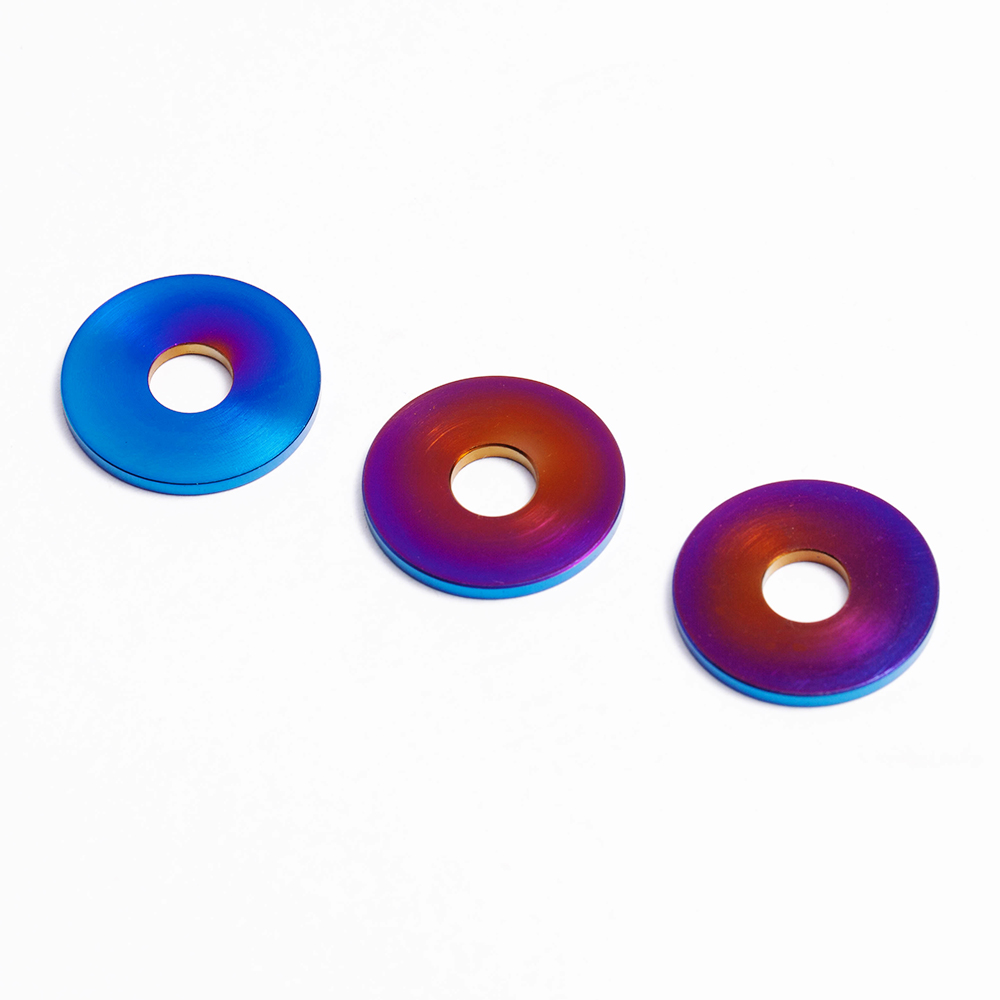
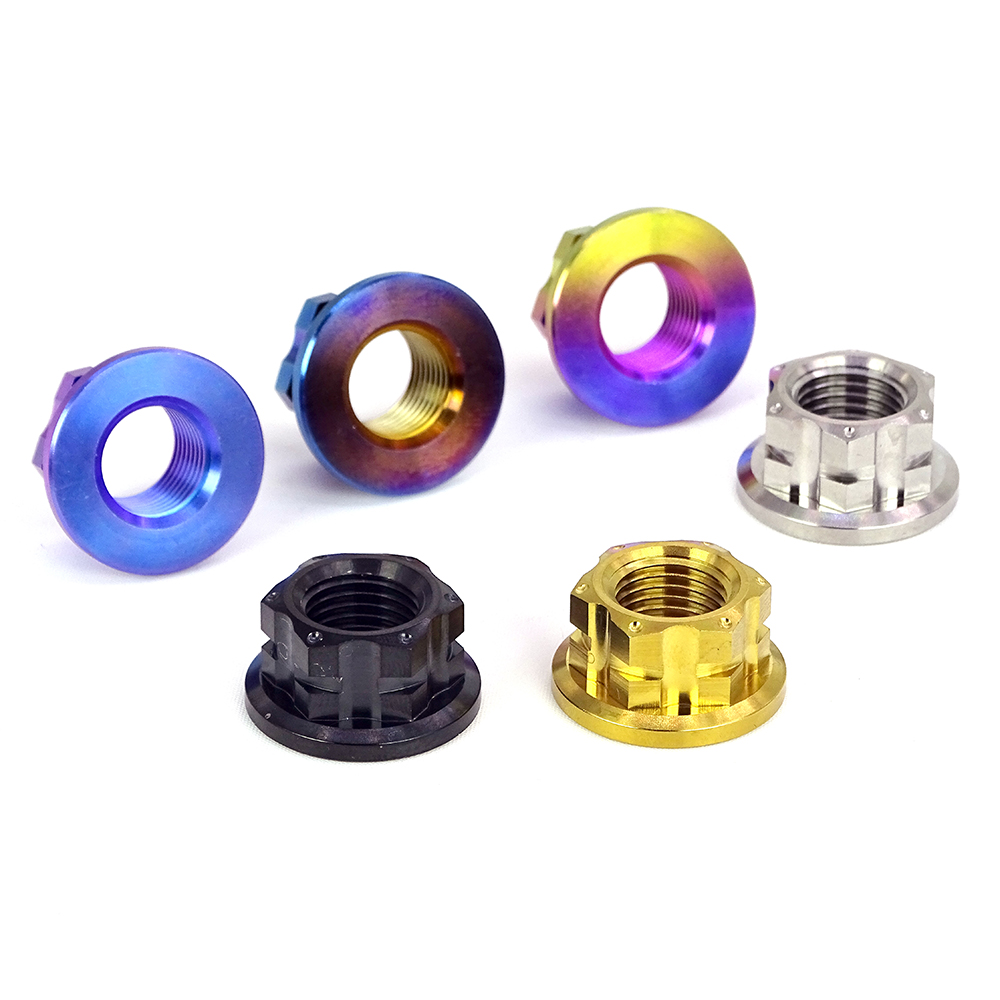
- Custom anodization coatings provide visual wear diagnostics
- Compatible with stainless steel, Inconel, and titanium valves
Miramar & Kearny Mesa Defense / Drone Propulsion
San Diego's storied aerospace defense manufacturing hub—spanning Miramar, Kearny Mesa, and Sorrento Valley—demands aerospace-grade small-displacement internal combustion engines and hybrid generators for Unmanned Aerial Vehicles (UAVs). In these mission-critical airborne duty cycles, power-to-weight ratios and mean-time-between-failures (MTBF) dictate operational range.
- AS9100 / ISO 9001:2015 strict quality control compliance
- Ultra-lightweight micro-retainers for 4mm & 5mm valve stems
- 100% optical CMM dimensional certification with full MTC
San Diego Engineering & Sourcing Trends
Strategic structural shifts shaping how performance tuners, defense contractors, and specialized builders procure critical valvetrain hardware.
1. The Transition to High-RPM Hybridized Valvetrains
The automotive performance sector in Southern California is navigating aggressive CARB environmental standards while preserving competitive motorsport dominance. This has catalyzed the development of hybridized powertrain architectures where internal combustion units operate at higher, more concentrated RPM bands to optimize electrical generation or peak thermal efficiency. As modern cylinder heads adopt tighter packaging configurations with narrower valve angles (such as 10-degree and 12-degree wedge heads or modern DOHC multi-valve layouts), conventional wide-diameter retainers cannot be accommodated. San Diego builders are transitioning to custom compact titanium retainers matched with beehive springs. Beehive spring geometry relocates spring mass away from the moving retainer, and when combined with a lightweight Gr5 titanium retainer, decreases dynamic reciprocating load by up to 55%.
2. Demand for Rapid-Response Agile Prototyping Over Rigid Bulk Stock
Local machine shops across Chula Vista, Poway, and Oceanside frequently handle short-run custom builds—from historic IMSA prototype race restorations to custom crate engine platforms. Regional engine builders no longer tolerate 16-week delivery cycles from rigid legacy distributors. They demand direct manufacturer collaboration capable of converting CAD solid models into low-volume production batches (from 32 to 500 units) within short turnaround windows. Furthermore, the integration of bespoke lock tapers (such as custom 8-degree radius-bead locks or proprietary European angles) requires deep Design for Manufacturability (DFM) expertise that bridge CNC turning directly to the dynamometer room.
3. Strict Material Traceability in Response to Counterfeit Market Risks
The influx of substandard titanium imports made from unverified aerospace scrap or re-melted turnings has caused catastrophic valvetrain failures across the racing industry. In high-lift cam profiles (>0.700" lift), brittle alpha-phase inclusions cause retainers to split along the lock seat without warning. San Diego purchasing agents and engineering teams now enforce non-negotiable procurement parameters: certified chemical mill test reports (MTC) adhering to ASTM B348, explicit proof of vacuum annealing, and full heat-lot traceability from ingot to finished boxed set.
Why Tier-1 Builders Partner With Us
Jiaxing Wexra Titanium Products Co., Ltd. combines specialized metallurgical mastery, dedicated in-house multi-axis CNC capacity, and export-grade quality assurance.
ISO 9001:2015 Registered
Every phase of our production—from bar stock verification, CNC turning, surface treatment, to laser etching—is governed by strict quality management protocols.
Aerospace Gr5 Titanium Only
We work exclusively with certified Grade 5 (Ti-6Al-4V) and premium titanium alloys. No contaminated scrap or uncertified commercially pure substitutions are tolerated.
Rapid DFM & Custom OEM/ODM
Send 2D prints, STEP files, or physical sample retainers. Our engineering team returns comprehensive Design for Manufacturability (DFM) reviews within 8 hours.
Seamless US Logistics Flow
With more than 91% of our manufacturing exported globally to the US, Germany, UK, and Canada, we guarantee rapid express transit and flawless customs clearance to San Diego facilities.
Frequently Asked Questions for San Diego Engineers
In-depth technical answers addressing metallurgy, valve lock mating, service longevity, and procurement protocols.
What is the typical operational lifespan of Ti-6Al-4V retainers in professional racing?
In drag racing and qualifying applications, titanium retainers can endure full seasons without degradation. For endurance environments like the Baja 1000 or continuous marine use, we recommend inspection every 40 to 60 operating hours. Check the valve lock taper for wear steps and the spring landing face for fretting. With our micro-shot-peened or DLC-treated finishes, component life is routinely extended by over 200% compared to untreated titanium.
Can your retainers be engineered to interface with custom valve spring steps?
Yes. We regularly produce retainers tailored to proprietary dual-spring, triple-spring, and single-beehive geometry. When placing a custom order, provide your outer spring inside diameter (ID), inner spring ID, damper thickness, and installed height requirements. We ensure precision clearance (±0.05 mm) along the spring location steps to prevent binding or loose floating.
Should San Diego marine builds choose Grade 2 or Grade 5 titanium retainers?
Grade 5 (Ti-6Al-4V) is mandatory for valve retainers. Grade 2 is commercially pure titanium with a tensile strength of roughly 345 MPa—entirely inadequate for the dynamic clamping loads exerted by racing valve springs (which often exceed 400 lbs open pressure). Grade 5 provides over 950 MPa tensile strength, high shear resistance, and complete immunity to salt air oxidation.
How do you eliminate galling between hardened steel valve locks and titanium retainers?
Galling occurs under micro-slippage if taper angles do not mate with 100% surface contact. We CNC turn our tapers (7-degree, 10-degree, or custom radiused bead) to an optical surface finish (Ra 0.2 – 0.4 µm) with precise angle control. We also recommend using high-pressure assembly lubricant with molybdenum disulfide or selecting our PVD-coated retainers to eliminate metal-to-metal galling during initial break-in.
What quality assurance records accompany commercial shipments to San Diego?
Every production batch is accompanied by an EN 10204 3.1 Certified Material Test Report (MTC) providing full spectrographic chemical analysis and mechanical tensile testing results. In addition, we furnish CMM dimensional inspection protocols, RoHS and REACH compliance documentation, and surface roughness verification logs for aerospace and defense audit trails.
What is the standard lead time for custom prototype valvetrain orders?
Following CAD/drawing approval, rapid prototype runs (e.g., 16 to 64 units) are machined and inspected within 7 to 10 working days. Production volume orders (1,000 to 10,000+ pieces) are fulfilled in 3 to 4 weeks. Shipments to San Diego County fly via express international air freight (FedEx/DHL/UPS), arriving at your machine shop or assembly plant within 3 to 5 business days.
Engineer Your High-RPM Valvetrain with Proven Titanium Reliability
Whether you require custom prototype retainers for an off-road racing engine, a high-boost offshore marine powertrain, or production runs for high-performance cylinder heads, our engineering team is ready to assist with DFM reviews and rapid quotes.
Get a Quote