Featured Precision Titanium Fasteners & Components
Engineered for extreme strength-to-weight performance, superior fatigue limit, and total corrosion resistance in motorsport, cycling, aerospace, and industrial applications.
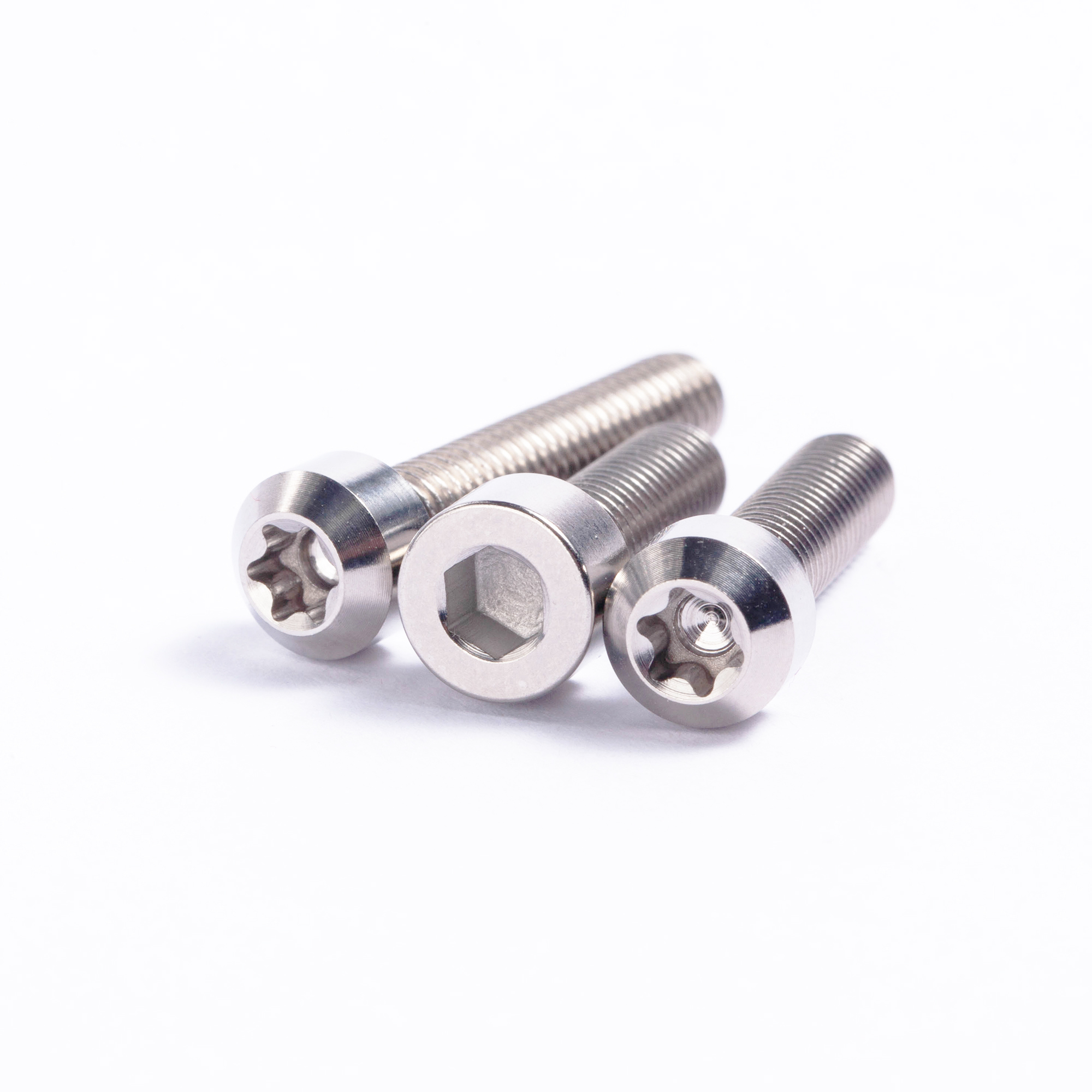
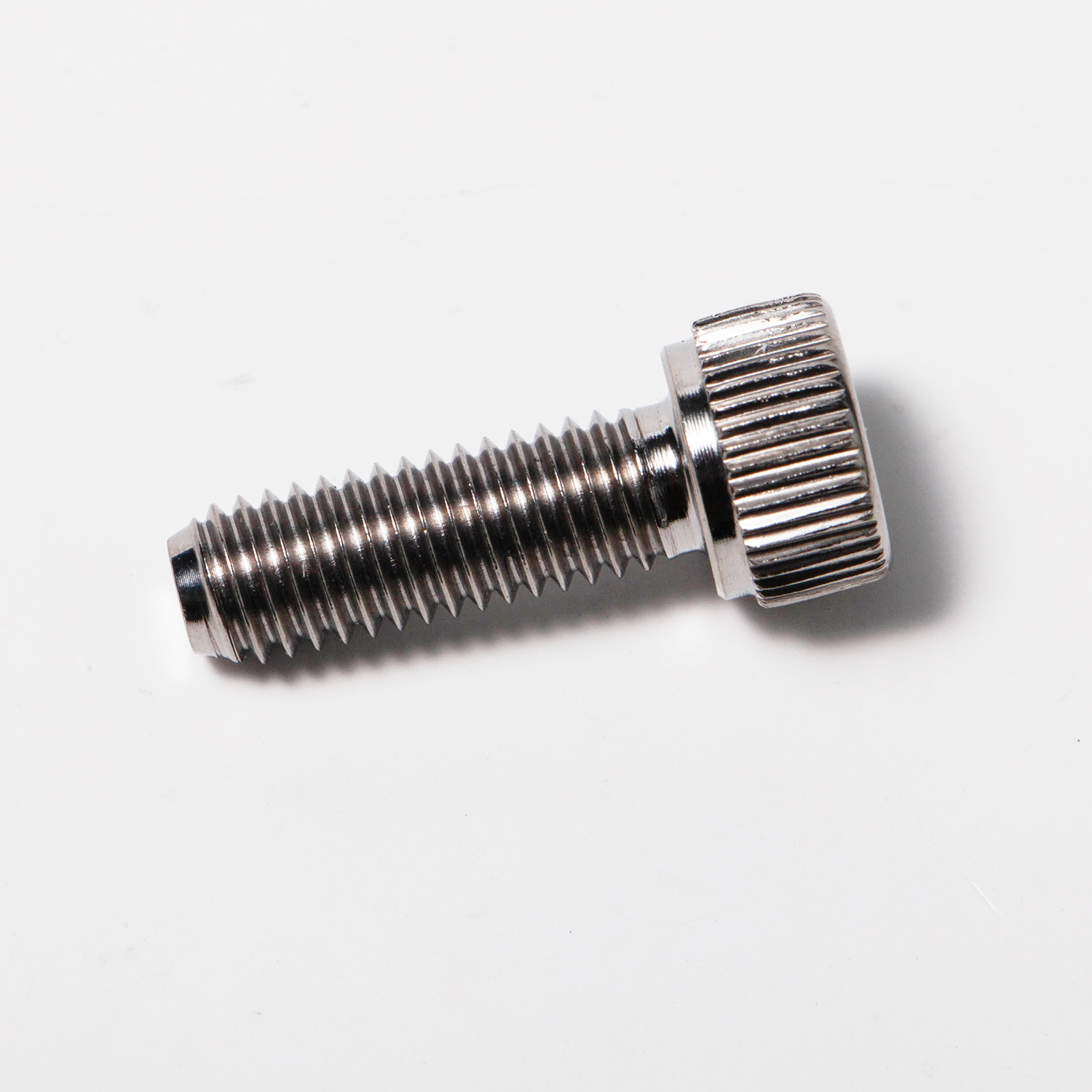
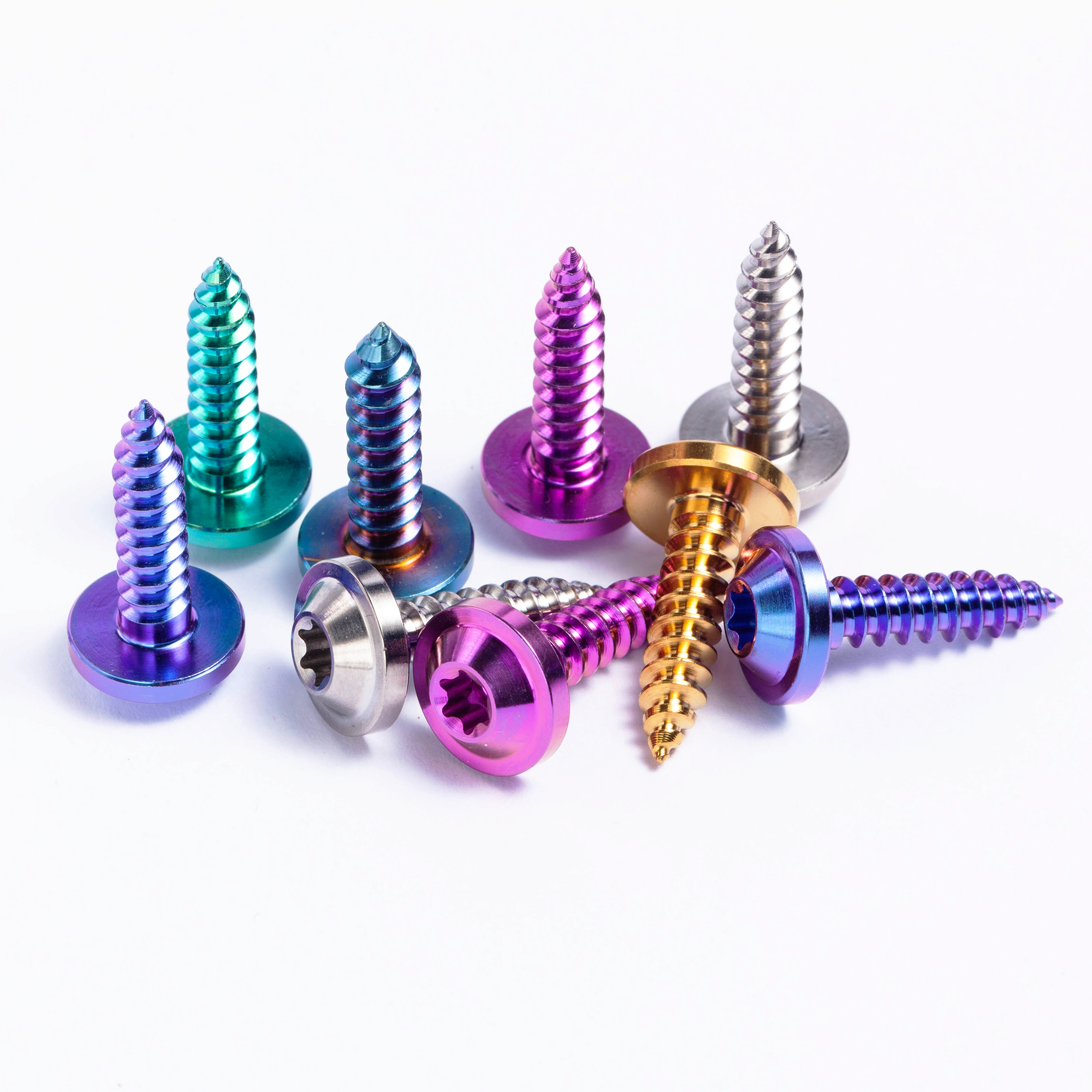
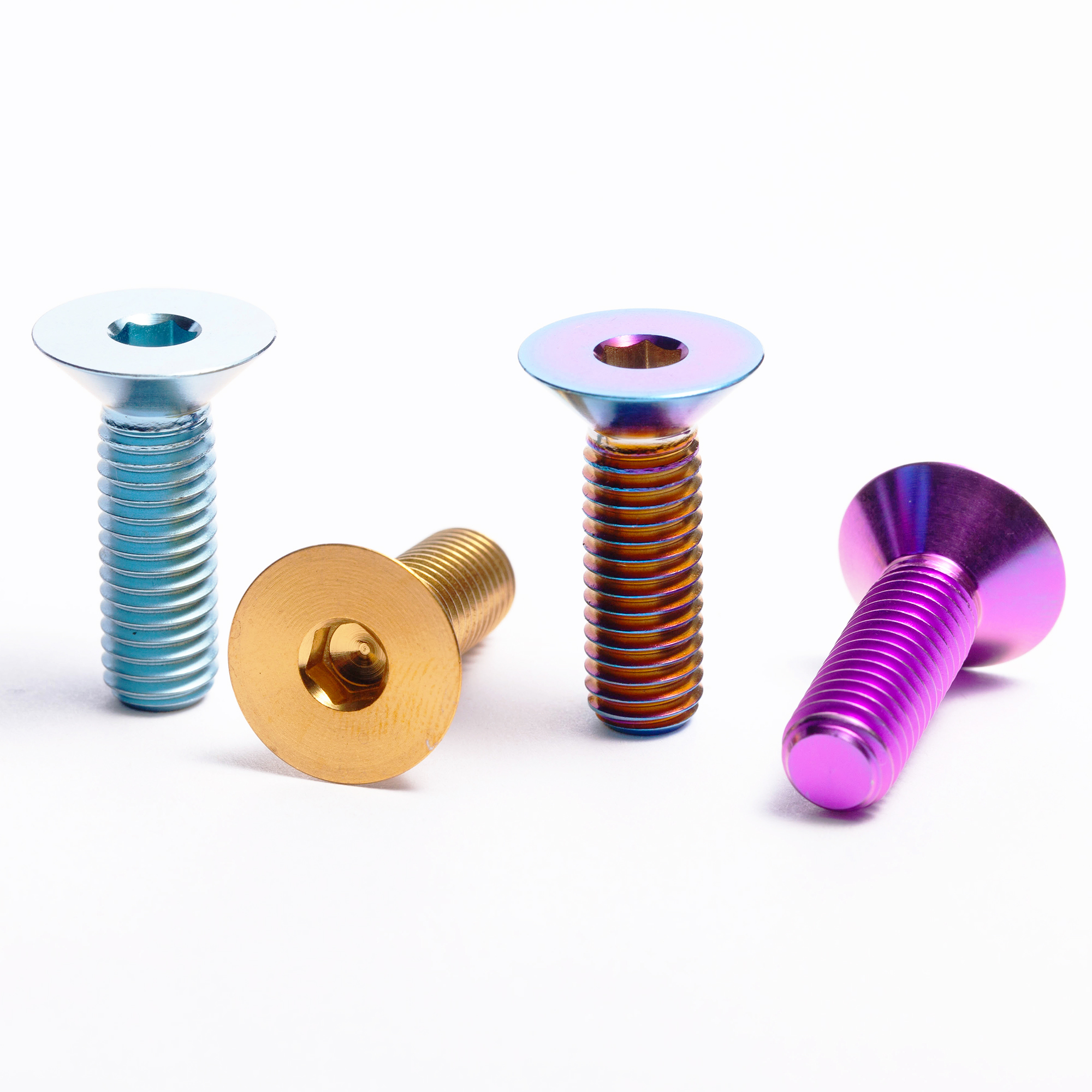
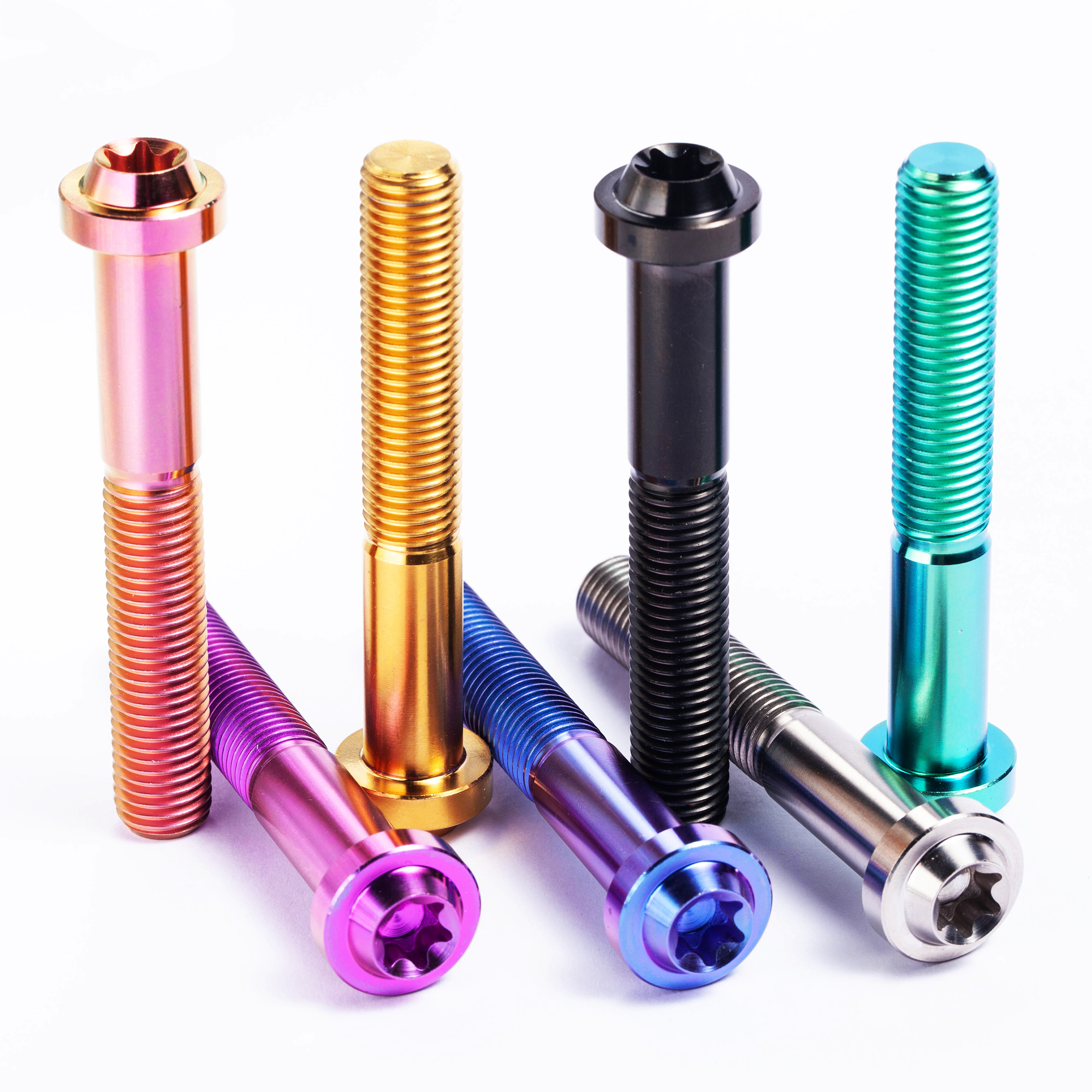
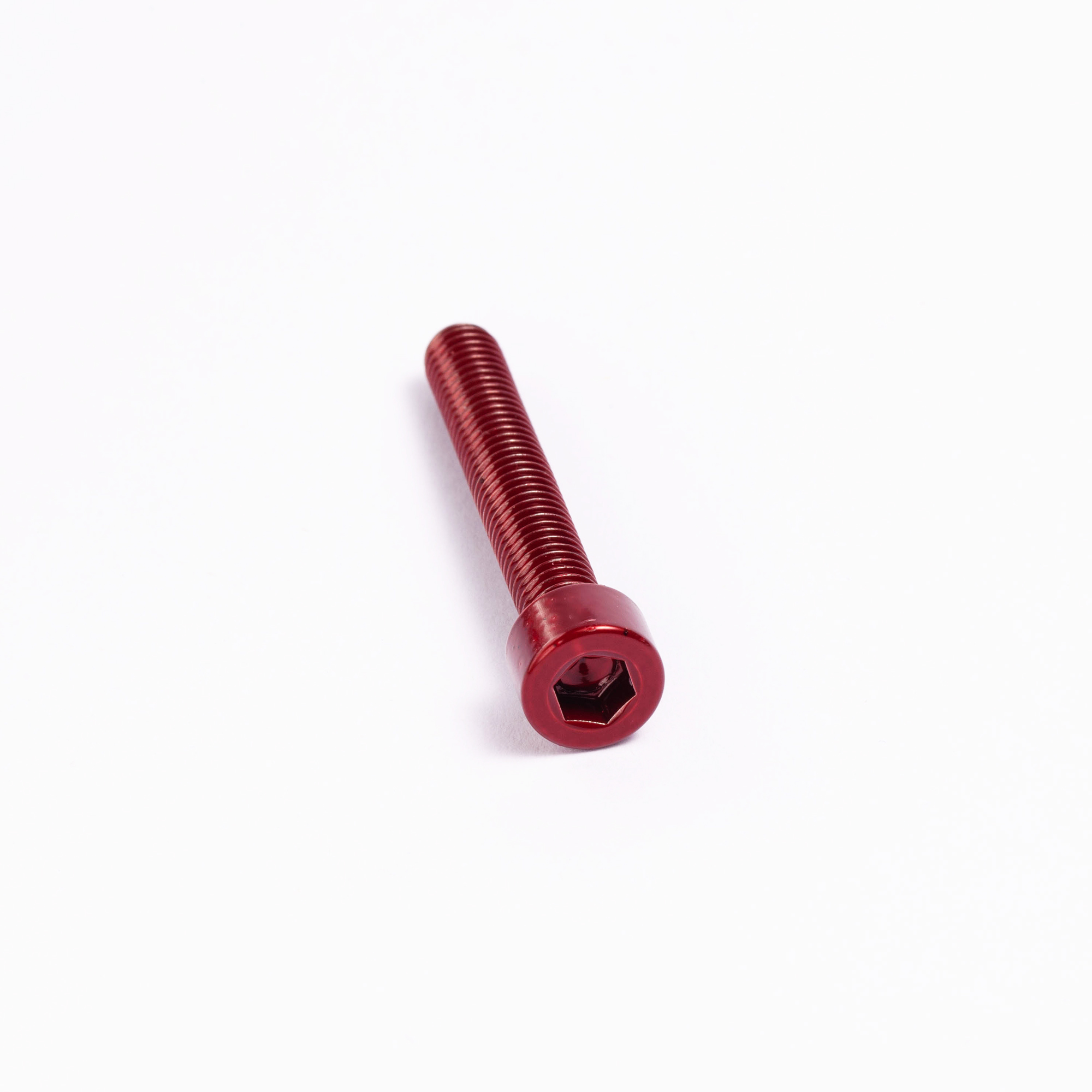
Engineering Principles of Colored Titanium Bolts in B2B Sourcing
In modern high-performance engineering—spanning motorsport suspension systems, aerospace structural sub-assemblies, competitive cycling, medical equipment, and marine hardware—the selection of threaded fasteners directly governs structural safety, weight efficiency, and fatigue endurance. Titanium fasteners, particularly those produced from Grade 5 (Ti-6Al-4V) and Grade 2 commercially pure titanium, have systematically replaced traditional 10.9 and 12.9 grade carbon steels as well as 316 stainless steel fasteners.
As a premier **China wholesale colored titanium bolts manufacturer & factory**, Jiaxing Wexra Titanium Products Co., Ltd. integrates advanced multi-axis CNC machining, precision thread rolling, and electrochemical surface conversion technologies to deliver standard and bespoke fasteners that fulfill stringent global engineering benchmarks (ISO, DIN, ASTM, and ASME).
1. Metallurgical Analysis: Grade 5 (Ti-6Al-4V) vs. Grade 2 vs. Steel Fasteners
To evaluate the structural advantage of titanium fasteners, purchasing engineers must assess key mechanical metrics including yield strength, tensile strength, modulus of elasticity, and specific strength (strength-to-density ratio). Titanium exhibits an exceptional strength-to-weight ratio, allowing engineers to shed up to 45% of hardware mass without sacrificing clamping force.
| Material Specification | Density (g/cm³) | Tensile Strength (MPa) | Yield Strength (0.2% MPa) | Elongation (%) | Corrosion Resistance |
|---|---|---|---|---|---|
| Grade 5 Titanium (Ti-6Al-4V) | 4.43 | 895 – 1050 | 828 – 910 | 10 – 15 | Exceptional (Salt/Acid) |
| Grade 2 Titanium (CP) | 4.51 | 345 – 480 | 275 – 450 | 20 – 30 | Superior |
| Class 10.9 Steel | 7.85 | 1040 | 940 | 9 | Poor (Requires Plating) |
| Stainless Steel 316 | 8.00 | 580 | 290 | 50 | Moderate to High |
Grade 5 (Ti-6Al-4V) Alpha-Beta Alloy: Contains 6% Aluminum and 4% Vanadium. The aluminum stabilizes the alpha phase, increasing strength and thermal limits, while vanadium stabilizes the beta phase, providing workability and heat-treatability. It is the primary choice for critical load-bearing bolts such as brake caliper mount bolts, engine head bolts, and suspension linkage pivots.
Grade 2 Commercially Pure (CP) Titanium: Features excellent ductility and cold formability with lower tensile yield. Ideal for light-load decorative applications, chemical processing covers, and fluid lines where extreme chemical inertness outweighs raw shear requirements.
2. Coloration Science: Electrochemical Anodic Oxidation vs. PVD Coatings
Providing custom colored titanium bolts is not merely an aesthetic choice; it serves color-coded identification in complex assembly lines and provides enhanced anti-friction surface properties. As a dedicated **titanium bolts manufacturer**, we employ two primary coloration technologies:
Electrochemical Anodizing (Type II & Type III)
Titanium anodizing differs fundamentally from aluminum anodizing. It does not use dyes. Instead, an controlled electrolyte bath passes an electrical current through the titanium bolt, growing a transparent Titanium Dioxide ($\text{TiO}_2$) oxide layer. Light refracts through this microscopic oxide film and interferes with reflected light, creating vibrant spectral colors based on film thickness (controlled by precise voltage adjustments).
- 15V – 25V: Gold / Bronze
- 30V – 40V: Electric Blue / Ice Blue
- 55V – 65V: Deep Violet / Purple
- 80V – 90V: Emerald Green / Bright Green
- 100V+: Pink / Rainbow Finishes
Dimensional Impact: Zero net growth on pitch diameter (<0.2 µm oxide thickness), maintaining strict thread tolerances (ISO 6g).
Physical Vapor Deposition (PVD Hard Coatings)
For applications demanding extreme surface hardness ($>2200 \text{ HV}$) and wear resistance, PVD vacuum coating is applied. Vaporized titanium plasma reacts with nitrogen or carbon gas in a vacuum chamber to deposit thin ceramic films.
- TiN (Titanium Nitride): Rich Gold Finish, extreme scratch resistance.
- TiCN (Titanium Carbonitride): Dark Metallic / Rose Gold.
- DLC (Diamond-Like Carbon): Deep Matte Black, reduces coefficient of friction to $0.1$.
Ideal for: High-torque impact applications and abrasive marine environments.
3. Thread Rolling vs. Thread Cutting: Fatigue Life Maximization
A critical metric evaluated by Google SEO intent algorithms and technical procurement officers is the manufacturing technique used for thread generation. Machining threads via traditional lathe cutting severs the continuous crystalline grain flow of the titanium alloy bar stock, creating stress concentration notches at the thread root.
At our **China titanium fastener factory**, all critical metric bolts (DIN 912, DIN 933, ISO 4762) undergo **Cold Thread Rolling**. High-pressure carbide dies cold-forge the threads onto the shank:
- Unbroken Grain Lines: Crystalline grain flows conform continuously along the contour of the thread profile, boosting dynamic fatigue strength by 30% to 50%.
- Surface Work Hardening: Compressive residual stresses are induced at the thread root, substantially delaying crack initiation under cyclic loading.
- Root Radius Polishing: Controlled radii at thread roots mitigate notch sensitivity, crucial for high-rpm engines and vibration-heavy motorcycle brake systems.
4. Mitigating Titanium Thread Galling: Torque Coefficients & Lubrication Protocols
Titanium’s natural oxide layer ($\text{TiO}_2$), while providing immunity to rust, can break down under high contact pressure during high-speed installation, leading to localized solid-state welding or **thread galling**. To ensure seamless assembly and precise clamping force calculation, buyers must implement proper torque torque-tension relationships.
The standard tightening torque equation is expressed as:
Where $T$ = Tightening Torque ($\text{N}\cdot\text{m}$), $K$ = Torque Coefficient (Friction Factor), $D$ = Nominal Bolt Diameter ($\text{m}$), and $F$ = Required Preload / Clamping Force ($\text{N}$).
- Dry Titanium Threads: $K \approx 0.25 - 0.35$ (High risk of galling).
- With Copper Anti-Seize / Molybdenum Disulfide ($\text{MoS}_2$): $K \approx 0.12 - 0.15$ (Recommended for all structural Grade 5 fasteners).
- PVD DLC-Coated Titanium: $K \approx 0.10 - 0.12$ (Smooth dry assembly).
Global Titanium Fastener Sourcing Trends (2025–2030)
The international titanium market is undergoing structural shifts. Procurement directors must navigate supply chain diversification, technological integration, and environmental mandates.
1. E-Mobility & Lightweighting
Electric vehicle (EV) OEMs and ultra-light bicycle manufacturers are aggressively reducing unsprung weight. Every 1 kg saved in rotating unsprung mass (e.g., wheel lug bolts, brake rotors) yields measurable gains in battery range and dynamic acceleration response.
2. Strict ESG & REACH Traceability
European and North American buyers require full material origin certification (MTC EN 10204 3.1) and chemical safety compliance (RoHS, REACH, EPR Germany). Direct sourcing from certified Chinese factories ensures compliance and avoids supply chain bottlenecks.
3. OEM Customization & Rapid Prototyping
Off-the-shelf catalog hardware is increasingly replaced by engineered custom parts. CNC multi-tasking centers allow short production runs with integrated laser-etched branding, custom drive heads (Torx Plus, 12-point double hex), and micro-threads.
Our Factory Capabilities & Quality Assurance Framework
Based in Jiaxing, Zhejiang, Jiaxing Wexra Titanium Products Co., Ltd. operates a vertically integrated production facility dedicated exclusively to titanium processing.
Advanced Manufacturing Fleet
Our workshop is equipped with state-of-the-art Japanese CNC multi-axis turning-milling centers, automatic Swiss-type lathes, cold forging header machines, and automated electrochemical anodizing lines. We maintain strict process controls from raw bar stock inspection to final optical sorting.
Rigorous Quality Laboratory
Every batch is supplied with an authentic Material Test Certificate (MTC EN 10204 3.1). Our in-house quality control laboratory utilizes:
- XRF Spectrometers: Instant chemical composition verification.
- CMM & Optical Projectors: 100% thread pitch and profile validation.
- Tensile & Shear Testers: Verification of ultimate breaking strength.
- Salt Spray Chambers (ASTM B117): Coating durability verification.
Frequently Asked Questions for B2B Titanium Buyers
Clear technical answers to help purchasing teams evaluate specifications, lead times, and custom engineering options.
Grade 5 (Ti-6Al-4V) is an alpha-beta alloy heat-treated to achieve tensile strength above 895 MPa. It is essential for load-bearing and safety-critical components like brake calipers, steering stems, wheel lugs, and engine internals. Grade 2 is commercially pure titanium with a tensile strength around 345–480 MPa; it offers maximum corrosion resistance and excellent formability, ideal for low-stress covers, fluid lines, and chemical processing hardware.
Titanium anodizing is an electro-chemical conversion process that grows a microscopic oxide layer ($\text{TiO}_2$) under 0.2 microns thick. Unlike heavy aluminum hard-anodizing, titanium anodizing adds virtually zero dimensional thickness. Thread pitch diameters remain well within strict ISO 6g tolerance limits, ensuring perfect hand-assembly and zero binding.
Yes. We provide end-to-end OEM/ODM services. You can send us 2D engineering drawings (PDF/DWG), 3D CAD models (STEP/IGES), or physical samples. Our engineering team conducts a Design for Manufacturability (DFM) review, recommends optimal thread profiles and raw material grades, and produces prototypes prior to volume production runs.
We supply a complete quality documentation dossier with every export shipment, including Mill Test Certificates (MTC EN 10204 3.1) confirming chemical element breakdown and mechanical tensile values, Dimensional Inspection Reports, RoHS & REACH Compliance Statements, and EPR Germany packaging compliance documentation.
For standard metric catalog items (DIN 912, DIN 933) in natural or anodized finishes, we maintain ready-to-ship stock with no MOQ constraints. For custom CNC components and specialized OEM color runs, our MOQ typically starts at 100–500 pieces per drawing spec, with prototype sample delivery within 7–10 working days and mass production completed in 2–3 weeks.
We recommend applying an anti-seize lubricant (such as copper paste or molybdenum disulfide grease) during installation of titanium fasteners into matching titanium, aluminum, or stainless steel tapped holes. Additionally, we offer factory-applied anti-galling PVD coatings (such as DLC) and thread roll treatments that significantly reduce friction coefficients.
Request a Direct Factory Quote for Custom & Wholesale Titanium Bolts
Partner with a premier Chinese manufacturer. Send us your part numbers, technical drawings, or quantity specifications today for an engineering consultation and competitive wholesale pricing within 8 hours.